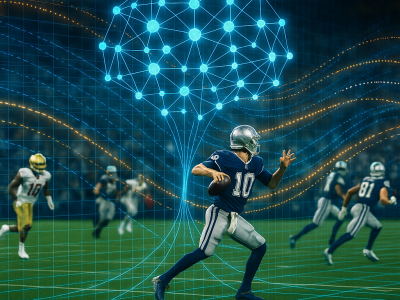
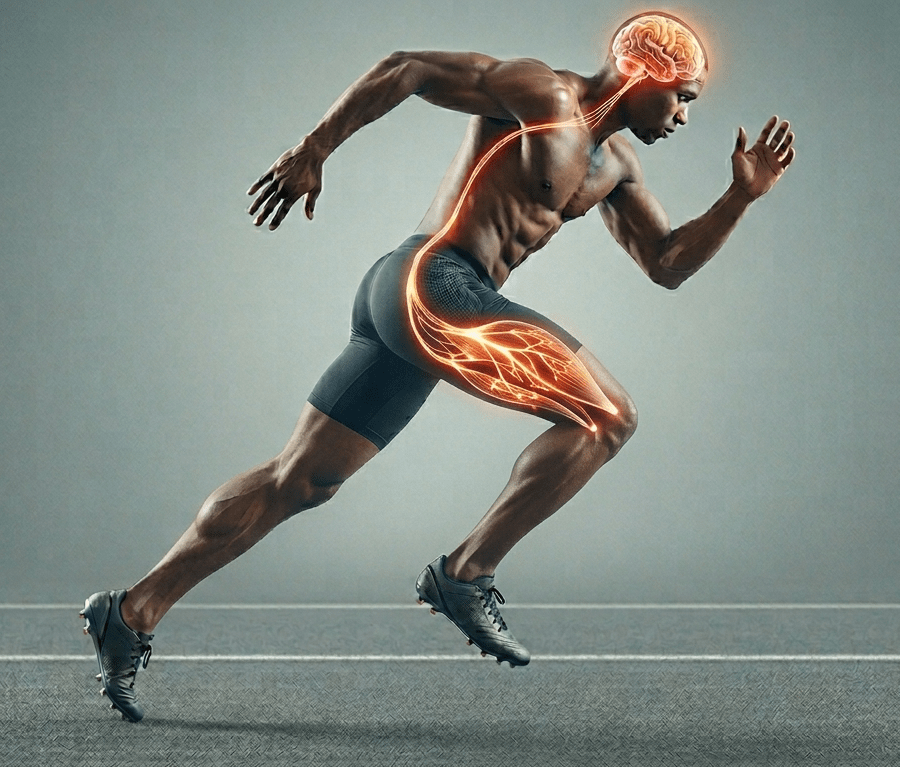
Hamstring injuries are among the most common and frustrating injuries in football. They can sideline players for weeks, disrupt team performance, and recur even after athletes appear to have fully recovered. While sports medicine researchers have traditionally focused on the injured muscle itself, new evidence suggests that the story may be far more complex.
A recent study conducted at Universidade de Lisboa in Portugal by Dr. José Pedro Correia, now at the University of Essex, found that footballers with a history of hamstring injuries exhibit distinct patterns of brain activity and muscle control compared with players without injury history, even after returning to play. The findings raise important questions about whether rehabilitation programmes should pay greater attention not only to muscles and movement, but also to the brain.
Published in the journal Sports Health, the study, titled Movement Rate and Brain Muscle Coupling in Male Footballers With and Without Hamstring Injury History, provides fresh insights into the neurological adaptations that may persist following one of football’s most prevalent injuries.
A persistent problem in football
Hamstring strain injuries remain a major challenge in professional football. According to previous research cited by the authors, hamstring injuries account for approximately 24 percent of all injuries in men’s professional football, and recurrence rates remain stubbornly high despite advances in prevention and rehabilitation.
The significance of the problem extends beyond time lost on the pitch. Previous hamstring injury is widely recognised as one of the strongest risk factors for future injury. Sprinting and other high-speed actions are responsible for the majority of hamstring strains, making the injury particularly relevant in modern football, where explosive movement is increasingly important.
Sports scientists have spent years investigating muscle strength, flexibility, fatigue, and biomechanics as contributors to injury risk. However, recent evidence has pointed towards another possible factor: the central nervous system. Researchers have begun to explore whether injuries may alter the way the brain plans, coordinates, and controls movement long after physical healing has occurred.
Looking beyond the muscle
The research team set out to examine whether footballers with a history of hamstring injury displayed differences in movement speed, muscle activation, brain activity, and brain-muscle communication when compared with players who had never experienced such an injury.
The study involved 108 male footballers recruited from professional and semi-professional clubs in Portugal. Among them, 39 players had sustained hamstring strains during the previous two seasons.
To investigate potential differences, participants performed a demanding movement task involving rapid alternating flexion and extension of the knees. During the exercise, researchers simultaneously recorded electrical activity from the brain using electroencephalography, commonly known as EEG, and muscle activity using electromyography, or EMG.
The researchers were particularly interested in a phenomenon known as corticomuscular coherence. This measure reflects the degree of synchronisation between brain activity and muscle activity, providing insights into how effectively the nervous system communicates with the muscles during movement.
The surprising result
The researchers initially expected footballers with previous hamstring injuries to perform worse during the task. Earlier studies had suggested that injured athletes often experience lingering neuromuscular deficits, altered coordination, and reduced movement efficiency.
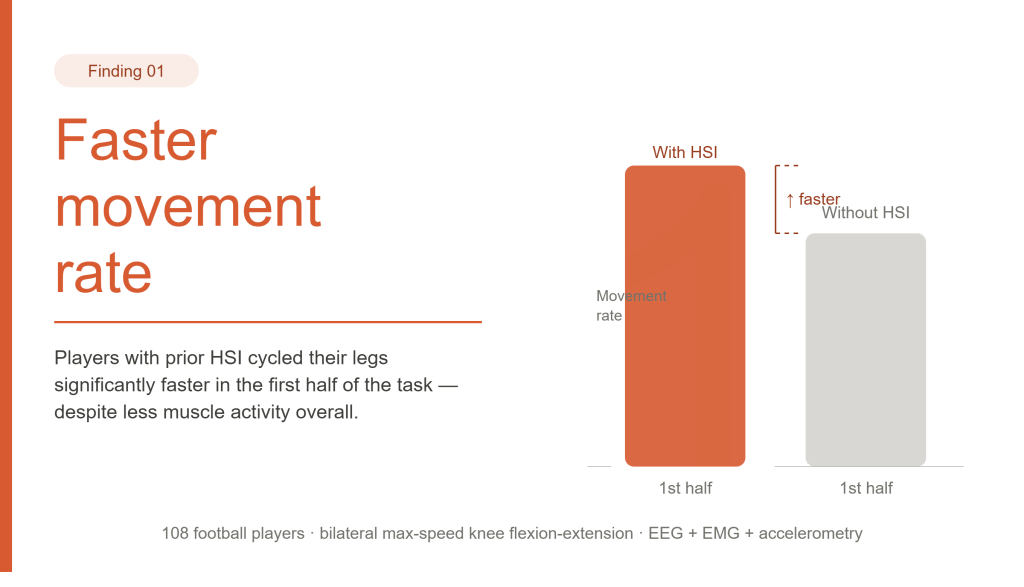
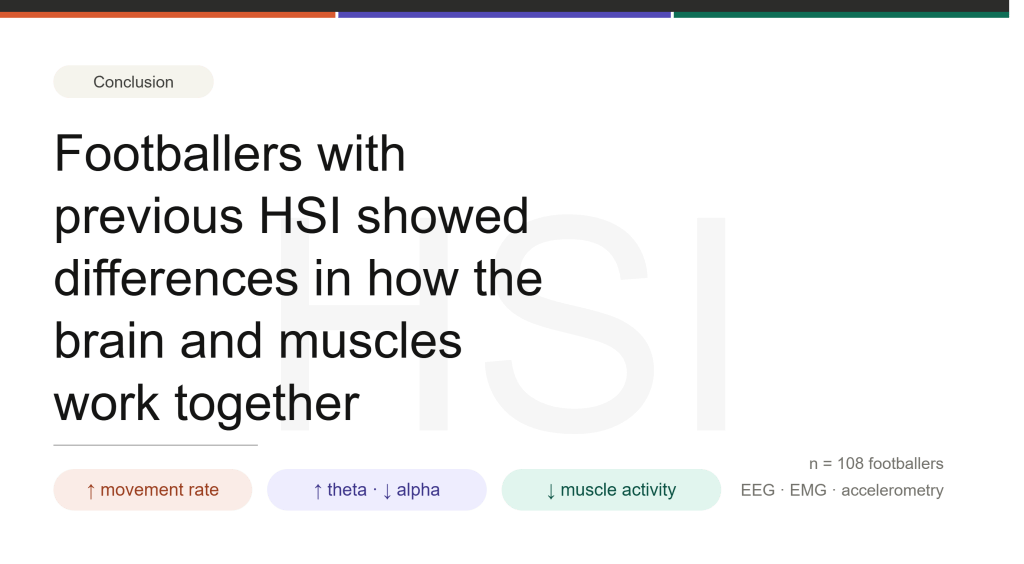
Instead, the opposite occurred. Footballers with a history of hamstring injury actually moved faster during the early stages of the test than players without a previous injury. This finding challenged the researchers’ original hypothesis and revealed a more complex relationship between injury history and performance.
The researchers developed a movement rate index that distinguished between what they described as “hares” and “tortoises”. Players classified as hares completed more movement cycles faster but also experienced a steeper decline in performance as the task progressed. Notably, these players were more than three times as likely to have experienced a previous hamstring injury.
This observation suggests that athletes capable of higher movement speeds may also face greater injury risk because their style of play demands more frequent sprinting and explosive actions.
What the brain revealed
While the performance findings were unexpected, the most intriguing discoveries emerged from the brain activity recordings.
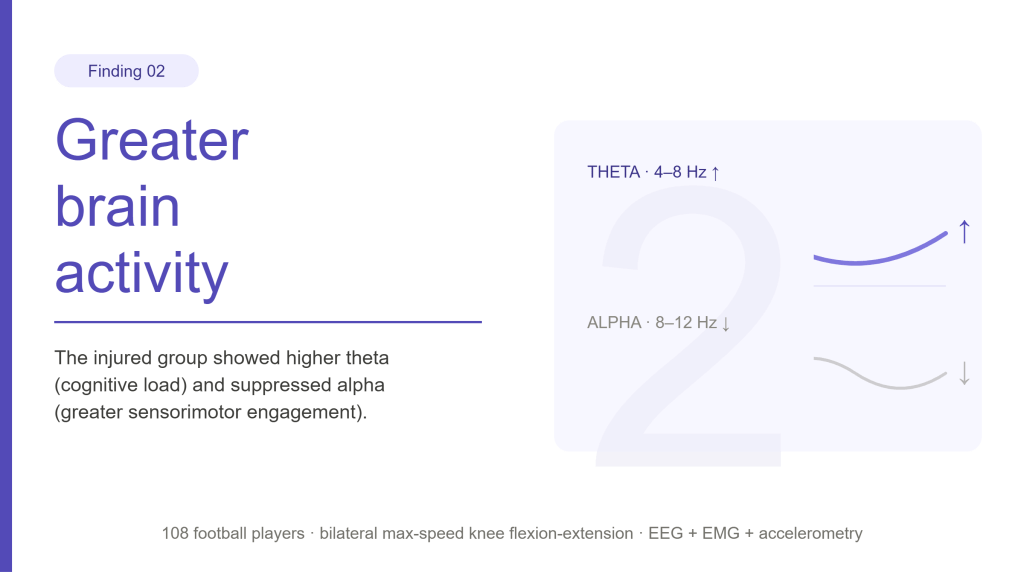
Players with prior hamstring injuries showed increased theta-wave activity in frontal brain regions during the later stages of the task. In neuroscience research, elevated theta activity is commonly associated with attention allocation, sensorimotor integration, and increased cognitive effort.
At the same time, these athletes exhibited reductions in alpha wave activity. Alpha activity is often linked to motor planning, movement execution, and the efficient use of cognitive resources. A reduction in alpha power has previously been associated with increased task difficulty and greater mental workload.
Taken together, these findings suggest that previously injured players may be relying on greater attentional resources to maintain performance. In simple terms, their brains may be working harder to achieve the same movement outcomes.
Importantly, these differences were observed even though all players had returned to competitive football and were free from active injury at the time of testing.
Whether the differences seen are a cause or a consequence, this work shows how muscle injuries implicate structures far beyond the muscle itself.
—José Pedro Correia
Faster performance at a neurological cost?
The combination of superior movement speed and increased neural effort presents an intriguing paradox.
The researchers propose that footballers with previous hamstring injuries may compensate for lingering neuromuscular changes by recruiting additional cognitive resources. This could allow them to maintain or even enhance movement performance despite underlying alterations in motor control.
Such adaptations may not necessarily be beneficial in every context. Increased cognitive load can reduce the brain’s reserve capacity, leaving athletes with fewer resources available to respond to rapidly changing situations during competition.
Previous studies have shown that elevated cognitive demands can influence movement mechanics and potentially increase the risk of non-contact lower limb injuries. If athletes are already dedicating additional mental effort to controlling movement, they may become more vulnerable when faced with the complex decision-making and environmental demands of competitive sport.
Changes in muscle activity
The muscle activity recordings provided further evidence that recovery from injury may involve more than restoring muscle strength alone.
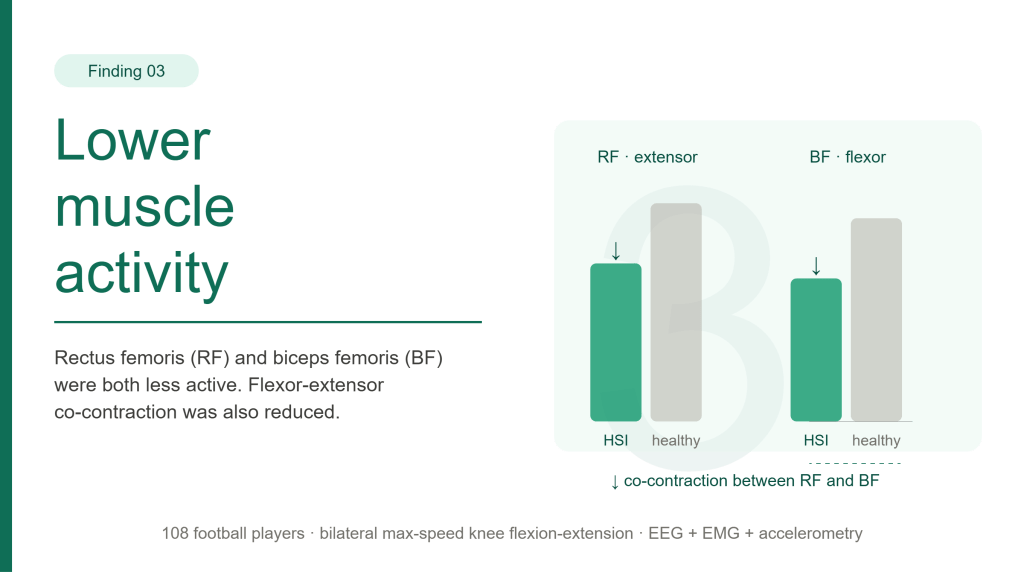
Players with a history of hamstring injury displayed lower activity in both the biceps femoris, one of the primary hamstring muscles, and the rectus femoris, a major muscle of the quadriceps group.
Interestingly, these reductions occurred despite the injured group demonstrating faster movement performance.
The researchers suggest that these findings may reflect persistent neuromuscular inhibition, a phenomenon previously reported in athletes following hamstring injuries. Neuromuscular inhibition refers to a reduction in the nervous system’s ability to fully activate specific muscles.
The study also identified lower levels of muscle co-contraction among previously injured players. Co-contraction occurs when opposing muscle groups activate simultaneously to stabilise a joint. Reduced co-contraction may contribute to faster movement speeds, but it could also decrease joint stiffness and potentially reduce protection against harmful loads.
Brain muscle communication remained unchanged
One of the study’s central objectives was to determine whether previous hamstring injury altered brain muscle coupling.
Surprisingly, the researchers found no significant differences in corticomuscular coherence between players with and without injury history.
This result contrasts with findings from studies on anterior cruciate ligament injuries, which have shown alterations in brain-muscle communication.
The absence of differences does not necessarily mean that hamstring injuries have no neurological impact. Rather, it suggests that the adaptations associated with hamstring strain injuries may involve different neural mechanisms than those seen in more severe joint injuries.
The researchers also noted that fatigue reduced corticomuscular coherence across all participants, regardless of injury status. This indicates that fatigue may have exerted a stronger influence on brain muscle communication than injury history itself.
What this means for rehabilitation
The study contributes to a growing body of evidence suggesting that sports injuries should not be viewed solely as musculoskeletal problems.
Although rehabilitation programmes traditionally focus on restoring strength, flexibility, and functional movement, the findings indicate that neurocognitive factors may also deserve attention.
The researchers argue that monitoring attentional resources, sensorimotor processing, and motor control strategies could become an important component of injury prevention and rehabilitation programmes. Approaches such as cognitive-motor dual-task training, neurofeedback, and attentional control exercises may help athletes develop more efficient movement strategies and reduce injury risk.
While additional prospective research is needed before these methods become standard practice, the study highlights the importance of considering the athlete as an integrated biological system in which muscles, nerves, and the brain continuously interact.
Reference
Correia, J. P., Grilo, H., Witvrouw, E., Vaz, J. R., & Freitas, S. R. (2025). Movement rate and brain muscle coupling in male footballers with and without hamstring injury history. Sports Health. https://doi.org/10.1177/19417381251350688