
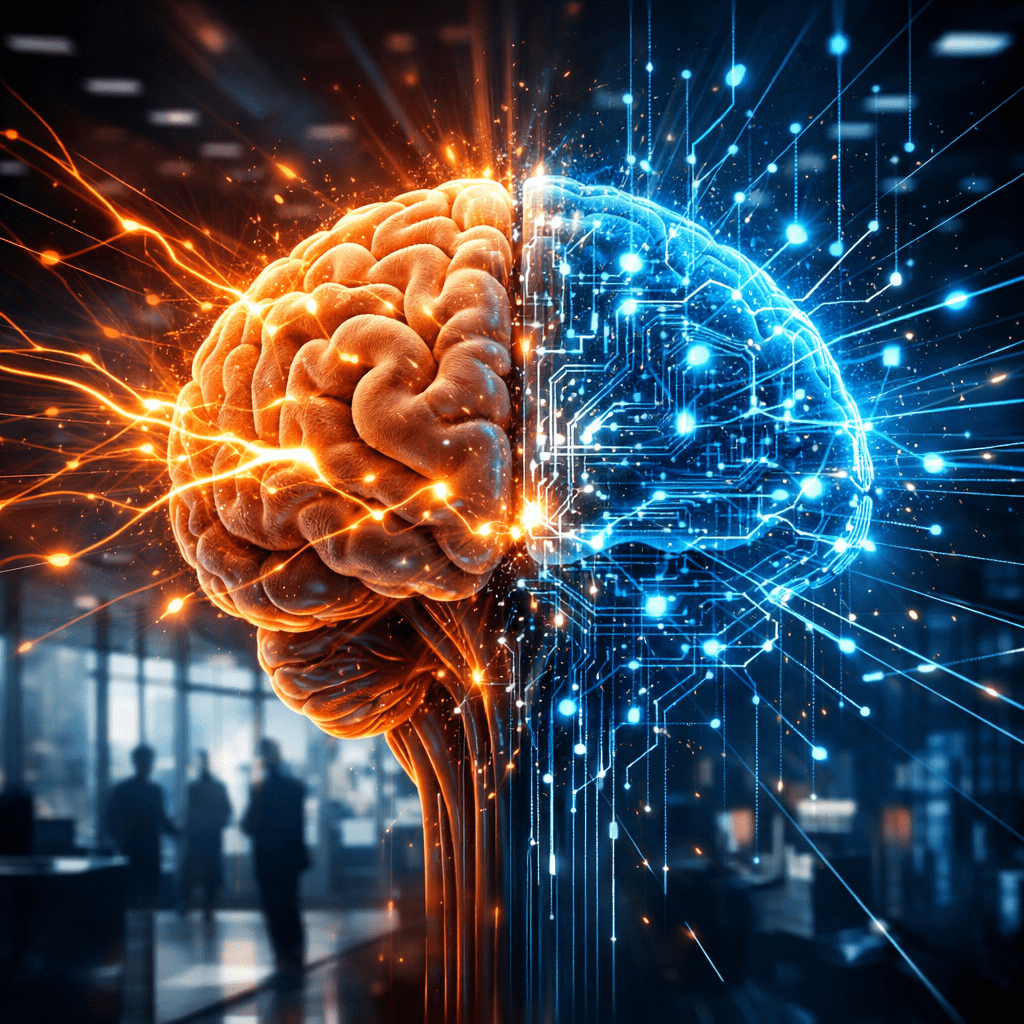
Artificial intelligence is no longer a background technology quietly improving office productivity. According to new academic research, it is fundamentally reshaping how professional expertise is produced, priced and delivered across highly regulated sectors such as law, accounting, healthcare consulting and higher education administration. A major systematic review led by Carl Bezuidenhout from the University of Wollongong reveals that AI adoption is not simply about efficiency gains. Instead, it is triggering structural change in professional services firms and altering the relationship between humans, machines and clients.
The study, published in the Journal of Information & Knowledge Management under the title “Artificial Intelligence in Professional Services: A Systematic Review and Foundational Baseline for Future Research”, synthesised findings from 75 peer reviewed academic papers spanning more than three decades of research. It offers one of the most comprehensive analyses to date of how artificial intelligence technologies are transforming knowledge intensive industries.
For science communicators, policymakers and professionals, the findings carry an important message. AI is not replacing professional expertise outright. Instead, it is redefining what expertise means in the digital age.
The quiet revolution inside professional services
Professional services firms, often referred to as PSFs in academic literature, include law firms, accounting practices, medical advisory organisations, engineering consultancies and university research services. These organisations have historically depended on highly trained human experts who sell intellectual labour rather than physical products.
The review shows that AI has entered this domain at an accelerating pace. Falling computing costs, cloud infrastructure, large datasets and advances in machine learning have made artificial intelligence tools increasingly accessible to organisations that once relied almost exclusively on human judgement. The rapid adoption of generative AI platforms such as ChatGPT, Copilot and Bard has further intensified this shift, raising expectations about automation, knowledge generation and client service delivery.
What makes this transformation significant is the type of work now affected. Unlike earlier waves of automation that targeted repetitive manual tasks, AI is increasingly capable of supporting complex cognitive functions such as document analysis, pattern recognition, language processing and predictive modelling. This places traditionally protected professional roles directly within the reach of algorithmic systems.
Beyond automation: a deeper structural change
One of the central conclusions of Bezuidenhout and colleagues is that the impact of AI goes far beyond operational efficiency. While productivity improvements remain a major motivation for adoption, the deeper transformation involves organisational structure, business strategy and professional identity.
Artificial intelligence is shifting professional services from a labour intensive model to a data intensive one. In practical terms, this means knowledge that once resided primarily in individual experts is increasingly embedded within software systems, algorithms and digital platforms. As a result, firms are beginning to rethink how value is created and delivered.
The study highlights how AI adoption affects multiple layers of organisational life simultaneously. It influences pricing models, reshapes client relationships, alters skill requirements and forces firms to confront new ethical responsibilities. Rather than functioning as a standalone tool, AI becomes part of an interconnected ecosystem that redefines how professional work is performed.
Changing how professional work is priced
One of the most visible consequences of AI adoption is its impact on billing structures. For decades, many professional services relied on hourly billing models, where fees were calculated based on the time spent by human professionals on specific tasks. Artificial intelligence challenges this logic directly.
The research documents cases where AI powered systems can review legal contracts in seconds rather than hours or analyse thousands of financial transactions automatically during audits. Such productivity gains undermine the economic foundation of time based billing. As a result, many firms are experimenting with alternative pricing models such as fixed fees, value based pricing and outcome driven contracts.
This transition is not merely financial. It forces firms to rethink how expertise is monetised and how clients perceive value. When machines perform routine analytical work, human professionals increasingly focus on strategic interpretation, advisory roles and complex decision making.
The human machine partnership
Contrary to popular narratives about job replacement, the review emphasises the growing importance of human AI collaboration. Artificial intelligence systems excel at processing large datasets, identifying patterns and performing repetitive analytical tasks. However, they still struggle with contextual reasoning, emotional intelligence, ethical judgement and creative problem solving.
As a result, many organisations are moving towards hybrid work models where AI augments rather than replaces human professionals. In healthcare consulting, for example, algorithms may assist with data analysis while clinicians and advisors interpret results within ethical and regulatory frameworks. In legal services, AI may support document discovery while lawyers maintain responsibility for strategic judgement and client advocacy.
This hybrid model also reshapes workforce development. Professionals increasingly need digital literacy, data interpretation skills and the ability to manage AI systems alongside traditional domain expertise. The study suggests that future professional training will require interdisciplinary competencies that combine technical understanding with human judgement.
Ethical risks and algorithmic accountability
While the opportunities are substantial, the research highlights serious risks associated with AI adoption. One of the most prominent concerns involves algorithmic bias and data quality. Artificial intelligence systems learn from historical datasets that may contain embedded social, cultural or institutional biases.
If left unchecked, these biases can be amplified at scale. In legal contexts, this could influence sentencing recommendations or risk assessments. In financial auditing, biased datasets could distort fraud detection models. In healthcare related advisory services, flawed data could affect diagnostic support tools.
Another challenge relates to transparency. Many AI systems operate as black box models, producing outputs that are difficult for users to interpret or explain. For professions governed by regulatory standards and accountability requirements, this lack of explainability presents a serious governance problem.
The researchers note growing interest in explainable artificial intelligence frameworks that aim to make algorithmic decision making more transparent. However, widespread adoption remains limited, particularly in commercial professional services environments.
Redefining professional identity
Perhaps the most profound implication of AI adoption lies in how it reshapes professional identity. Traditional professional authority has long been based on specialised training, accreditation and human judgement. As AI systems take on a greater share of technical tasks, the definition of expertise begins to evolve.
Rather than positioning professionals as sole knowledge holders, organisations increasingly view them as orchestrators of digital systems, interpreters of machine generated insights and ethical gatekeepers. This shift has cultural implications for professions that have historically valued individual expertise and experiential learning.
The research also suggests that professional legitimacy will increasingly depend on how well practitioners integrate AI tools responsibly into their workflows. Trust will no longer be based solely on credentials, but also on transparency, data governance and ethical technology use.
Competitive pressure and new market entrants
Artificial intelligence is not only transforming existing firms. It is also enabling new digital entrants to offer specialised services without traditional professional infrastructure. Startups equipped with AI driven platforms can provide contract analysis, accounting automation and advisory tools at lower cost and greater scale.
This intensifies competition within professional services markets and challenges established regulatory frameworks. While traditional firms operate under strict professional governance rules, technology providers may not face the same obligations. This regulatory asymmetry raises questions about accountability, consumer protection and professional standards.
The study highlights the need for updated regulatory approaches that reflect the realities of AI driven service delivery. Without policy intervention, the gap between technological innovation and professional governance is likely to widen.
What the future of professional work may look like
Based on the systematic review, the authors propose several future research directions that also offer insight into emerging industry trends. These include deeper investigation into human AI collaboration models, ethical governance frameworks, explainable AI adoption and long term workforce transformation.
From a societal perspective, the findings suggest that artificial intelligence will continue to blur the boundaries between human and machine expertise. Rather than eliminating professional roles, AI is likely to reshape them into new hybrid forms that combine computational power with human judgement.
For organisations, this transition will require strategic investment not only in technology infrastructure, but also in training, ethics frameworks and organisational culture. Firms that approach AI adoption purely as a cost cutting exercise may miss its broader transformative potential.
Reference
Bezuidenhout, C., Abbas, R., Mehmet, M., & Heffernan, T. (2025). Artificial intelligence in professional services: A systematic review and foundational baseline for future research. Journal of Information & Knowledge Management, 24(2), 2550009. https://doi.org/10.1142/S0219649225500091