In recent years, mental health research has increasingly focused on how individuals construct meaning from their life experiences. Yet one persistent challenge remains: many people struggle to speak openly about emotionally significant events, particularly in group or therapeutic settings. A newly published study in the Journal of Constructivist Psychology introduces an innovative approach that may help bridge this gap.
In the article Touching Inner Life Stories (TILS): A Structured Three-Stage Narrative-Experiential Method, researcher Rinat Halabi from Talpiot Academic College of Education presents a structured narrative method designed to facilitate emotional processing without requiring immediate self-disclosure. The study, published in the Journal of Constructivist Psychology, outlines a three-stage framework that combines storytelling, imagination, and reflective dialogue to support psychological resilience and personal growth.
Talking about emotions is not always easy
Despite the growing awareness of mental health and emotional well-being, many individuals find it difficult to engage in reflective self-expression. This is particularly evident in educational and counselling contexts, where participants may feel exposed, judged, or overwhelmed when asked to recount personal experiences directly.
Halabi’s work emerges from this very challenge. While facilitating professional development programs for student teachers and educational counsellors, the researcher observed that participants often resisted entering reflective spaces when prompted to share meaningful life stories. The difficulty was not a lack of experience or insight, but rather the emotional risk associated with immediate disclosure.
This insight aligns with broader findings in psychology, which suggest that confronting personal narratives too abruptly can trigger anxiety or emotional withdrawal. As a result, there has been increasing interest in approaches that allow individuals to engage with their inner experiences more gradually and symbolically.
A structured Narrative-Experiential Approach
The method, known as Touching Inner Life Stories (TILS), is described as a narrative-experiential framework that operates at the intersection of education and therapy. Rather than functioning as a clinical psychotherapy protocol, TILS is positioned as a reflective and developmental tool that supports self-awareness, emotional insight, and resilience.
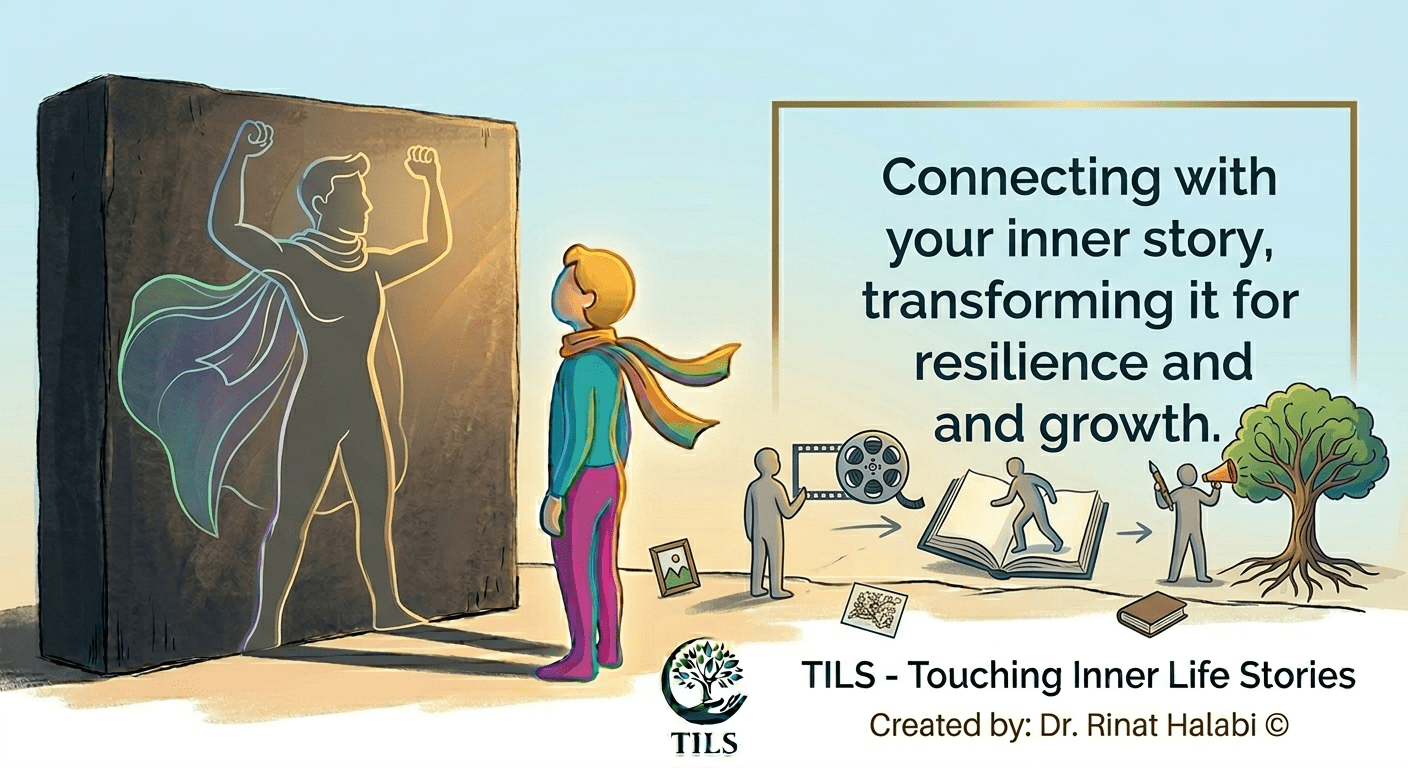
At its core, TILS is grounded in the idea that individuals make sense of their lives through stories. By engaging with symbolic stimuli such as images, drawings, or short narratives, participants can explore emotions indirectly before connecting them to their own experiences. This creates, as the study describes, a safe interpretive space where meaning can emerge without the pressure of immediate personal exposure.
The framework integrates concepts from narrative therapy, bibliotherapy, Jungian depth psychology, and Winnicott’s theory of transitional space. It also draws on philosophical perspectives such as hermeneutics and narrative identity theory, emphasizing the role of interpretation and storytelling in shaping the self.
The Three-Stage Framework: From Observer to Director
Central to TILS is a structured progression through three experiential roles: observer, actor, and director. These roles guide participants from emotional distance to deeper personal engagement, enabling a gradual exploration of inner life stories.
In the first stage, the observer role, participants encounter an external stimulus such as a picture or a short story. They are invited to describe what they see, what stands out, and what emotions or associations arise. Importantly, this stage does not require any personal disclosure. The focus remains on the external material, allowing individuals to engage safely and build a sense of control.
The second stage, the actor role, introduces imaginative involvement. Participants are encouraged to enter the narrative world, interact with its characters, and explore possible actions or dialogues. This stage activates emotional and cognitive processes through symbolic engagement, often revealing underlying feelings and conflicts without direct confrontation.
In the final stage, the director role, participants connect the symbolic experience to their own life stories. They revisit past events, reinterpret them, and construct new meanings through writing, dialogue, or creative expression. This stage fosters a sense of agency, as individuals become active authors of their narratives rather than passive recipients of their experiences.
The science behind storytelling and identity
The theoretical foundation of TILS reflects a convergence of philosophical and psychological traditions. Central to this framework is the concept of narrative identity, developed by philosopher Paul Ricoeur, which proposes that individuals construct their sense of self through evolving life stories.
From this perspective, identity is not fixed but continuously shaped through interpretation and reinterpretation. By revisiting and reframing personal narratives, individuals can shift from limiting or problem-saturated stories to more adaptive and empowering ones. This process closely aligns with the goals of narrative therapy, which emphasise the reauthoring of personal meaning.
The method also incorporates Wolfgang Iser’s reader-response theory, which suggests that meaning arises from the interaction between the text and the reader. In the context of TILS, this principle is applied through open-ended stimuli that invite participants to fill interpretive gaps with their own experiences and emotions.
In addition, Jungian psychology holds that symbols and archetypes serve as bridges between conscious and unconscious processes. Engaging with symbolic stories allows individuals to access deeper layers of meaning while maintaining a protective distance from potentially distressing material.
From symbolic story to personal transformation
To illustrate the application of TILS, the study presents a case involving an elderly woman referred to as Gila. Facing a profound emotional crisis following her husband’s transition to long-term care, Gila experienced intense guilt and inner conflict.
During the session, she was introduced to a symbolic story about a family whose survival depended on a single cow. In the narrative, the loss of the cow ultimately leads to unexpected growth and prosperity. Initially, Gila focused on the perceived injustice within the story, criticizing the actions of the characters involved.
As the process progressed into the actor stage, she engaged in an imaginative dialogue with one of the characters, expressing anger and questioning their decisions. This symbolic interaction allowed her to externalize emotions that had remained unarticulated.
In the director stage, Gila connected the narrative to her own life experiences, recalling earlier feelings of neglect and later moments of personal empowerment. Through this process, she was able to reinterpret her situation, shifting from guilt to a more balanced understanding of her choices. The experience facilitated emotional relief and reinforced her sense of agency.
Why this method matters today
The relevance of TILS extends beyond individual therapy sessions. As mental health challenges continue to rise globally, there is a growing demand for approaches that are accessible, adaptable, and sensitive to diverse emotional needs.
One of TILS’s key strengths is its flexibility. The method has been applied across age groups, including children, adolescents, and adults, and can be integrated into educational, counselling, and developmental contexts. Its emphasis on symbolic engagement makes it particularly valuable for individuals who may struggle with direct verbal expression.
Furthermore, the structured yet fluid nature of the three-stage process allows facilitators to adjust the pace and depth of engagement to the participant’s readiness. This aligns with contemporary approaches to trauma-informed care, which prioritise safety, autonomy, and gradual exposure.
Becoming the author of your own story
The study highlights the potential of narrative experiential methods to enhance emotional resilience and psychological well-being. Resilience, it suggests, is not simply a matter of enduring hardship. It is cultivated through the gradual, courageous act of revisiting one’s own narrative, and discovering that it can be rewritten
Resilience is not only about what happens to us, but about our capacity to meet our inner stories and to become their authors.
— Rinat Halabi
By combining storytelling, imagination, and reflective dialogue, TILS offers a structured, compassionate space in which individuals can move from passive witness to active creator of their own life story, bridging cognitive and emotional processes in the service of lasting resilience.
Reference
Halabi, R. (2025). Touching inner life stories (TILS): A structured three stage narrative experiential method. Journal of Constructivist Psychology. https://doi.org/10.1080/10720537.2025.2592549