
Why do humans age, while some species seem to defy time? It is a question that has puzzled scientists, clinicians, and philosophers for decades. A recent research article by Alessandro Fontana, published in GeroScience and titled “Evolvable soma theory of ageing: observations from the natural world” , offers a provocative new perspective. Conducted at the National Gerontology Center in Larnaca, Cyprus, the study is concerned with the Evolvable Soma Theory of Ageing (ESTA), a framework that challenges long-standing assumptions in evolutionary biology and gerontology.
Rather than viewing ageing as a passive accumulation of damage or a byproduct of declining evolutionary pressure, this theory proposes something far more dynamic. According to ESTA, ageing may represent the outcome of an active, ongoing evolutionary process that continues to shape organisms long after reproduction. This reframing may have significant implications for how scientists understand longevity, genetic regulation, and even the future of anti-ageing research.
A longstanding scientific puzzle
Traditional theories of ageing have largely fallen into two camps. One group suggests that ageing results from accumulated cellular damage, often described as wear and tear caused by metabolic processes and environmental stress. Another group proposes that ageing is genetically programmed, shaped by evolutionary trade-offs that prioritise early life reproductive success over long-term survival.
ESTA does not reject these ideas entirely but offers a complementary perspective, by suggesting that ageing is not merely the result of neglect by evolution. Instead, it may be a direct consequence of evolution still experimenting within the organism, particularly during the post-reproductive phase.
Ageing as a continuation of development
At the heart of the theory lies a radical proposition. Development and ageing are not separate processes but part of a continuous biological program. Genetic instructions active in early life are highly optimised, guiding growth and development with precision. After reproduction, however, later-acting genetic instructions become less refined.
These late-stage processes are largely epigenetic. They involve changes in gene expression rather than alterations in DNA sequence. According to the model, such epigenetic modifications are encoded in the genome and activated over time, influencing how cells behave, differentiate, and eventually decline.
Fontana argues that these late-acting epigenetic events function as somatic experiments. Most of these experiments are unsuccessful, leading to functional deterioration and ageing. However, a small proportion may carry beneficial traits that evolution can refine and pass on to future generations. In this sense, ageing becomes a testing ground for evolutionary innovation rather than a purely degenerative process.
Nature’s longest living species offer clues
One of the most compelling aspects of the research lies in its use of observations from the natural world. The study examines species with exceptional longevity to explore whether their life histories align with the predictions of ESTA.
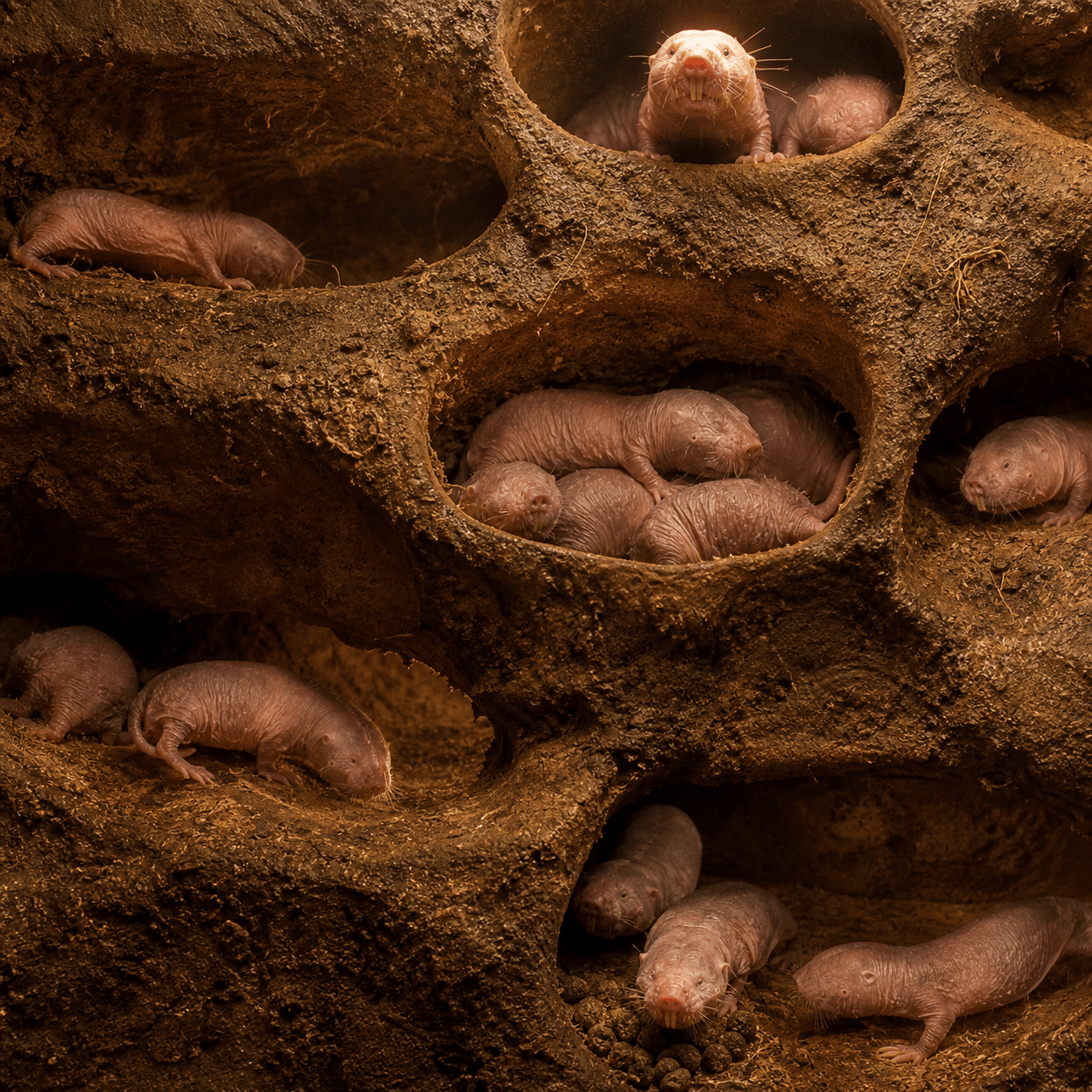
Animals such as the Greenland shark, which can live for over 400 years, and the bowhead whale, which can live for over 200 years, occupy ecological niches characterised by low environmental competition and relative stability. Similarly, the naked mole rat and the Galapagos tortoise demonstrate unusually long lifespans within their respective groups.
Fontana suggests that these species experience reduced evolutionary pressure. As a result, their genomes may contain fewer late-acting developmental genes that generate harmful outcomes. This leads to slower ageing and extended lifespan.
In contrast, species facing intense competition and rapidly changing environments may undergo faster evolutionary change. This accelerates the accumulation of late-acting genetic variants, increasing the likelihood of detrimental outcomes and hastening ageing.
Living fossils and evolutionary stasis
The study further explores the concept of evolutionary stasis through organisms often described as living fossils. These species have undergone relatively little change over millions of years, providing a unique opportunity to examine the relationship between evolution and ageing.
Using measures of evolutionary performance, the research compares the longevity of these species with that of closely related clades. The findings indicate that species with greater evolutionary stasis tend to have longer lifespans.
While the data are exploratory rather than definitive, they are consistent with the theory’s central prediction. Reduced evolutionary activity appears to correlate with slower ageing, supporting the idea that ageing is linked to the pace of evolutionary experimentation.
By eliminating aging, the evolutionary system would lose its primary mechanism for continuous adaptation and refinement.” […] “With few exceptions, the lineages that may have attempted this path are not around to tell the tale.
—Alessandro Fontana
Development, evolution and timing
Another key insight from the study concerns the relationship between development and evolutionary history. Classical ideas such as terminal addition, where new traits emerge in later stages of development, are revisited within this framework.
Fontana proposes that evolutionary innovations may initially appear during late life stages, where they can be tested with minimal impact on reproductive success. Over time, beneficial traits may shift to earlier developmental stages through changes in genetic timing mechanisms.
This process introduces a dynamic interplay between development and evolution, where the timing of gene activation plays a crucial role. It also provides a potential explanation for why early developmental stages are highly conserved across species, while later stages exhibit greater variability.
Reproduction and life history patterns
The theory also extends to broader life history traits, including the timing of reproduction. According to the study, environments characterised by high competition may drive faster evolutionary change, leading to both accelerated ageing and shifts in reproductive timing.
Comparisons between closely related species such as bonobos and chimpanzees illustrate this point. Despite similar lifespans, differences in ecological conditions and social structures are associated with variations in the age of reproduction.
In addition, sex specific differences in lifespan and reproductive timing across mammals provide further support. Females generally live longer and reach maturity earlier than males, patterns that may reflect differing evolutionary pressures and rates of genetic experimentation.
Rethinking ageing in modern science
The Evolvable Soma Theory of Ageing represents a significant departure from traditional views. While standard theories view ageing as a consequence of declining evolutionary influence, this framework sees it as an unavoidable product of ongoing evolutionary activity.
Importantly, the study does not claim to provide definitive proof. Instead, it presents a series of observations and theoretical arguments that collectively support the plausibility of this perspective. The author emphasises that biological systems are complex and that multiple mechanisms are likely to contribute to ageing.
Nevertheless, the theory offers a compelling explanation for why ageing persists despite its apparent disadvantages. If ageing is indeed a mechanism through which evolution continues to explore new biological possibilities, then eliminating it entirely could limit the capacity for adaptation.
Reference
Fontana, A. (2026). Evolvable soma theory of ageing: observations from the natural world. GeroScience. https://doi.org/10.1007/s11357-026-02115-z