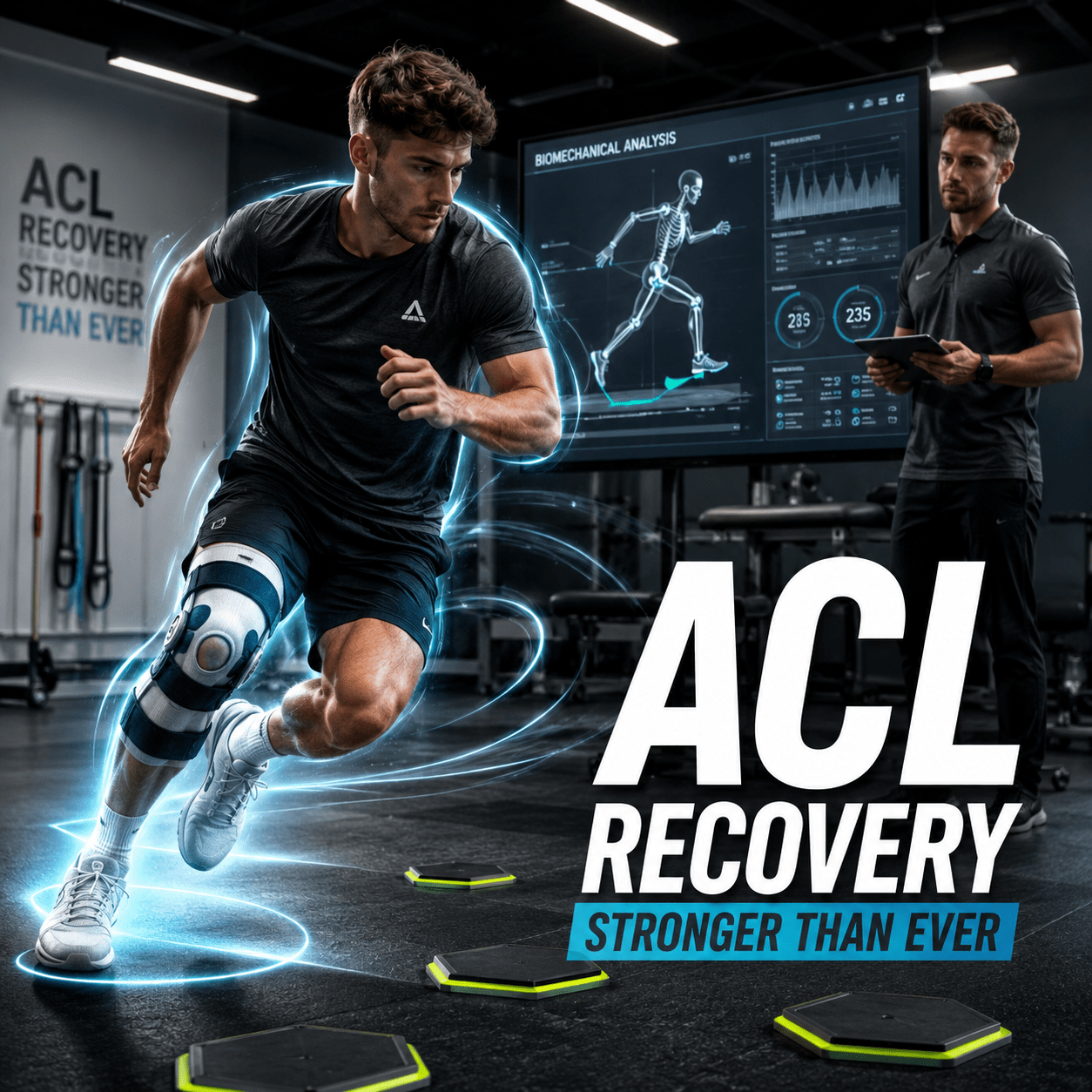
For decades, anterior cruciate ligament injuries have been viewed through a relatively straightforward lens. An athlete tears the Anterior Cruciate Ligament (ACL), undergoes reconstructive surgery, completes rehabilitation, regains strength and gradually returns to sport. Yet clinicians working in sports physiotherapy have long suspected that recovery is rarely as linear as textbooks suggest.
New research published in the International Journal of Sports Physical Therapy argues that many athletes experience what researchers describe as “rehabilitation plateaus”, periods in which physical progress slows or completely stagnates despite continued rehabilitation. The study, titled “ACL Rehabilitation Plateaus Across Athlete Populations: Two Case Reports and a Clinical Framework for Identifying Functional Stagnation”, was led by sports physiotherapist and clinical researcher E. Ram Kumar Sr. alongside collaborators from the SRM Institute of Science and Technology and Tagore College of Physiotherapy in Tamil Nadu, India.
Rather than focusing solely on surgical outcomes or rehabilitation timelines, the researchers examined a more complicated question. Why do some athletes fail to fully recover even when surgery is technically successful and rehabilitation protocols are followed? This research introduces the concept of the “ACL rehabilitation plateau,” a stage in post-operative rehabilitation during which athletes demonstrate stagnation in functional progress despite ongoing therapy. Through two clinical case reports involving athletes from different sporting backgrounds, the study identifies contributing factors, including insufficient muscle strength development, psychological barriers, and inadequate progression through advanced rehabilitation phases. The paper also proposes a practical clinical framework to help sports medicine professionals recognize, monitor, and address rehabilitation plateaus more effectively, potentially improving return-to-sport outcomes and reducing prolonged recovery periods.
The hidden problem in ACL recovery
ACL injuries are among the most feared injuries in sports. The ligament plays a crucial role in stabilising the knee during cutting, pivoting and explosive directional changes. Rupture often results in instability, impaired neuromuscular control, and substantial loss of athletic function.
Modern ACL reconstruction surgery has advanced considerably over the past two decades. However, the success of surgery does not automatically translate into a successful return to sport. Many athletes continue to experience persistent weakness, impaired movement mechanics, reduced confidence and delayed neuromuscular responses months after surgery.
According to the researchers, rehabilitation plateaus remain poorly recognised within musculoskeletal physiotherapy, particularly in ACL rehabilitation. In neurological rehabilitation, plateaus are already widely discussed as periods where recovery temporarily stalls despite ongoing therapy. The authors argue that similar phenomena occur in sports injury recovery but are frequently overlooked.
Their study explored two markedly different cases. One involved a 36-year-old recreational badminton player struggling with resistance training and rehabilitation adherence. The other involved a 16-year-old sub-elite football player whose rehabilitation was interrupted during a critical stage of neuromuscular development.
When recovery suddenly stops
The first athlete initially appeared to be progressing well after ACL reconstruction using a patellar tendon graft. Early rehabilitation restored knee range of motion, weight-bearing capacity, and basic quadriceps activation. Yet problems emerged during the transition from basic strengthening to higher load functional rehabilitation.
The patient had a longstanding aversion to weight training and associated heavy resistance exercise with physical discomfort and fatigue. As rehabilitation progressed, his participation became increasingly inconsistent due to occupational demands and psychological fatigue.
Clinicians observed that despite ongoing therapy, the athlete struggled to progress beyond low-load machine-based strengthening exercises. Objective testing later revealed persistent quadriceps and hamstring strength deficits exceeding 25 percent compared with the uninjured limb. The athlete remained unable to tolerate explosive single-leg drills, resisted lunges, and higher-intensity plyometric tasks.
Importantly, the issue was not pain. By the 12-month review, the patient reported no knee pain during daily activities. The real problem was that the body failed to adapt to increasing functional demands.
The researchers formally identified this as a rehabilitation plateau, defined as stagnation in physical and neuromuscular progress despite adherence to a structured rehabilitation programme. Ultimately, the athlete returned only to recreational badminton rather than competitive participation.
A very different athlete with the same challenge
The second case involved a teenage football player competing at district and school-level tournaments. Following ACL reconstruction, his initial rehabilitation programme included standard exercises such as heel slides, static quadriceps activation and balance drills. However, the programme lacked progressive overload and sport-specific neuromuscular training.
After three months, club-based rehabilitation ended, and the athlete experienced a further three-month interruption without structured therapy.
When he later resumed rehabilitation approximately seven months after surgery, clinicians identified significant deficits in balance, single-leg control, muscular strength, and explosive mechanics. Although he was pain-free, he struggled with sprint initiation, directional changes, and reactive movement patterns required for football.
Crucially, the researchers argued that the athlete’s difficulties extended beyond simple deconditioning. He demonstrated impaired perceptual motor integration, delayed force production, and reduced reactive control during sport-specific tasks.
In practical terms, the athlete no longer trusted his movement under dynamic conditions.
This distinction is important because ACL rehabilitation is increasingly understood as more than a muscular recovery process. Neurophysiological research suggests ACL injuries can alter motor planning, sensory processing and corticomotor control. Even after ligament reconstruction, the brain may continue to process movement differently.
The researchers, therefore, shifted rehabilitation towards perceptual neurocognitive training alongside traditional strength work.
Why the brain matters in sports rehabilitation
One of the most compelling aspects of the study is its emphasis on the brain-body connection during ACL recovery.
Traditional ACL rehabilitation has largely focused on restoring strength, mobility and joint stability. However, the researchers argue that advanced rehabilitation must also address perceptual processing, reactive decision making and neuromotor coordination.
For the teenage footballer, rehabilitation evolved into a sophisticated combination of gym-based resistance training, agility drills, and neurocognitive retraining. Sessions included externally cued foot tap drills, reactive split jump tasks, visual stimulus recognition exercises and dual task training combining movement with cognitive demands.
Position-specific football drills were also introduced. As a central midfielder, the athlete practiced ball reception under visual distraction, directional passing under time constraints, and reactive running tasks involving changing cues.
These interventions aimed to recreate the unpredictable sensory environment of competitive football while retraining neuromuscular timing and reactive control. By 12 months post-surgery, objective strength testing demonstrated restoration of limb symmetry. By 14 to 15 months, the athlete had returned to full-contact competitive football.
The contrast between the two cases highlights a key message emerging within modern sports medicine. Rehabilitation success is not determined solely by surgical repair or elapsed time. Recovery depends on whether rehabilitation stimuli adequately match the athlete’s evolving physical, neurological and psychological needs.
ACL reconstruction alone does not guarantee a successful return to sport. Our research highlights that many athletes experience periods where rehabilitation progress slows or stagnates despite ongoing treatment. Early identification of these rehabilitation plateaus allows clinicians to modify interventions and provide more individualized rehabilitation strategies, ultimately improving recovery and return-to-sport outcomes.
— Dr. E. Ram Kumar and Dr. R. Suvathi
The science behind rehabilitation plateaus
The concept of a rehabilitation plateau may seem intuitive, but the physiological mechanisms underlying it are complex.
The researchers suggest several potential contributors. Persistent quadriceps inhibition may limit force generation even after healing occurs. Altered corticomotor excitability may impair movement planning and reactive control. Fear of reinjury can reduce load acceptance and limit progression into advanced training phases.
External factors also play an important role. Inconsistent rehabilitation attendance, poor communication between therapists and athletes, inadequate progression of mechanical loading, and lack of sport-specific drills can all contribute to stagnation.
The study also reinforces the importance of progressive overload in ACL rehabilitation. Muscles, tendons and neural systems adapt only when exposed to sufficiently demanding stimuli. If rehabilitation remains overly conservative or repetitive, adaptation may plateau.
In the first case, underloading appeared to prevent progression into advanced strength adaptation. In the second, insufficient neuromuscular stimulation disrupted sport-specific motor development.
These findings align with growing evidence within sports physiotherapy that ACL rehabilitation should be outcome-based rather than strictly timeline-based.
Why aquatic therapy gained attention
Another notable feature of the study was the use of aquatic therapy throughout rehabilitation.
Hydrotherapy allowed both athletes to perform movement-based exercises with reduced joint loading. Water-based walking, supported squats, and controlled lower limb movements enabled neuromuscular activation while minimising mechanical stress on the knee.
For the older badminton player, aquatic therapy also reduced fear associated with movement and loading. For the footballer, it supported active recovery while maintaining conditioning during more demanding rehabilitation phases.
Aquatic therapy has increasingly gained recognition in sports medicine because it enables earlier movement exposure while preserving confidence and reducing discomfort. Although it cannot replace progressive strength training, it may function as an effective complementary intervention during plateau periods.
Reference
Ram Kumar, E., Suvathi, R., Khristi, J. J., Mathipriya, K., Nivetha, R., & Ubaithullah, A. B. (2026). ACL rehabilitation plateaus across athlete populations: Two case reports and a clinical framework for identifying functional stagnation. International Journal of Sports Physical Therapy, 21(3), 291 to 302. https://doi.org/10.26603/001c.156102