
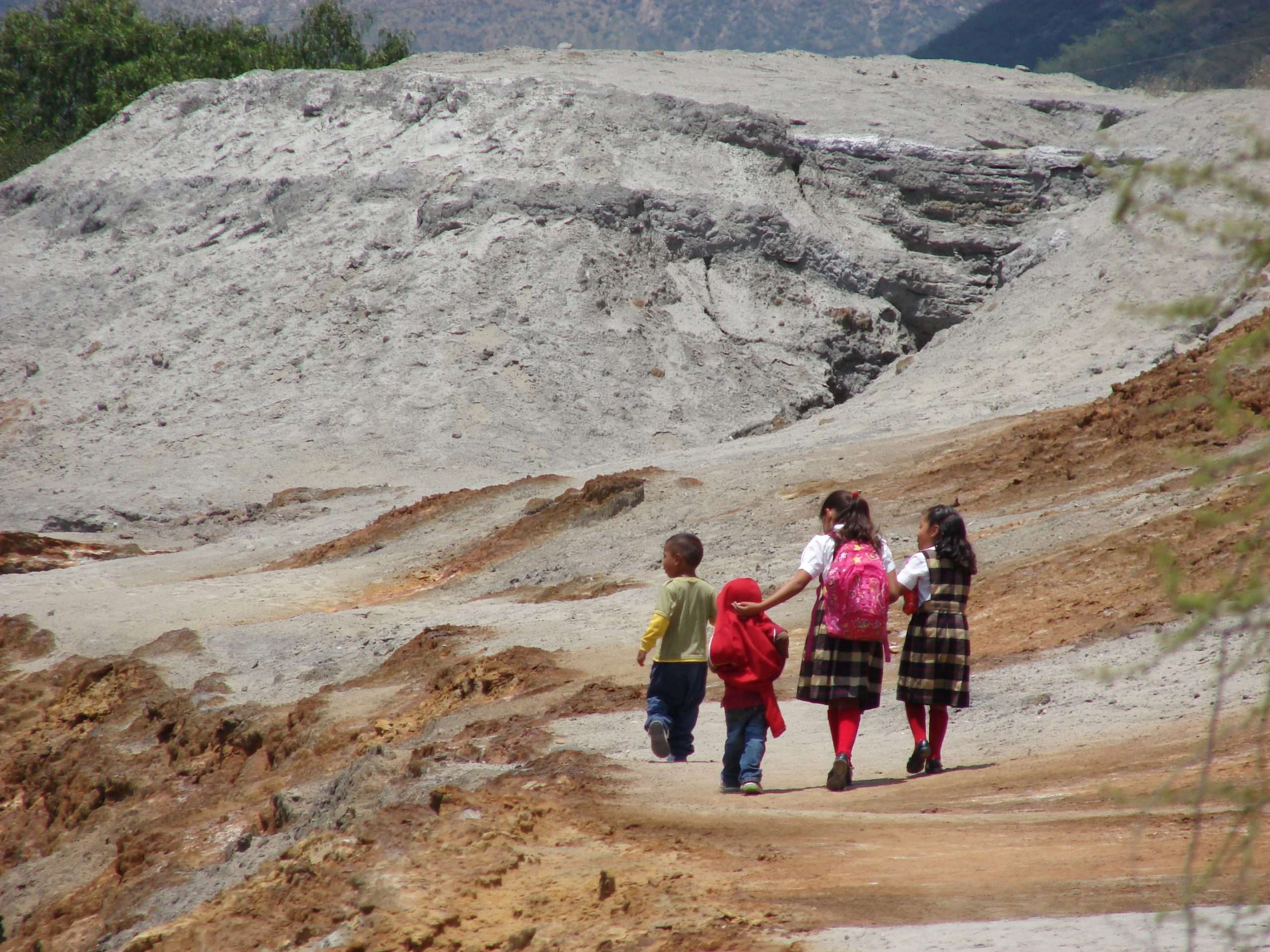
In many mining towns around the world, dust is a fact of everyday life. It settles on roads, playgrounds, windowsills, and schoolyards, often dismissed as a harmless nuisance. New research, however, suggests that this dust may carry far more serious consequences for human health than previously recognised. A recent peer-reviewed study led by Jesus E. Corona Sánchez has revealed that chronic exposure to urban dust contaminated with toxic elements can significantly elevate cancer risk, particularly among children living in mining communities.
The study, titled “Cancer Risks Associated with Chronic Exposure to Urban Dust May Increase in a Mining Town”, was published in the journal Soil and Sediment Contamination An International Journal. The research was conducted by scientists from the Colegio de Postgraduados in Mexico, a postgraduate public research university with a strong focus on environmental and agricultural sciences. By combining advanced chemical analysis with human health risk modelling, the authors provide one of the most detailed assessments to date of how mining-related dust exposure may affect urban populations.
A town shaped by centuries of mining
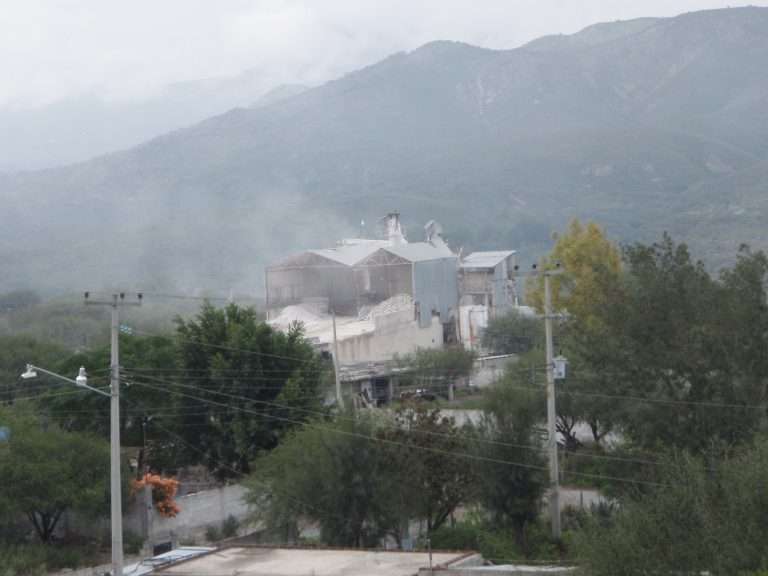
The research focuses on Zimapán, a semi-arid town in the state of Hidalgo, Mexico, where mining activity dates back to the early sixteenth century. For decades, mine tailings have been deposited in open areas without protective covers or containment measures. These tailings, composed of finely crushed rock residues, are rich in potentially toxic elements, including arsenic, lead, cadmium, zinc, and barium.
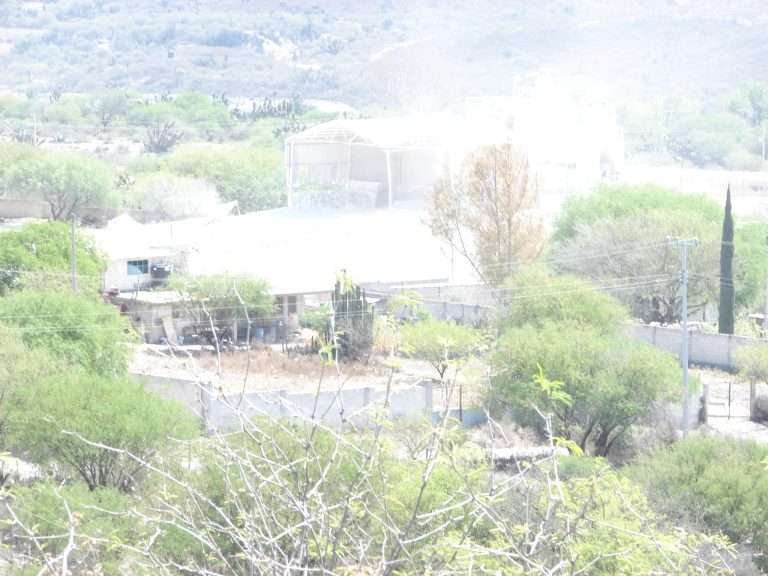
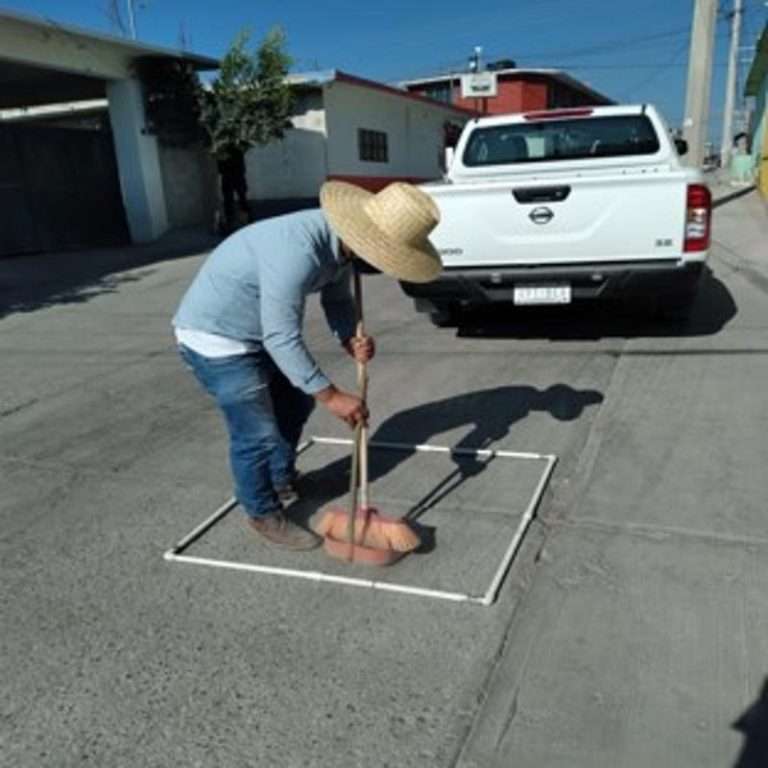
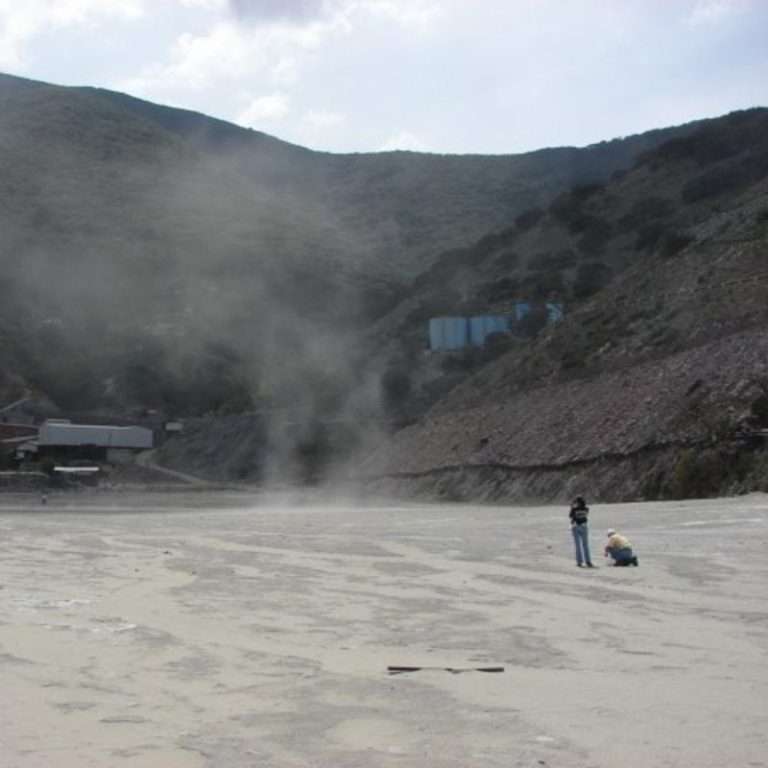
Strong seasonal winds and long dry periods allow fine particles from these tailings to disperse across the town. Dust accumulates on streets, pavements, residential areas, and near schools. Vehicles and daily human activity then resuspend the particles into the air, increasing the risk of inhalation and accidental ingestion. According to the authors, this constant recycling of contaminated dust creates a chronic exposure pathway that has been largely overlooked in public health assessments.
Why urban dust matters for human health
Urban dust is not chemically uniform. Its health relevance depends on particle size, chemical composition, and bioaccessibility. The researchers analysed dust particles smaller than 20 micrometers, a size range that is easily inhaled or ingested. Scanning electron microscopy revealed irregularly shaped particles with rough surfaces, consistent with material derived from mine tailings rather than natural soil.
More importantly, chemical analysis showed extremely high concentrations of arsenic and lead, along with elevated levels of zinc and cadmium. Pseudo-total arsenic concentrations exceeded 8000 milligrams per kilogram in areas closest to the mine tailings. These levels are orders of magnitude higher than soil quality guidelines used in many countries for residential land use.
For readers less familiar with environmental toxicology, the pseudo-total concentration is the overall amount of an element present in a material. While not all of this amount is absorbed by the body, it represents the maximum potential exposure burden. To better estimate actual health risk, the researchers also measured bioaccessible fractions.
What bio accessibility reveals about real exposure?
Bioaccessibility describes the proportion of a contaminant that dissolves in simulated bodily fluids and becomes available for absorption into the bloodstream. In this study, the authors assessed pulmonary bioaccessibility using a simulated lung fluid and gastric bioaccessibility using an acidic solution designed to mimic stomach conditions.
The findings were striking. While only arsenic and zinc showed measurable pulmonary bioaccessibility, their presence in lung simulated fluids indicates that inhaled dust can release toxic elements directly into the respiratory system. Gastric bioaccessibility results were even more concerning. Arsenic, lead, zinc, and cadmium all showed substantial solubility under stomach-like conditions, meaning that dust swallowed through hand-to-mouth contact can become chemically active inside the body.
In some areas farther from the mine tailings, gastric bioaccessible arsenic concentrations were unexpectedly higher than in areas closer to the source. This suggests that dust transport, deposition patterns, and particle ageing may influence toxicity in complex ways. The authors emphasise that total concentration alone cannot fully predict health impact without considering bioaccessibility.
Children as the most vulnerable population
One of the most important findings of the study relates to the differential risk between children and adults. Using standard risk assessment models from the United States Environmental Protection Agency, the researchers calculated chronic daily intake, hazard quotient, and cancer risk values for both age groups.
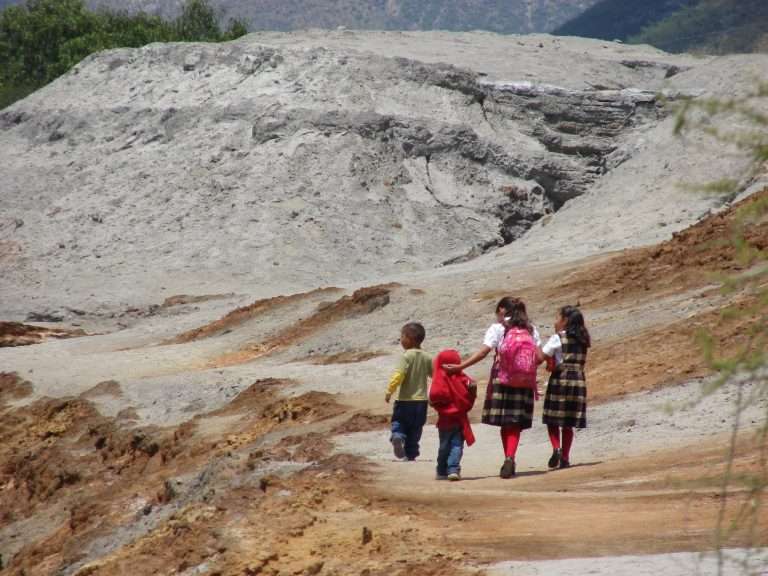
Children were found to be consistently more vulnerable. This is partly because children ingest more dust relative to their body weight through normal play behaviour and frequent hand-to-mouth contact. The study assumed an average dust ingestion rate of 200 milligrams per day for children, compared with 100 milligrams per day for adults.
As a result, hazard quotients for arsenic and lead exceeded safe thresholds in children across all sampled areas. A hazard quotient greater than one indicates a potential for non-cancer health effects. In some locations, arsenic hazard quotients in children were hundreds of times higher than this benchmark. These levels are associated with neurological impairment, skin disorders, and developmental effects.
Cancer risk and long-term exposure
Cancer risk assessment was conducted specifically for arsenic, as it is classified as a known human carcinogen with established slope factors for ingestion exposure. The acceptable lifetime cancer risk range used by regulatory agencies typically falls between one in a million and one in ten thousand.
In Zimapan, estimated cancer risk values for arsenic exceeded these limits by several orders of magnitude. For children, average cancer risk values were more than one thousand times higher than the maximum acceptable threshold. Adults also showed elevated cancer risk, although at lower levels than children, due to reduced dust ingestion rates.
These findings do not mean that every exposed individual will develop cancer. Rather, they indicate a statistically significant increase in population level risk over long periods of exposure. According to the authors, chronic exposure to arsenic-laden urban dust could contribute to higher rates of lung, skin, and other cancers in mining communities if no mitigation measures are implemented.
Chronic exposure to toxic elements contained in PM may cause cancer conditions in children in mining towns.
-Rogelio Carrillo Gonzalez
Why this research matters beyond Mexico
Although the research was conducted in a specific Mexican town, its implications extend far beyond national borders. Many mining regions across Latin America, Africa, Asia, and parts of Europe share similar characteristics. These include long mining histories, poorly contained tailings, arid or semi-arid climates, and growing urban populations living close to legacy waste sites.
Urban dust contamination represents a global environmental health issue that has received far less attention than water or food contamination. This study provides a methodological framework for assessing dust-related exposure using both chemical analysis and health risk modelling. It also underscores the importance of considering bioaccessibility rather than relying solely on total metal concentrations.
Managing risk while mining continues
The authors are careful to acknowledge the economic importance of mining. Rather than calling for the elimination of mining activity, they propose practical mitigation strategies to reduce dust dispersion and human exposure. These include covering tailings with soil or synthetic barriers, establishing vegetation that traps dust particles, and implementing regular cleaning practices in homes and public spaces.
They also call on environmental authorities to establish regulatory limits for toxic elements in urban dust, similar to those that exist for soil and water. Currently, few countries have enforceable standards addressing dust-borne contaminants in residential environments.
Reference
Corona Sánchez, J. E., González Chávez, M. D. C. A., Tapia Maruri, D., & Carrillo González, R. (2025). Cancer risks associated with chronic exposure to urban dust may increase in a mining town. Soil and Sediment Contamination An International Journal, 34(7), 1821 to 1840. https://doi.org/10.1080/15320383.2025.2462981
Coauthor

Ma del Carmen Gonzalez-Chavez has worked at the Colegio de Postgraduados since 1984. She holds a degree in Pharmaceutical Chemistry and Biology from the National Autonomous University of Mexico, a Master of Science degree in Soil Science from the Colegio de Postgraduados, and a PhD from the University of Reading, United Kingdom. She received a fellowship as a junior researcher at the Sustainable Agricultural Systems Laboratory (USDA). She was a visiting researcher at Texas A&M University and conducted short-term research at Argonne National Laboratory. Her h-index is 28, with 3,564 citations to her research, which spans 16 SciVal topics and 194.