
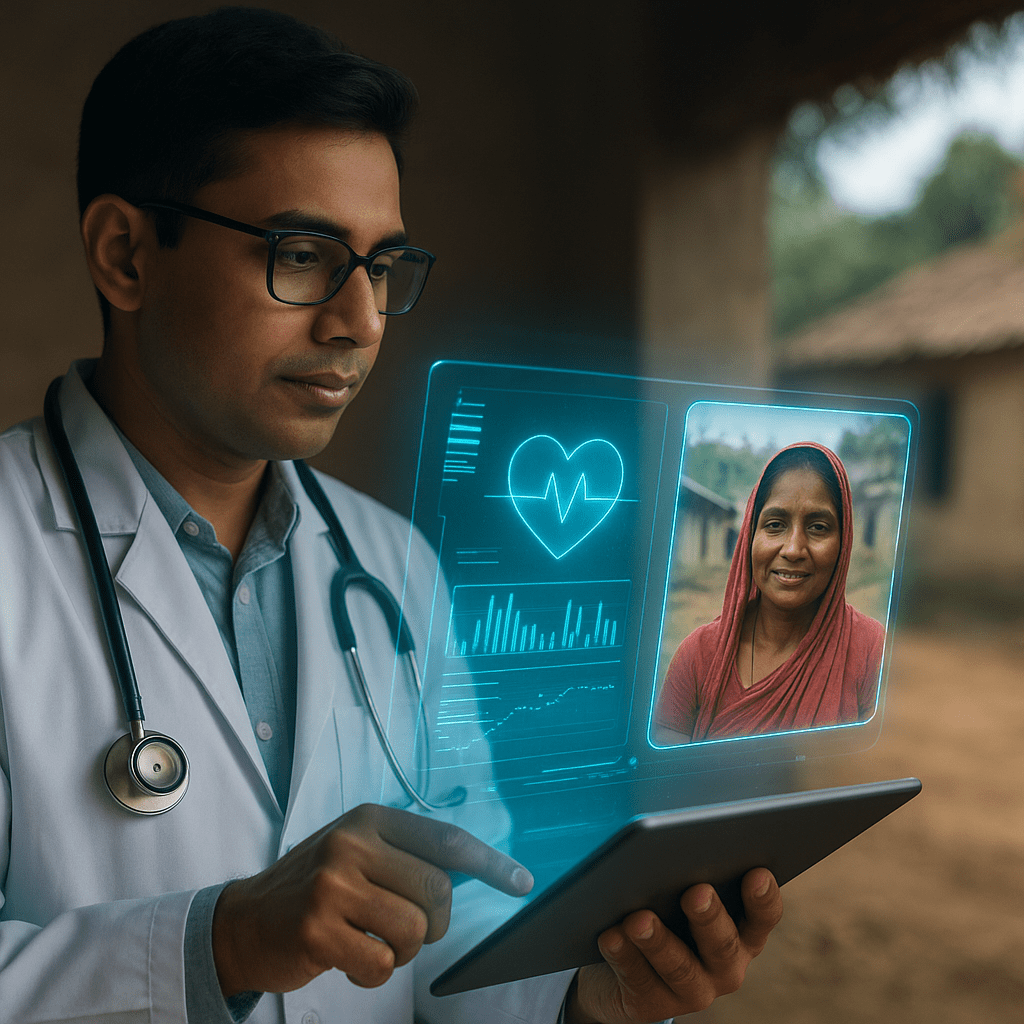
In a rural clinic in sub-Saharan Africa, patients often walk for hours to see a doctor. Many wait weeks for an appointment, only to find that the specialist they need is unavailable. Meanwhile, across Singapore, patients with rheumatoid arthritis open an app to track pain levels, send instant reports to their doctors, and receive feedback within hours. This striking contrast underscores a defining question of modern medicine: can digital health truly bridge the gap between the privileged and the underserved?
That is the challenge examined by Dr Anindita Santosa of Aaria Rheumatology, Singapore, along with her co-authors James Weiquan Li of Changi General Hospital and Tze Chin Tan of Singapore General Hospital. Their review, Digital Health for Equitable Rheumatic Care: Integrating Real-World Experiences to Guide Policy Pathways, published in Healthcare in, explores how telemedicine, mobile apps, artificial intelligence, and wearable devices are reshaping rheumatology worldwide.
The research evaluates how these technologies are used in both high-income countries and low- and middle-income countries (LMICs), identifying their promise and their pitfalls. It concludes that digital health could transform the management of rheumatic diseases, but only if systemic barriers like poor infrastructure, low digital literacy, and the global digital divide are addressed with urgency.
Inequality in rheumatic care
Rheumatic diseases are chronic, painful, and costly to treat. They disproportionately affect disadvantaged populations. Patients in LMICs are particularly at risk, facing high mortality and loss of life expectancy from diseases such as systemic sclerosis, idiopathic inflammatory myopathies, and Takayasu arteritis. In these regions, the shortage of trained rheumatologists compounds the burden.
During the COVID-19 pandemic, digital health surged into prominence. Telemedicine became a lifeline when in-person visits were impossible. Yet not everyone benefited equally. Wealthier patients in developed countries had access to fast internet and secure platforms. Poorer patients, especially in rural Africa and South Asia, were left behind. Frequent internet shutdowns in countries like Ethiopia and Sudan further widened the gap.
This inequity reflects broader structural divides. Patients from minority and low-income backgrounds continue to report worse outcomes, even when clinical care appears similar. Black, Asian, and Minority Ethnic patients in the UK, for example, show poorer outcomes in early inflammatory arthritis compared with their White counterparts. These differences cannot be dismissed as biological. They stem from systemic inequities embedded in healthcare delivery.
Apps and wearables as lifelines
One of the most striking findings from Santosa and colleagues’ review is the proliferation of digital tools designed to support rheumatology care. Apps like RheumaHelper, Arthritis Tracker, and RA Monitor offer symptom tracking, medication reminders, and direct communication with providers. Wearables add another layer, monitoring physical activity, vital signs, and sleep quality.
In high-income countries, these apps are increasingly integrated into clinical workflows. Swiss and UK platforms link daily symptom reports directly to electronic health records. This allows clinicians to monitor disease activity in real time and adjust treatments more effectively.
For patients in LMICs, the impact can be transformative. A mobile phone app that reminds a patient in rural Ghana to take medication may mean the difference between controlled symptoms and debilitating flares. Digital health tools offer a low-cost way to extend scarce specialist expertise to patients scattered across vast regions.
Telemedicine and its double edge
Telemedicine is perhaps the most visible face of digital health. In Europe and North America, it is now routine for follow-up visits in rheumatology. Patients appreciate the reduced travel time and convenience. Yet even in these wealthy regions, questions persist about diagnostic accuracy and the loss of relational support that in-person consultations provide.
In LMICs, telemedicine holds enormous promise but faces serious obstacles. The French TeleRheumatology project shows how coordinated systems can expand access, but socioeconomic barriers and infrastructure gaps persist. In regions where electricity cuts are frequent, a video consultation can collapse mid-sentence, leaving patients frustrated and untreated.
The pandemic demonstrated both sides of the coin. It proved that remote consultations could sustain care even in crises. But it also showed how fragile digital systems can be, especially when deployed without addressing basic inequalities in infrastructure.
Artificial intelligence and the promise of prediction
Beyond apps and telemedicine, artificial intelligence (AI) is emerging as a powerful force in rheumatology. In high-income settings, deep learning algorithms now analyse X-rays and MRI scans to detect joint erosion and inflammation. Some models achieve diagnostic accuracies above 90 per cent. AI tools can also predict treatment responses, potentially guiding clinicians to tailor therapies more effectively.
In LMICs, the potential is even greater. Where specialists are scarce, AI-powered diagnostic systems could extend expertise to remote clinics. A general practitioner equipped with a smartphone-based AI tool might diagnose rheumatoid arthritis more reliably than without it.
Yet risks abound. AI models are only as good as the data on which they are trained. If training datasets lack diversity, algorithmic bias may worsen health inequities rather than resolve them. The opacity of “black box” systems also raises questions about accountability. Regulators worldwide are grappling with how to govern AI in healthcare. Without careful oversight, the promise of AI could turn into another form of exclusion.
Patient voices in the digital transition
The shift towards digital health is not just about technology; it is about people. Patients’ experiences of these tools vary widely. Many appreciate the flexibility of learning through digital platforms, the convenience of symptom tracking apps, and the immediacy of feedback.
Yet there are concerns. Some patients report missing the human connection that face-to-face care provides. Others find digital interfaces overwhelming or too impersonal. For older adults, particularly in LMICs, digital literacy remains a formidable barrier.
These insights highlight a critical lesson: digital health must be designed with patients, not merely for them. Without user-centred design, even the most sophisticated tool may fail to meet the real needs of those it seeks to serve.
Policies to bridge the digital divide
The review stresses that technology alone cannot fix inequities. Policy frameworks are essential. Governments must invest in digital infrastructure, particularly in LMICs where electricity and internet services are unreliable. Training programmes for healthcare professionals are equally important, ensuring that doctors and nurses can use digital tools effectively.
International collaboration can accelerate progress. Programmes supported by organisations like the European Alliance of Associations for Rheumatology (EULAR) already provide training and guidance to countries with fewer resources. Partnerships that share knowledge, infrastructure, and best practices will be vital.
Regulation also matters. Digital health apps must meet standards for safety, effectiveness, and privacy. Without strong oversight, vulnerable populations risk being exposed to poor-quality or even harmful technologies. Policymakers need to balance innovation with equity and accountability.
Towards a fairer digital future
The review from Singapore underscores a central point: technology must serve equity, not just efficiency. Rheumatic care offers a test case for how digital health can be integrated into diverse healthcare systems. Success will depend on aligning innovation with inclusive policies, robust infrastructure, and patient-centred design.
For millions living with rheumatic diseases, it could mean earlier diagnosis, better treatment, and improved quality of life. But achieving that vision requires more than technology. It requires political will, regulatory frameworks, and an unwavering commitment to equity.
So the question remains: as we embrace the digital future of healthcare, will we use it to build a more equal world, or will we allow old inequalities to persist behind new screens?
Reference
Santosa, A., Li, J. W., & Tan, T. C. (2025). Digital health for equitable rheumatic care: Integrating real-world experiences to guide policy pathways. Healthcare, 13(4), 438. https://doi.org/10.3390/healthcare13040438