
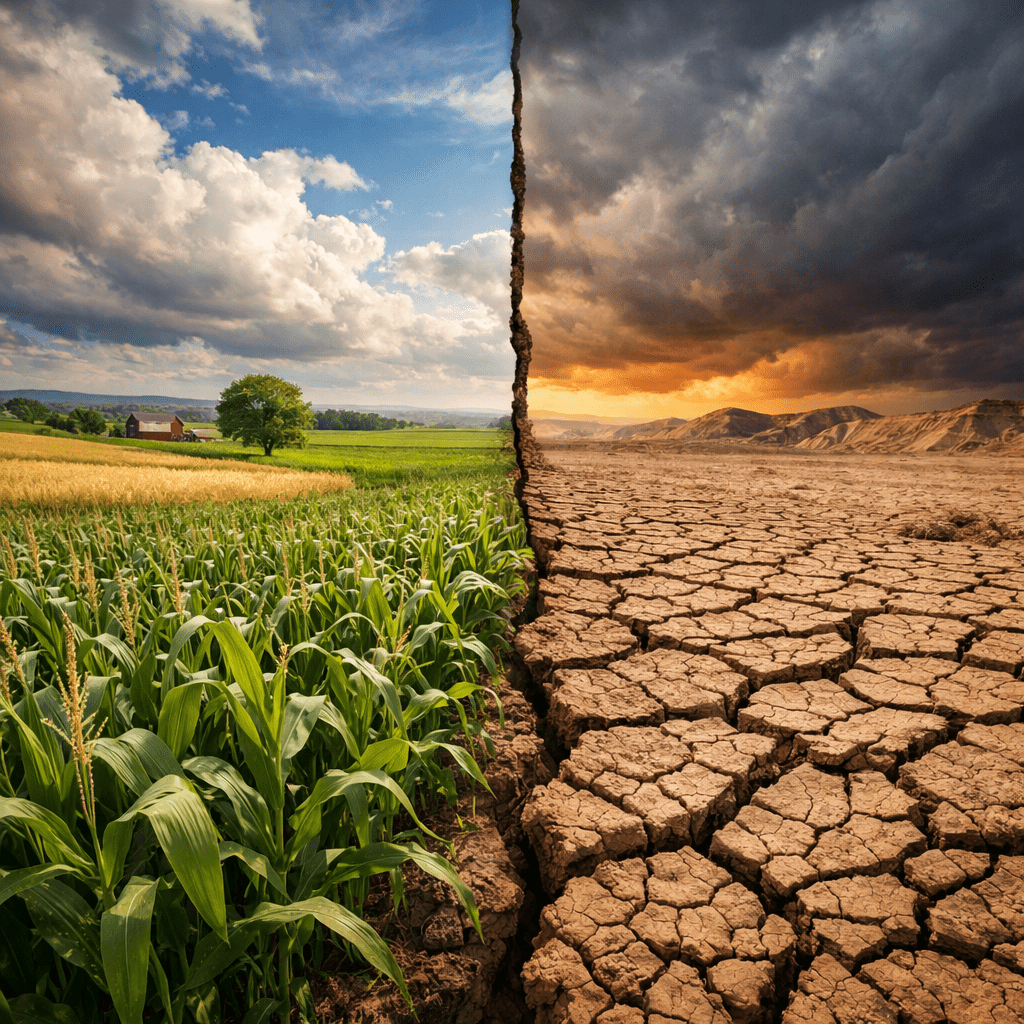
Climate change is often framed as a global environmental crisis. Yet for many communities, it is equally a crisis of inequality. In her research article, “Environmental Justice in a Changing Climate: Addressing Inequalities in Egypt, Tunisia, and Syria”, published in the 7th Annual Conference on the Politics of Inequality in the Arab World, American University, and authored by Nivin Abdelmeguid of the Faculty of Economics and Political Science at Cairo University, the argument is clear. Climate change does not affect all citizens equally. It amplifies pre-existing structural inequalities and exposes governance failures across the Arab world.
The article examines the intersection of climate change, governance, and environmental justice in Egypt, Tunisia, and Syria. It situates environmental degradation within broader political economies and argues that climate change disproportionately affects marginalized groups, including women, refugees, rural communities, and the urban poor. The study challenges conventional climate narratives and insists that climate resilience must be grounded in social equity. The original article can be accessed here: Environmental Justice in a Changing Climate: Addressing Inequalities in Egypt, Tunisia, and Syria.
Climate justice beyond carbon emissions
Public debate on climate change frequently focuses on greenhouse gas emissions, mitigation targets, and renewable energy transitions. Abdelmeguid’s research shifts attention towards environmental justice, a framework that examines how environmental harms and benefits are distributed across societies. The paper argues that in politically fragile contexts such as Egypt, Tunisia, and Syria, climate vulnerability is shaped by entrenched socioeconomic disparities and authoritarian governance structures.
In these contexts, climate change intensifies water scarcity, food insecurity, and public health risks. These impacts are not randomly distributed. They fall hardest on communities with limited adaptive capacity. Those who contribute least to global emissions are often those who bear the greatest consequences of climate disruption. This dynamic lies at the heart of climate inequality and environmental justice in the Middle East.
Water scarcity and climate vulnerability
Water scarcity is among the most acute climate risks facing the region. Egypt’s dependence on the Nile River makes it highly vulnerable to shifts in precipitation patterns and rising temperatures. Climate models suggest that Nile inflows could decline significantly by the end of the century, placing enormous pressure on agricultural production and food systems. Agriculture remains a major employer, and reduced water availability directly threatens rural livelihoods.
Tunisia faces declining rainfall, prolonged droughts, and inadequate water management infrastructure. These challenges exacerbate socioeconomic inequality between urban and rural populations. In Syria, a prolonged drought prior to the outbreak of civil war devastated agricultural productivity and contributed to large-scale rural-to-urban migration. The research does not claim that climate change caused the conflict. However, it identifies climate stress as a contributing factor that intensified existing grievances linked to governance and resource distribution.
Food insecurity and economic instability
Food insecurity emerges as another critical theme. Egypt, as the most populous country in the Arab world, relies heavily on stable agricultural production and food imports. Climate variability, rising temperatures, and water scarcity threaten staple crops such as wheat and rice. As food prices fluctuate, low-income households that spend a significant proportion of their income on food are disproportionately affected.
In Tunisia, climate change intersects with economic stagnation and political fragility. The agricultural sector employs a substantial share of the workforce. Declining yields, soil salinization in coastal areas, and increased drought frequency undermine rural economies. Rising food prices have triggered social unrest in recent years, illustrating how climate impacts can translate into political instability.
As temperatures rise, so do disparities, where those least responsible face the harshest consequences, and true climate action must begin with justice and inclusion.
—Nivin Abdelmeguid
Public health under climate stress
The research also highlights climate-related health risks. Rising temperatures increase the incidence of heat-related illnesses, particularly among elderly populations and outdoor laborers. In densely populated urban areas such as Cairo, poor air quality interacts with climate stressors to exacerbate respiratory diseases, including chronic obstructive pulmonary disease.
Water scarcity and flooding contribute to the spread of waterborne diseases. In Syria, the destruction of healthcare infrastructure has left vulnerable populations exposed to communicable diseases and malnutrition. Mental health impacts are also noted. Communities facing displacement, conflict, and climate uncertainty experience elevated levels of anxiety and psychological stress.
Governance gaps and elite priorities
Abdelmeguid argues that governmental responses in Egypt, Tunisia, and Syria often prioritize economic growth and elite interests over inclusive climate adaptation. In Egypt, large-scale infrastructure projects and urban expansion initiatives are presented as engines of modernization. However, informal settlements and marginalized communities frequently lack adequate drainage systems, sanitation infrastructure, and access to healthcare.
Tunisia has made international climate commitments and adopted policy frameworks aligned with global climate agreements. Yet implementation gaps persist. Bureaucratic inertia and political instability hinder equitable resource distribution. Rural communities remain underrepresented in climate decision-making processes.
Syria’s governance crisis is compounded by years of civil war. Environmental regulation and climate adaptation have been sidelined in favor of immediate survival and military priorities. The absence of coherent state institutions undermines long-term climate resilience planning. The research suggests that rebuilding efforts must integrate environmental rehabilitation and sustainable resource management to ensure durable post-conflict recovery.
Grassroots activism and environmental mobilization
Despite structural constraints, grassroots environmental activism is emerging as a significant force. In Egypt, youth-led movements have used social media to raise awareness about pollution of the Nile and waste management. These initiatives reflect a broader trend of digital environmental activism in the Middle East.
In Tunisia, environmental movements link climate justice with socioeconomic rights. Campaigns advocating sustainable agriculture also address land ownership and gender inequality. Activists argue that environmental sustainability cannot be separated from social equity.
In Syria, environmental organizations operating under extremely difficult conditions have documented deforestation, water contamination, and soil degradation. These efforts emphasize that environmental restoration must be central to any reconstruction agenda. The study suggests that civil society engagement enhances accountability and can reshape climate governance.
Towards equitable climate policy
The article concludes with policy recommendations tailored to each national context. In Egypt, inclusive infrastructure planning and environmental impact assessments are essential. Public consultation mechanisms could enhance transparency and integrate local knowledge into adaptation strategies. Investment in renewable energy and green jobs could simultaneously address unemployment and greenhouse gas emissions.
Tunisia’s relatively stable institutional framework offers opportunities to more effectively integrate civil society into climate governance. Capacity building for rural communities, particularly women and youth, could strengthen adaptive capacity.
In Syria, humanitarian responses must incorporate climate resilience. Community-based ecosystem rehabilitation and sustainable land management could reduce future vulnerability. International cooperation will be critical in rebuilding infrastructure and supporting environmental governance.
Reference
Abdelmeguid, N. (2025). Environmental Justice in a Changing Climate: Addressing Inequalities in Egypt, Tunisia, and Syria. AUC Political Science Department’s 7th Annual Conference on the Politics of Inequality in the Arab World, American University in Cairo. https://doi.org/10.5281/zenodo.16680785