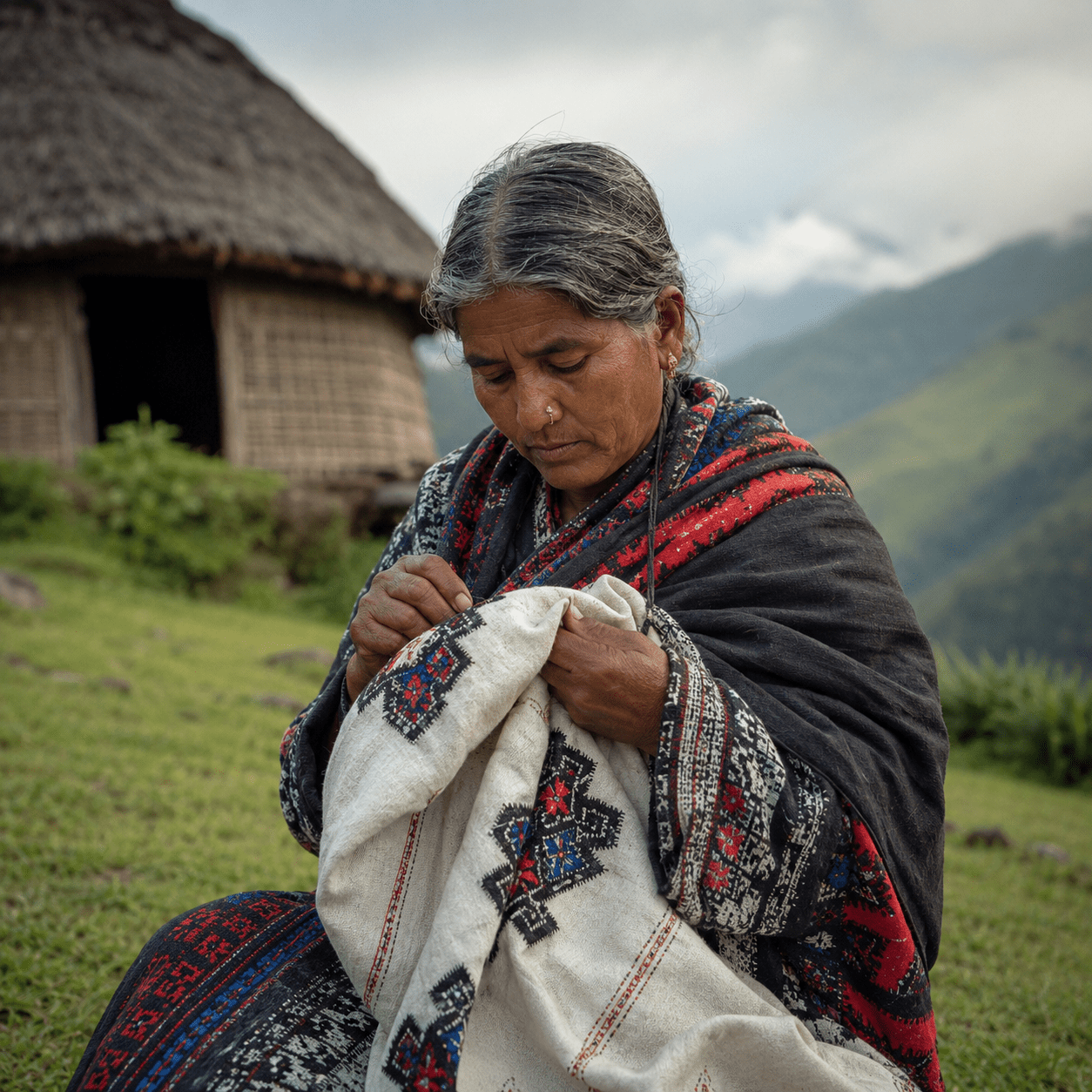
A cool afternoon in the upper Nilgiri Hills and I watched a Toda woman carefully embroider a traditional Putukuli shawl outside her Mund – the unique settlement of the Toda community. Her hands worked slowly over the thick white cloth, sewing in black, red, and blue geometric designs that were centuries old. It was not just a work of art. It was a vibrant manifestation of Indigenous knowledge, culture, and history. I asked her how long it would take to complete the shawl, and she smiled and said, “More than a month.” Then she quietly added that the amount she would get for weeks of careful work was only a small fraction of what tourists would eventually pay. That discussion raised a question that goes beyond the Nilgiris: How does cultural recognition, which is not necessarily tied to economic security, translate into economic security for the communities that hold that heritage?
This question lies at the heart of an important area of research that connects economics, geography, and sustainability. Scientists are increasingly interested in livelihood systems and value chains to explain why communities that produce culturally valuable goods are often economically vulnerable. The Toda artisans are a fascinating example of this paradox.
Looking beyond recognition
Traditional crafts are often recognized as a symbol of national heritage. They are recognized by governments, displayed in museums, and bought by tourists as real cultural products. This recognition is significant as it contributes to the maintenance of Traditional crafts and the reinforcement of cultural identity. Ghose and Ali (2023), published in the Brazilian Journal of International Law, similarly emphasise the importance of protecting traditional cultural expressions and traditional knowledge within handicraft production. However, recognition is not the only factor that will decide whether artisans can sustain themselves.
In the course of our field research in various Toda settlements, numerous artisans spoke of spending weeks embroidering textiles that were sold for much more than they were paid. While the craft is gaining more visibility through tourism and heritage promotion, the economic benefits are not always felt by the women whose skills enable the creation of these products.
Inside a handmade shawl
Every product follows a journey before reaching the consumer. Economists refer to this journey as a value chain, i.e., the sequence of activities involved in producing, transporting, marketing, and selling a product. These stages are more easily discernible for industrial goods. However, the process is not as obvious with Indigenous handicrafts.
A Toda artisan creates the embroidered textile through weeks of specialized labor and inherited knowledge. The product can then be processed through cooperatives, traders, retailers, or tourism outlets before being appreciated by visitors as a unique cultural artifact. Value is added at every step, not just in the making of the craft, but also in the branding, transportation, marketing and customer access. The key scientific question is who will benefit from that added value?
Research on value chains shows that those who control market access often capture a larger share of economic returns than those who produce the product. Scrase (2003), published in Third World Quarterly, demonstrates how artisan labour can remain economically precarious despite the cultural and commercial value of handmade production. This is not necessarily unfairness to the individual. Rather, it uncovers the influence of markets, institutions, and geography on opportunities.
The Toda settlements are situated in the hilly areas of the Nilgiris. While this environment has helped preserve distinctive cultural traditions, it also creates challenges for accessing larger markets. Limited direct contact with consumers, along with distance and transport costs, can make people more reliant on intermediaries. These structural conditions affect livelihoods as much as artistic ability. This is why value-chain research is gaining in significance in development studies.
Livelihoods are more than income
To many, livelihood simply means earning money. Researchers, however, use a much broader concept. A sustainable livelihood is the capacity of people and communities to sustain their livelihoods in the face of social, economic, and environmental change. Income is just one component of the equation. Livelihood sustainability results from skills, cultural knowledge, health, social relationships, natural resources, and resilience.
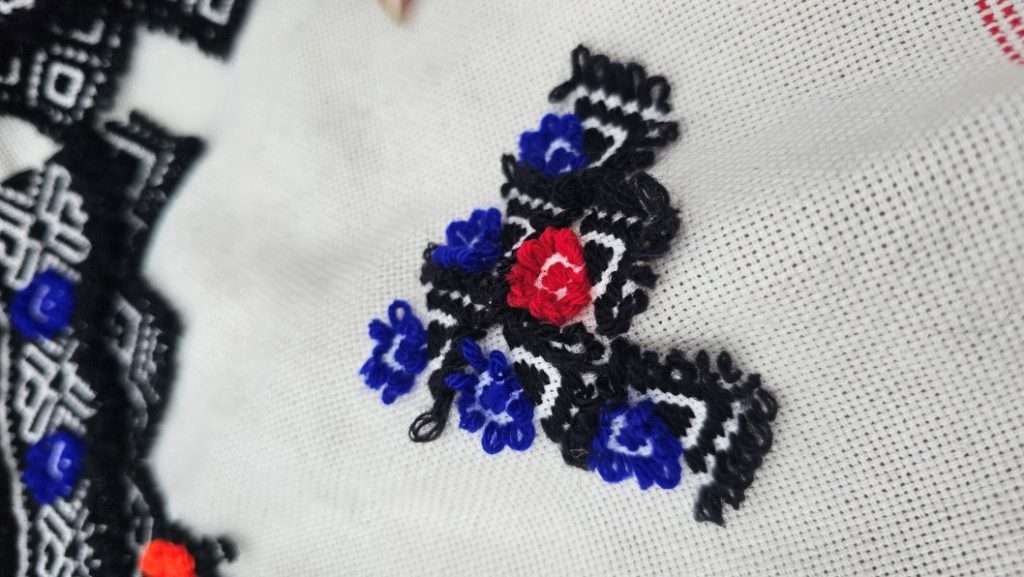
This is well exemplified by the Toda community. Embroidery is not just an economic activity. It is a symbol of identity, ceremony, and an advanced system of Indigenous knowledge handed down from one generation to the next. Each motif reflects cultural memory, while every completed Putukuli carries meanings that extend beyond commercial value.
However, sustainable livelihoods must also ensure economic security through cultural knowledge. If the artisans are unable to secure a regular income from their work, despite the high value of the heritage products they create, the future of this knowledge is uncertain. This raises another significant scientific question: Can a cultural tradition remain sustainable if the livelihoods that support it are not?
The invisible labor behind cultural heritage
A significant discovery from our fieldwork was the pivotal role women played in preserving Toda embroidery. In all the settlements we visited, embroidery was almost entirely the domain of women who were able to combine this highly skilled activity with domestic chores, child care and other daily tasks.
Creating a Putukuli is physically demanding. It requires exceptional precision, prolonged concentration and countless hours of manual stitching. Some craftsmen shared their experience of back pain, neck strain and loss of eyesight after years of embroidering. However, these work-related difficulties are not often mentioned in the context of promoting traditional crafts as cultural heritage.
Thus, heritage conservation is not just about preserving artifacts or techniques; it’s about the people who work to maintain those traditions. Such work is increasingly referred to as invisible labor, as much of its value is not visible to markets and public policy. The final product is a work of art that consumers appreciate, but few are aware of the weeks of work, physical stamina, and inherited skills that went into creating it
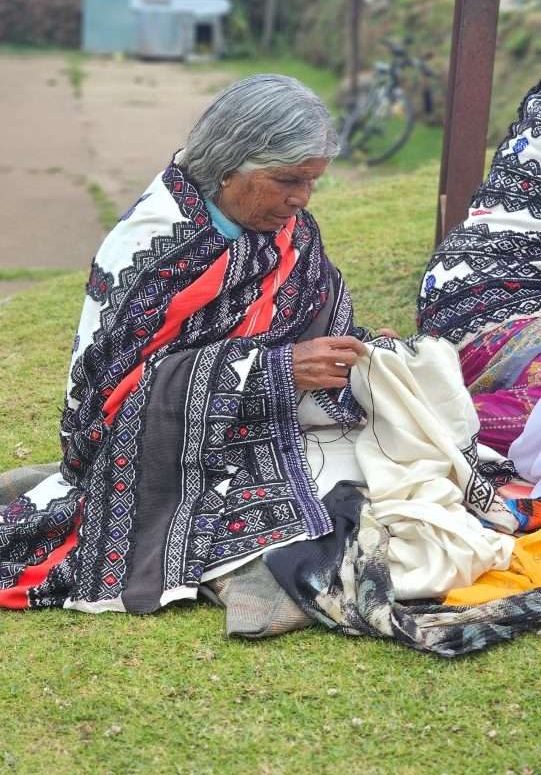
Our field research reminded us that preserving Indigenous heritage is not simply about protecting beautiful objects. It is about recognising the knowledge, labour and dignity of the communities who create them.
—Soumyabrata Mondal
When young people look beyond tradition
The Toda community, like many indigenous communities around the world, is undergoing social and economic change. Better educational opportunities, improved connectivity and expanding employment options have created new aspirations for younger generations.
During our conversations, many young artisans expressed pride in their cultural traditions. But they wondered whether embroidery was enough to secure their future. They were not culturally concerned, but more practically. When months of hard work don’t guarantee a stable income, other jobs are appealing.
This illustrates what researchers describe as livelihood transition, i.e., the gradual shift from traditional occupations to new economic opportunities. Such transitions are not necessarily negative. They can enhance education, income, and social mobility. The problem is that economic forces, not personal preferences, drive the loss of traditional knowledge.
Call for a sustainable heritage economy
The Toda experience shows the importance of a partnership between science, policy and local communities for sustainable livelihoods.
Value chain analysis is a method used by economists to determine where economic value is lost. Geographers study the relationship between remoteness and market participation and accessibility. Social scientists examine the influence of gender and institutions and community organisations on livelihood opportunities. These views offer concrete solutions for enhancing heritage-based economies.
Artisans can use digital platforms to connect with consumers directly, bypassing the need for several intermediaries. Geographic Information Systems (GIS) can be used to detect spatial barriers to market access. Producer cooperatives can help to enhance collective bargaining and price transparency. Community-led tourism can help to ensure that Indigenous communities are more involved in decision-making on how their culture is represented and marketed. Importantly, these approaches should reinforce, rather than supplant, traditional knowledge systems. Sustainable development is achieved when scientific innovation is integrated with Indigenous knowledge, not in place of it.
The Toda artisans have reminded us that cultural heritage is not just a legacy of the past. It is one that has to be economically and socially sustainable now if it’s going to remain so in the future.
References
Ghose, A., & Ali, S. M. (2023). Protection and preservation of traditional cultural expression & traditional knowledge in handicraft industry: advocating the need for a global cultural policy framework. Braz. J. Int’l l., 20, 473. https://doi.org/10.5102/rdi.v20i2.9109
Scrase, T. J. (2003). Precarious production: Globalisation and artisan labour in the Third World. Third World Quarterly, 24(3), 449–461. https://doi.org/10.1080/0143659032000084401