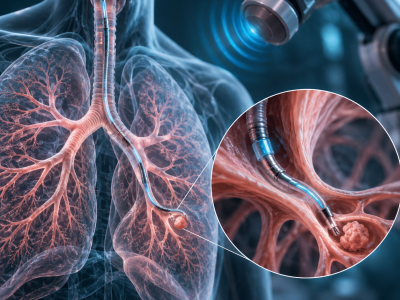

Cardiovascular disease remains the leading cause of mortality worldwide, yet early diagnosis still depends heavily on brief clinical encounters and the trained ear of a physician. A recent review titled Sensors for Heart Sound Analysis: A Review by Dr Vishwanath Madhava Shervegar of the Department of Electronics and Communication Engineering at MIT Kundapura, published in the IEEE Sensors Journal, explores how emerging heart sound sensors, digital stethoscope technologies, and AI cardiac monitoring systems are reshaping the future of cardiovascular care.
Rather than replacing clinicians, these intelligent sensing platforms are expanding their diagnostic reach. They allow heart sounds to be recorded continuously, analysed automatically, and transmitted remotely, enabling earlier detection of cardiac abnormalities and supporting personalised healthcare across clinical and home environments.
Why listening to the heart still matters
Heart sounds provide essential information about mechanical cardiac activity. The primary sounds known as S1 and S2 reflect valve closure events, while murmurs, clicks, and gallops can indicate pathological conditions such as valve stenosis, septal defects, or heart failure. For generations, clinicians have relied on auscultation using acoustic stethoscopes to interpret these signals.
However, conventional auscultation is inherently subjective. Diagnostic interpretation varies between observers and subtle acoustic signatures may remain undetected, particularly in noisy environments or early disease stages. These limitations have encouraged the development of phonocardiogram analysis systems capable of digitising heart sounds and extracting clinically meaningful features.
Modern sensor technologies now provide a pathway towards objective cardiac auscultation that integrates signal processing, wireless transmission, and artificial intelligence-based classification.
The shift from stethoscopes to smart sensing platforms
Electronic and sensor-based auscultation systems convert mechanical chest wall vibrations into digital signals suitable for computational analysis. This transformation allows clinicians and researchers to examine heart sounds using spectral decomposition, waveform segmentation, and machine learning classification methods.
Digital stethoscope platforms equipped with acoustic microphones can amplify heart sounds up to twenty-four times compared with traditional devices. These systems reduce ambient noise and enable storage and sharing of auscultation recordings through telemedicine networks. As a result, telemedicine diagnostics now support remote cardiac assessment in geographically isolated regions and primary care settings with limited specialist access.
Understanding the new generation of heart sound sensors
The review identifies several major categories of wearable healthcare sensors currently used in cardiac auscultation research and clinical practice. Each sensor type converts mechanical cardiac activity into measurable electrical signals using a distinct transduction principle.
Acoustic sensors remain widely deployed in electronic stethoscopes. They capture pressure waves travelling through biological tissue and convert them into electrical waveforms suitable for amplification and filtering. These sensors are particularly useful for routine diagnostic screening in hospital environments.
Piezoelectric sensors detect subtle mechanical deformation produced by chest wall vibrations. When exposed to pressure changes, piezoelectric materials generate electrical charge signals with high sensitivity in the low frequency range associated with S1 and S2 heart sounds. Their compact structure makes them well-suited for wearable cardiac monitoring patches.
Microelectromechanical systems microphones, commonly known as MEMS sensors, represent a major technological advance in digital auscultation. These ultra-small devices combine mechanical and electronic components into a single structure and offer high signal fidelity while consuming low power. MEMS-based sensors are increasingly embedded in smart garments and ambulatory monitoring platforms.
Artificial intelligence integrated sensors extend this capability further by incorporating embedded neural network algorithms that automatically classify heart sounds into normal and abnormal categories. These systems enable real-time detection of murmurs, arrhythmias, and valve disorders without requiring continuous clinical supervision.
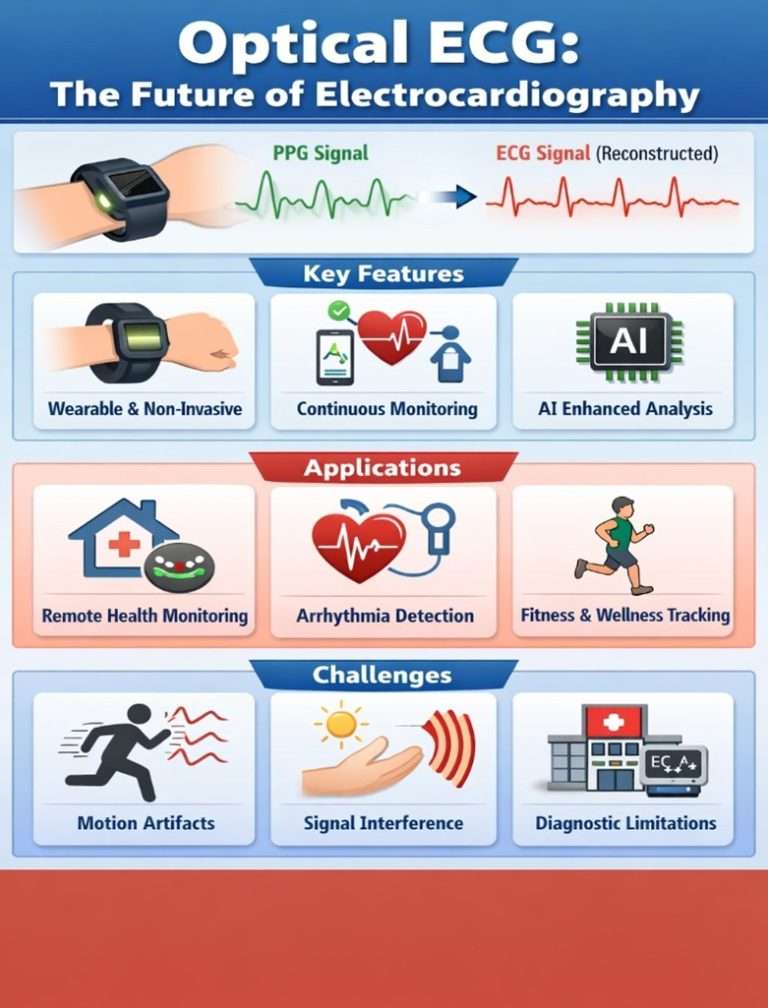
Table 1 Comparison between Conventional ECG and Optical ECG
Feature | Conventional ECG | Optical ECG (PPG-based) |
Measurement | Electrical activity | Blood volume changes |
Accuracy | Very high | Moderate to high |
Wearability | Limited | High |
Continuous Monitoring | Challenging | Easy |
Comfort | Moderate | High |
Artificial intelligence is changing cardiac auscultation
The integration of AI cardiac monitoring algorithms into sensor platforms has transformed the interpretation of phonocardiograms. Traditional analysis required manual feature extraction and expert evaluation, whereas deep learning models can now identify hierarchical signal representations directly from acoustic waveforms.
Machine learning classifiers such as support vector machines and k nearest neighbour models have demonstrated effectiveness in distinguishing normal heart sounds from pathological signals in controlled datasets. More recently, convolutional neural networks have achieved high accuracy in detecting murmurs and abnormal timing intervals from spectrogram representations of heart sounds.
These AI-enabled systems support clinical decision-making by reducing interobserver variability and improving diagnostic reproducibility. They also enable early identification of cardiovascular abnormalities in primary care settings where specialist expertise may be unavailable.
Continuous monitoring becomes possible
One of the most significant developments highlighted in the review is the transition of heart sound sensing from hospital-based equipment to portable and wearable platforms. Advances in miniaturisation and wireless connectivity now allow continuous monitoring of cardiac function outside clinical environments.
Wearable chest patches incorporating MEMS microphones or piezoelectric films can record phonocardiogram signals throughout daily activities. These recordings can be transmitted to cloud platforms for automated analysis and long-term trend evaluation. Such systems are particularly valuable for managing chronic cardiac conditions and monitoring recovery after surgical procedures.
Smartphone-connected auscultation devices further expand access to cardiovascular assessment. Digital stethoscopes integrated with mobile applications enable patients to record heart sounds at home and securely share them with clinicians. This approach strengthens remote patient monitoring and supports early intervention before symptoms worsen.
Contact and non-contact sensing technologies expand diagnostic possibilities
Heart sound sensors can also be classified according to whether they require physical contact with the body. Contact sensors such as MEMS microphones and piezoelectric films remain the most common solutions for wearable phonocardiography because they provide high signal quality and stable acquisition conditions.
However, non-contact sensing technologies are gaining attention in infection-sensitive environments and for remote monitoring. Laser Doppler vibrometry systems measure micro vibrations of the chest wall without requiring adhesives or wearable patches. Infrared thermal sensors detect subtle temperature fluctuations associated with cardiac activity, while radar-based systems capture mechanical motion produced by heartbeats.
These approaches demonstrate that future digital stethoscope technologies may operate without direct physical interaction, opening new possibilities for ambient cardiac monitoring in clinical wards and smart home environments.
Signal processing makes heart sounds clinically meaningful
Sensor-based auscultation relies on sophisticated signal-processing pipelines that transform raw acoustic recordings into diagnostic features. Preprocessing stages typically involve adaptive filtering techniques that remove respiratory noise and motion artifacts while preserving relevant cardiac frequency components between 20 and 200 Hz.
Feature extraction methods analyse time domain parameters such as amplitude and cardiac cycle duration, as well as frequency domain descriptors derived from Fourier transform analysis. Wavelet transform techniques provide a multi-resolution representation of non-stationary heart sound signals, enabling the detection of transient events such as murmurs and clicks.
Once extracted, these features are classified using machine learning algorithms that distinguish physiological patterns from pathological signatures. This structured workflow supports automated interpretation within phonocardiogram analysis systems deployed across wearable and telemedicine platforms.
The future of multimodal intelligent cardiac sensing
The next generation of heart sound sensing technologies is expected to combine multiple physiological signals within unified diagnostic platforms. Integration of phonocardiogram and electrocardiogram measurements enables precise alignment of electrical and mechanical cardiac events, improving detection of arrhythmias and valve disorders.
Sensor fusion approaches supported by edge computing architectures allow real-time analysis without reliance on remote cloud processing. At the same time, smart textile technologies are enabling continuous cardiac monitoring through garments embedded with flexible sensor arrays.
Such innovations indicate that cardiac auscultation is evolving from a manual clinical skill into a data-driven diagnostic discipline supported by intelligent sensing infrastructure. As highlighted by Dr. Shervegar’s review in the IEEE Sensors Journal, sensor-based heart sound analysis is positioned to become a central component of personalized cardiovascular healthcare in the coming decades.
Reference
Shervegar, V. M. (2025). Sensors for heart sound analysis: A review. IEEE Sensors Journal. https://doi.org/10.1109/JSEN.2025.3592827