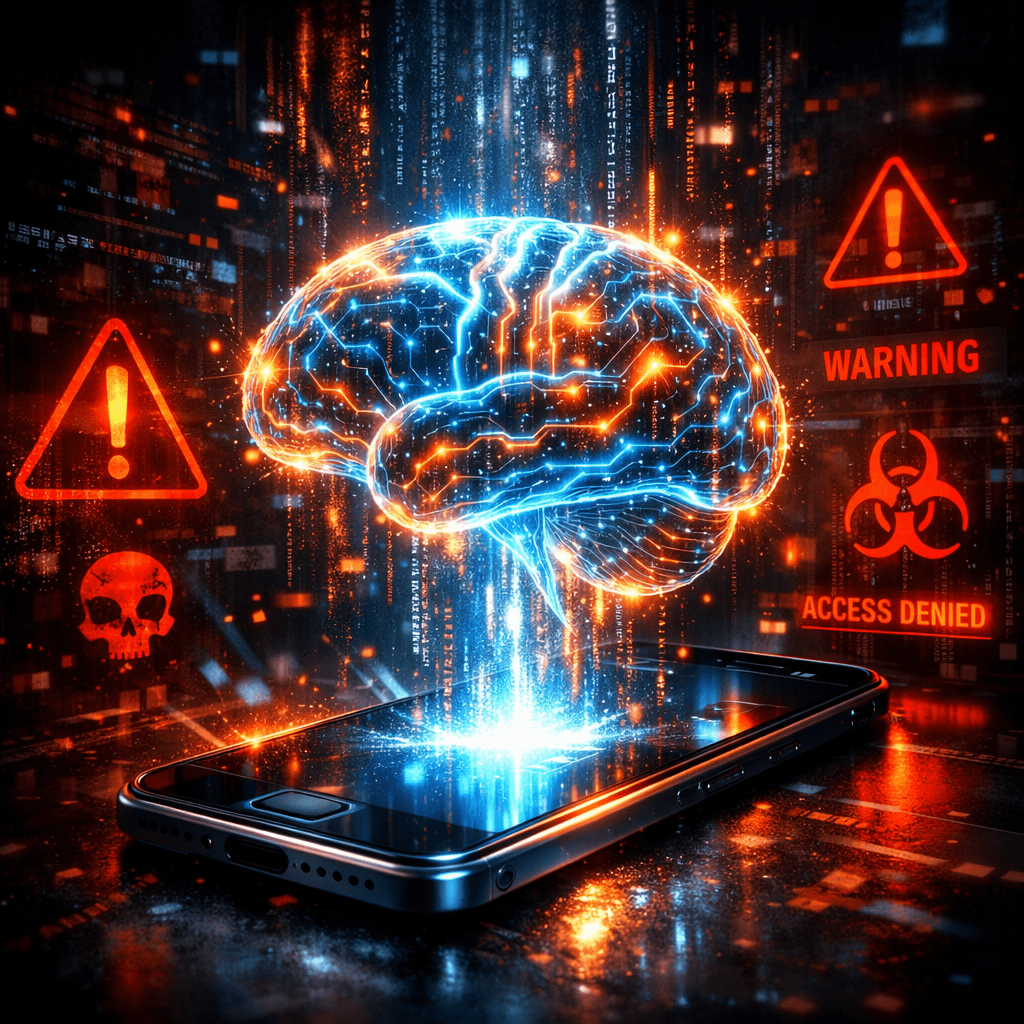
When ChatGPT was released to the public in late 2022, artificial intelligence shifted almost overnight from a specialist topic into a mainstream societal concern. Within weeks, YouTube was saturated with videos predicting mass job losses, democratic collapse, uncontrollable machines, and even human extinction. While such narratives may appear sensationalist, new research suggests that they are not random or marginal. Instead, they are systematically amplified by platform dynamics and audience behaviour.
A recent peer-reviewed study by Andreas Schwarz, published in the Journal of Risk Research, provides one of the most comprehensive analyses to date of how artificial intelligence risks are framed on YouTube and how those frames influence public attention and engagement. Conducted at the Institute of Media and Communication Science at Technische Universität Ilmenau in Germany, the article, titled “The mediated amplification of societal risk and risk governance of artificial intelligence: technological risk frames on YouTube and their impact before and after ChatGPT” the study reveals that videos emphasizing societal threats posed by AI consistently outperform more optimistic or neutral content.
By examining how risk communication operates on one of the world’s most influential digital platforms, the research sheds light on why fear-based AI narratives spread so effectively and what this means for public understanding, trust, and the governance of AI.
From technical innovation to perceived societal risk
Artificial intelligence has long been framed as a transformative technology with enormous economic and scientific potential. Governments, corporations, and research institutions have invested heavily in AI-driven solutions across various sectors, including healthcare, transportation, education, security, and industry. At the same time, warnings about AI-related risks have multiplied, ranging from algorithmic bias and mass surveillance to autonomous weapons and the loss of human control.
Despite these concerns, earlier research on news media and social media coverage suggested that AI was more often portrayed in positive or opportunity-driven terms. Benefits such as efficiency, innovation, and productivity often overshadow discussions of regulation, ethics, or long-term societal consequences. Risk governance, when mentioned at all, was usually peripheral.
The situation began to change with the rise of generative AI systems capable of producing human-like text, images, and code. ChatGPT, in particular, lowered the threshold for public interaction with advanced AI, making abstract risks feel immediate and personal. According to Schwarz’s analysis, this moment marked a turning point in how AI was framed and perceived on YouTube, one of the most widely used platforms for science and technology information.
Four dominant frames shaping AI discourse
The analysis identified four dominant AI risk frames circulating on YouTube, each characterised by a distinct balance between perceived threat and perceived efficacy.
The first frame emphasised high societal threat alongside high societal efficacy. Videos in this category highlighted serious risks associated with AI, such as loss of control, ethical failures, or political destabilisation, while also discussing regulatory frameworks, ethical standards, and the role of governments, scientists, and industry in managing these risks. These narratives conveyed concern but also suggested that effective governance was possible.
The second frame combined high societal threat with low societal efficacy. Here, AI was portrayed as dangerous and largely unregulated, with institutions depicted as failing to act decisively. These videos often focused on existential risks, mass unemployment, or authoritarian surveillance, while offering few credible solutions to address these issues. This frame was particularly pessimistic, suggesting a lack of collective capacity to manage AI’s impact.
The third frame reflected low societal threat with little or no discussion of efficacy. Videos in this group presented AI as a complex but manageable technology, acknowledging some risks while maintaining a balanced or ambivalent tone. Governance and regulation were largely absent, and the overall message was one of cautious observation rather than alarm.
The fourth frame emphasised no societal threat and no societal efficacy. These videos focused almost exclusively on the benefits of AI, celebrating innovation, productivity gains, and technological progress. Risks were downplayed or ignored, and questions of regulation or governance were rarely addressed.
Together, these four frames capture the competing narratives shaping public perceptions of artificial intelligence in digital media environments.
Fear attracts attention and engagement
One of the most striking findings of the study is the strong association between perceived AI threat and audience response. Videos that emphasised high levels of societal threat consistently attracted more views per day and generated significantly more comments than videos presenting low or no threat.
This pattern held true regardless of whether the videos also discussed effective governance measures. In fact, videos portraying high threat with low efficacy generated the highest levels of audience engagement, particularly in the form of comments. This suggests that fear, combined with perceived lack of control, is especially effective at prompting discussion, debate, and emotional response.
In contrast, videos that framed AI primarily as beneficial or unproblematic tended to receive less engagement, despite being more numerous overall. Likes per view did not differ significantly across frames, indicating that attention and conversational engagement, rather than approval, are the key drivers of algorithmic visibility.
These findings align with broader research on digital platforms, which shows that emotionally charged content is more likely to be amplified by recommender systems. On YouTube, engagement signals such as comments play a crucial role in determining which videos are promoted to wider audiences, creating feedback loops that favor high-threat narratives.
ChatGPT as a risk amplifying event
The study also examined how AI risk framing evolved over time, particularly before and after the release of ChatGPT in November 2022. The results reveal a clear shift.
While videos emphasising low or no threat remained relatively stable, the proportion of high-threat frames increased sharply after the launch of ChatGPT. Both high-threat, high-efficacy and high-threat, low-efficacy frames became significantly more frequent, with the latter showing the strongest growth in 2023.
This temporal pattern supports the interpretation of ChatGPT as a risk-amplifying event in the sense described by the social amplification of risk framework. By making advanced AI capabilities visible and accessible to the general public, ChatGPT intensified media attention and heightened perceptions of societal vulnerability. Newer videos were significantly more likely to emphasise risks over benefits, reinforcing a narrative of escalating danger.
Crucially, the amplification did not necessarily translate into greater discussion of effective risk governance. While some content addressed regulatory responses such as the European Union’s Artificial Intelligence Act, many high-threat narratives continued to portray institutions as lagging behind technological development.
Reference
Schwarz, A. (2024). The mediated amplification of societal risk and risk governance of artificial intelligence: Technological risk frames on YouTube and their impact before and after ChatGPT. Journal of Risk Research. https://doi.org/10.1080/13669877.2024.2437629