
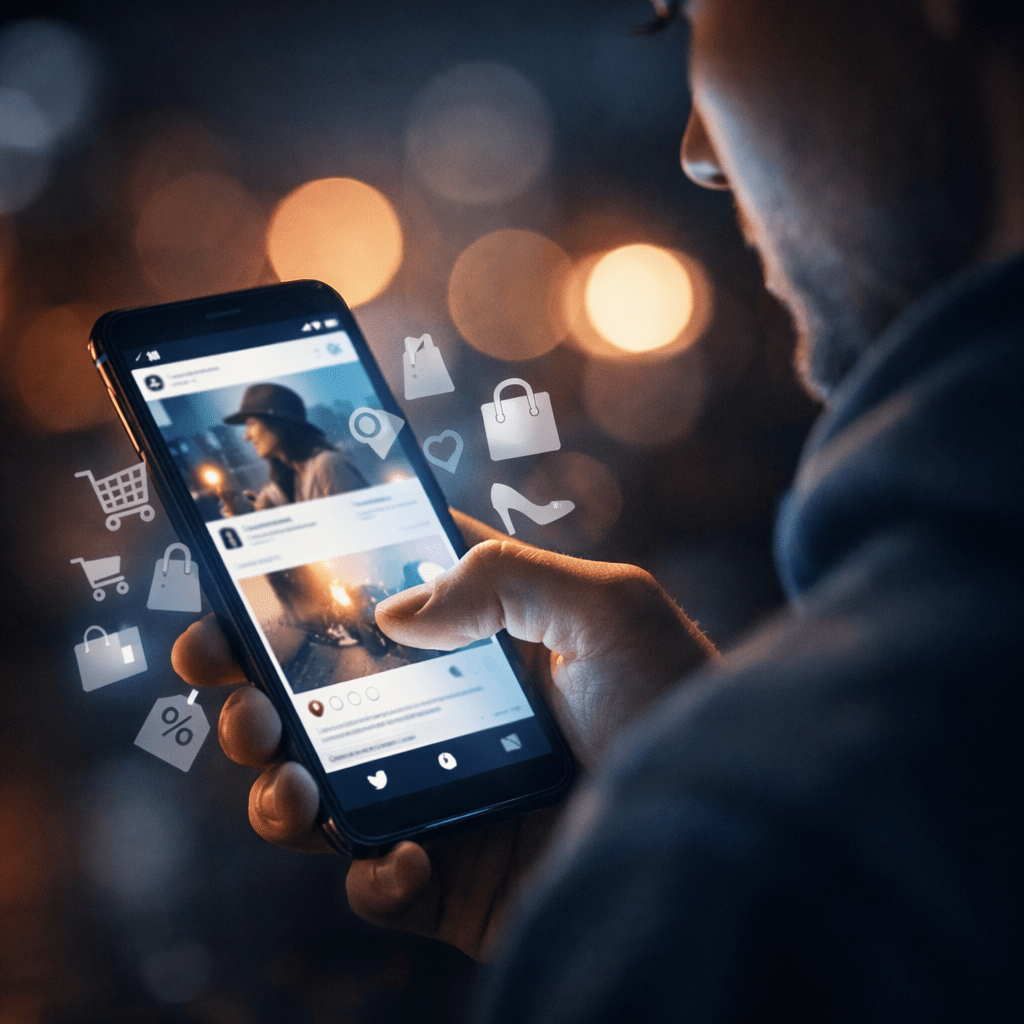
Scrolling through social media has become an everyday habit for billions of people, but what often feels like casual browsing is increasingly shaped by artificial intelligence. Behind the endless stream of posts, videos and product suggestions lies a sophisticated system designed to predict preferences, personalize content and influence decision making. A growing body of research now suggests that these invisible systems do more than entertain. They may be subtly steering consumers towards impulsive purchases.
A recent peer reviewed study by Afiqah Amin, article titles “Artificial intelligence in social media: a catalyst for impulse buying behavior?” published in the journal Young Consumers, investigates how artificial intelligence driven recommendations and visible AI labels influence impulsive buying behaviour on social media platforms. Conducted at the School of Business and Economics, Universiti Brunei Darussalam, the research offers timely insight into how AI powered personalisation operates as a behavioural nudge, particularly across different generations.
Why AI powered personalisation matters now
Artificial intelligence has become the backbone of modern social media platforms. Algorithms continuously analyse user behaviour, including likes, shares, viewing time and search history, to curate content that feels personally relevant. This data driven personalization has transformed social media into a powerful commercial environment where discovery and purchase are often separated by only a few taps.
According to Amin’s research, this environment is particularly conducive to impulsive buying. Impulse buying is defined as an unplanned purchase triggered by emotional or situational cues rather than deliberate decision making. Social media platforms combine visual stimulation, ease of purchase and constant engagement, creating ideal conditions for such behaviour.
What makes artificial intelligence especially influential is its ability to blend commercial prompts into organic content. Rather than appearing as overt advertising, AI recommendations often resemble ordinary posts. This seamless integration reduces resistance and increases the likelihood that consumers act on instinct rather than reflection, a process central to understanding digital consumer behaviour today.
Ai recommendations as subtle behavioural nudges
The study draws on nudge theory, a behavioural science framework developed by Richard Thaler and Cass Sunstein, which explains how small changes in choice architecture can influence behaviour without restricting freedom of choice. In the context of social media, AI driven recommendations function as digital nudges, shaping the environment in which consumers make purchasing decisions.
Amin’s findings show that AI recommendations significantly increase impulsive buying behaviour. These recommendations are not perceived as aggressive persuasion. Instead, they simplify decision making by presenting products that appear highly relevant to the individual user. This relevance reduces cognitive effort and enhances emotional engagement, both of which are key drivers of impulsive consumption.
The research highlights that users often perceive AI recommendations as helpful rather than manipulative. Because these suggestions align closely with existing preferences, consumers may experience a sense of validation or familiarity, increasing trust in the content presented. This emotional response plays a crucial role in transforming passive browsing into active purchasing.
The labels like “recommended for you” really work
While AI recommendations operate quietly in the background, social media platforms also display explicit AI driven labels such as “Recommended for you” or “Suggested post”. These labels are intended to signal personalisation and relevance, but the study reveals a more nuanced effect.
Contrary to expectations, the visibility of AI driven labels did not significantly increase impulsive buying across the entire sample. Unlike recommendations embedded naturally into content feeds, labels draw conscious attention to the fact that an algorithm is influencing what users see. This awareness can trigger more deliberate processing, reducing the immediacy of emotional response.
The findings suggest that overt AI labelling may weaken the nudging effect by prompting users to reflect on the persuasive intent behind the content. Rather than acting instinctively, consumers may pause to evaluate whether the suggestion is genuinely useful or simply a marketing tactic. This distinction highlights the importance of subtlety in AI driven marketing strategies.
Generational differences in ai influence
One of the most compelling aspects of the research is its examination of generational differences. The study compares younger consumers, primarily Generation Z, with older consumers, mainly Millennials and Generation X, to assess how age moderates the influence of AI driven social media features.
The results show that older consumers are significantly more responsive to AI recommendations and AI labels than younger users. For older generations, AI driven suggestions were more likely to trigger impulsive purchases, indicating a stronger behavioural impact. This effect may be linked to differing levels of familiarity with algorithmic systems.
Younger consumers, who have grown up immersed in digital environments, appear more accustomed to personalised content and more sceptical of algorithmic influence. As a result, they may be less susceptible to traditional forms of AI driven nudging. This generational divide challenges assumptions that younger users are always more vulnerable to digital persuasion.
Why consumer knowledge does not reduce impulsive buying
The study also explores whether consumer knowledge about artificial intelligence mediates the relationship between AI personalisation and impulsive buying behaviour. In theory, greater awareness of how AI systems operate should empower consumers to resist manipulation and make more rational decisions.
However, Amin’s findings suggest otherwise. Consumer knowledge of AI did not significantly reduce impulsive buying behaviour. Even users who understood that recommendations were generated by algorithms remained influenced by personalised content. Emotional engagement and perceived relevance appeared to outweigh rational awareness.
This outcome highlights the limits of informational interventions in digital environments. Knowledge alone may not be sufficient to counteract emotionally driven decision making, especially when AI systems are designed to operate seamlessly and continuously within social media platforms.
Implications for marketers and platform designers
The research carries important implications for digital marketing, platform governance and ethical AI design. For marketers, the findings reinforce the effectiveness of AI driven personalization as a tool for increasing engagement and conversion. Subtle, well-integrated recommendations appear more influential than overt promotional labels.
At the same time, the generational differences identified in the study suggest that one size fits all strategies may no longer be effective. Younger consumers may require more experiential, interactive or value driven approaches, while older consumers remain more responsive to conventional personalization techniques.
For platform designers and policymakers, the study raises questions about transparency and consumer autonomy. While AI driven systems enhance user experience, they also shape behaviour in ways that users may not fully recognize. Balancing personalization with ethical responsibility remains a critical challenge in the evolving digital economy.
For everyday social media users
For everyday users, the research offers an opportunity for reflection rather than alarm. Artificial intelligence does not force people to buy products. Instead, it shapes the context in which decisions are made, often by amplifying emotional cues and reducing friction in the purchasing process.
Understanding this dynamic can encourage more mindful engagement with social media. Recognising that highly relevant recommendations are rarely accidental may help users pause before acting on impulse. Awareness does not eliminate influence, but it can create space for more intentional decision making.
As social media platforms continue to integrate shopping features and AI driven content, the line between entertainment and commerce will become increasingly blurred. Research such as this plays a crucial role in helping both consumers and institutions understand how digital technologies shape behaviour in subtle yet powerful ways.
Looking ahead in ai and consumer behaviour research
Amin’s study also points to future directions for research. The reliance on self reported perceptions highlights the need for studies using real behavioural data such as clickstreams and purchase histories. Including a wider range of age groups, particularly older adults and emerging digital natives, would further enrich understanding.
As artificial intelligence continues to evolve, its influence on consumer behaviour will likely become more complex and less visible. Interdisciplinary research combining marketing, psychology and data science will be essential for navigating this landscape responsibly.
Ultimately, this research reinforces a central insight of behavioural science: the environment matters. In the age of algorithmic media, that environment is increasingly shaped by artificial intelligence, quietly guiding choices one recommendation at a time.
Reference
Amin, A. (2025). Artificial intelligence in social media: A catalyst for impulse buying behavior? Young Consumers, 26(5), 765–785. https://doi.org/10.1108/YC-10-2024-2297