In recent years, the conversation around cancer care has shifted from a narrow focus on survival to a broader concern for quality of life. This evolution is at the heart of new research led by Dr. A. Konstantis, of Princess Alexandra Hospital and University College London Hospitals (UCLH) NHS Foundation Trust, UK, published in the Forum of Clinical Oncology.
The paper, titled “The implementation of palliative care in Greece: a position paper by the Palliative Care Working Group of the Hellenic Society of Medical Oncology (HeSMO)”, sets out a bold vision: a healthcare system where palliative care is seamlessly integrated with oncology, ensuring every patient receives compassionate, evidence-based support throughout their cancer journey.
A growing cancer burden
Globally, the burden of cancer is rising at an unprecedented rate. According to the study, there were 19.3 million new cancer cases and 10 million cancer-related deaths in 2020. By 2040, the number of new cases is projected to surge to 28.4 million, marking a 47% increase.
Greece mirrors this global trend, with 64,530 new cancer diagnoses recorded in 2020. The Feasibility Study for Palliative Care in Greece estimates that each year between 120,000 and 135,000 patients and their families require palliative care. Cancer patients represent nearly 37% of this need, underscoring the urgency for a structured national response.
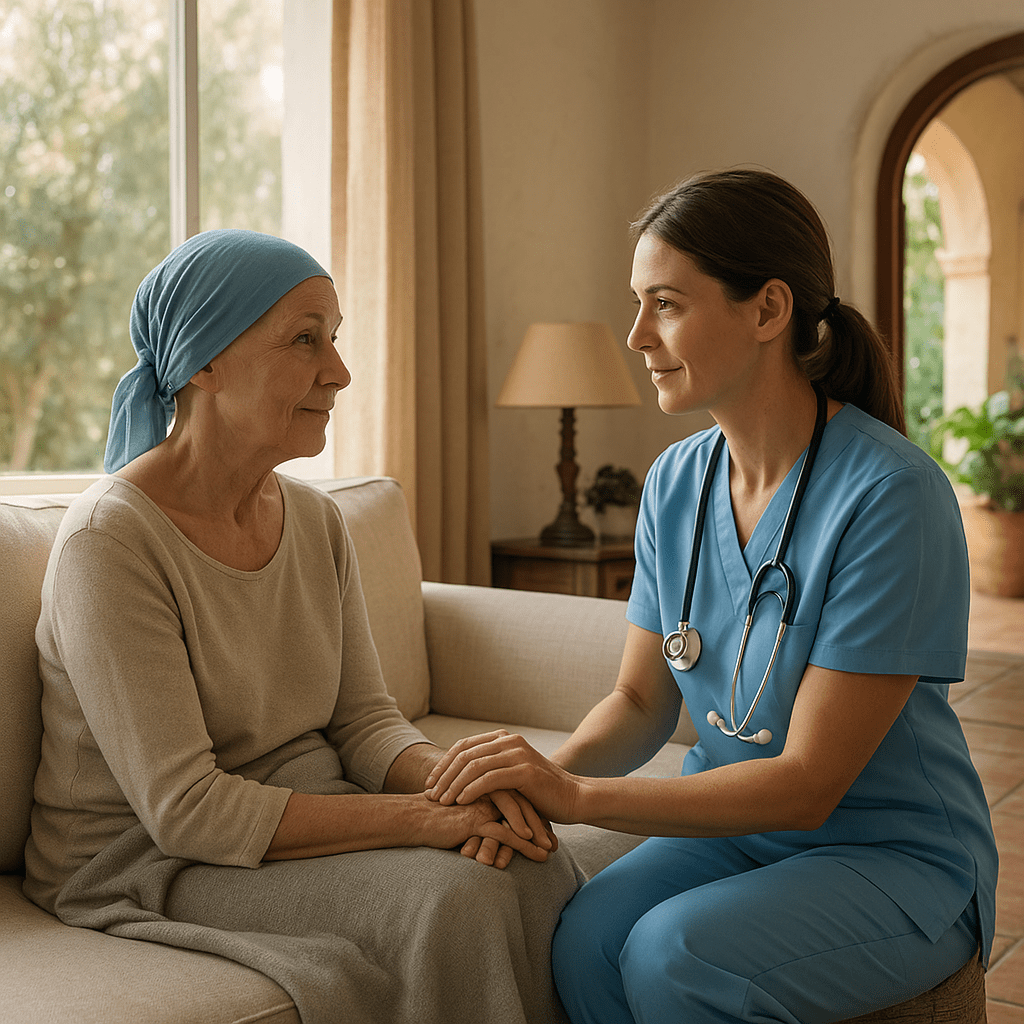
Palliative care, often misunderstood as synonymous with end-of-life care, is in fact an active, holistic approach to enhancing the quality of life for patients and their families. It encompasses pain management, psychological support, and spiritual well-being from the point of diagnosis to survivorship and beyond.
Understanding what palliative care really means
The World Health Organization (WHO) defines palliative care as an approach that “improves the quality of life of patients and their families facing problems associated with life-threatening illness.” It aims to prevent and relieve suffering through early identification and treatment of physical, psychological, and spiritual issues.
However, terminology has long caused confusion. Terms such as “supportive care,” “hospice care,” and “palliative care” have often been used interchangeably, leading to misconceptions among patients and healthcare professionals. The Multinational Association of Supportive Care in Cancer (MASCC) defines supportive care as the management of adverse effects of cancer and its treatment, including rehabilitation, survivorship, and end-of-life care.
In Greece, the official term for palliative care is anakoufistiki frontida (ανακουφιστική φροντίδα), meaning “relief care.” This terminology is often perceived more positively than “palliative,” which can still carry a stigma of imminent death. HeSMO emphasises that overcoming this linguistic and cultural barrier is crucial to enhancing access to timely care.
Why integration matters
The paper by Konstantis and colleagues presents compelling evidence that early integration of oncology and palliative care leads to better patient outcomes. Clinical trials consistently show improvements in quality of life, symptom control, emotional well-being, and even survival rates.
Previous studies demonstrated that patients with metastatic lung cancer who received early palliative care lived longer and experienced less depression. Subsequent research confirmed that structured palliative interventions reduce hospital admissions, emergency visits, and the use of aggressive treatments near the end of life.
HeSMO’s position is clear: palliative care should not be an afterthought. It should be introduced at diagnosis and continue alongside active treatment. This “concurrent care” model ensures patients benefit from both therapeutic interventions and the comprehensive support needed to manage complex symptoms and emotional distress.
Building a national model for Greece
Greece currently faces several challenges in establishing consistent and equitable access to palliative care. There is a shortage of trained professionals, uneven distribution of services between urban and rural areas, and limited integration between hospitals and community-based care.
To address these issues, HeSMO calls for the development of a national palliative care framework supported by clear referral guidelines, multidisciplinary collaboration, and targeted education. The proposed model includes three levels of care: primary, secondary, and tertiary, based on the complexity of patients’ needs.
In this model, general practitioners (GPs) and community nurses would provide basic palliative care, oncologists would manage intermediate cases, and specialist teams would oversee complex needs. Such stratification allows the healthcare system to deliver personalised, resource-efficient care while maintaining continuity between hospitals and home services.
The human touch: Multidisciplinary teamwork
One of the strongest recommendations from HeSMO’s position paper is the establishment of multidisciplinary teams (MDTs) in every cancer centre. Drawing inspiration from the UK’s Calman–Hine Report of 1995, MDTs have been shown to improve outcomes and reduce inequalities in cancer care.
An effective MDT should include oncologists, palliative care specialists, nurses, psychologists, physiotherapists, social workers, and chaplains. This collaborative approach addresses not just the physical aspects of disease, but also the emotional, social, and existential challenges faced by patients and their families.
HeSMO urges the Greek Ministry of Health to formally regulate and mandate MDTs as part of oncology services nationwide. Where hospitals lack such infrastructure, patients should be referred to external specialists or regional palliative centres to ensure no one is left behind.
Training tomorrow’s oncologists
Education remains one of the cornerstones of effective palliative care integration. Surveys conducted by both the European Society for Medical Oncology (ESMO) and HeSMO reveal that many oncologists recognise the importance of palliative care but feel inadequately trained in its principles.
HeSMO advocates for the inclusion of structured palliative care training in medical oncology curricula. The Hellenic Academy of Oncology, founded by HeSMO, already includes a dedicated module on supportive and palliative care in its two-year master’s programme. Further workshops, such as those organised in collaboration with the American Society of Clinical Oncology (ASCO), are helping to bridge knowledge gaps among both junior and senior oncologists.
Training initiatives should also extend to nurses, general practitioners, and other healthcare professionals who play vital roles in delivering community-based care. According to HeSMO, the long-term goal is to recognise palliative care as a medical subspecialty within Greece.
Palliative care at home
For most patients, home is where they wish to spend their final days. Home-based palliative care not only aligns with patient preferences but also reduces hospital costs and the need for admissions.
Konstantis and his co-authors argue that building robust community services is the first step towards delivering effective home care. Teams of trained GPs, nurses, psychologists, and social workers can provide physical, emotional, and social support directly to patients in their homes. This approach has been successfully implemented in other countries and is now considered the gold standard for end-of-life care.
HeSMO proposes a pilot programme to establish community-based palliative care teams across Greece, focusing on regions with limited access to hospital services. Strengthening collaboration between oncologists and primary care providers will ensure patients receive continuous, compassionate support wherever they live.
Quote-A. Konstantis1
Survivorship and the next chapter
Cancer survivorship is an often-overlooked phase in patient care. As survival rates improve, many patients face long-term physical and emotional challenges after treatment. HeSMO recommends adopting Survivorship Care Plans (SCPs) that provide personalised guidance on follow-up care, lifestyle adjustments, and psychosocial support.
These plans help patients transition from active treatment to daily life while ensuring ongoing communication with healthcare providers. National rehabilitation programmes could further enhance survivors’ quality of life and reduce the risk of recurrence.
Research and future directions
Despite its proven benefits, research in palliative and end-of-life care remains underfunded. In the United Kingdom, less than one percent of total cancer research expenditure is directed toward these areas. HeSMO emphasises that advancing palliative care requires rigorous, well-funded research to generate local evidence and shape national policies.
Future studies should explore innovative models of care, evaluate cost-effectiveness, and investigate patient-reported outcomes. Collaborative efforts between academic institutions, hospitals, and policymakers will be key to advancing Greece’s role in global palliative care research.
Dr. Konstantis and his colleagues envision a healthcare model where no patient faces cancer without the comfort of skilled, compassionate support. Their message echoes the WHO’s guiding principle: “Leave no one behind.”
Reference
Konstantis, A., Paraskeva, M., Avgoustidi, M., Kiagia, M., Kounnis, V., Rovithi, M., Alexaki, M., Ardavanis, A., Arvanitou, E., Tsoukalas, N., & Agelaki, S. (2024). The implementation of palliative care in Greece: A position paper by the Palliative Care Working Group of the Hellenic Society of Medical Oncology (HeSMO). Forum of Clinical Oncology, 15(1), 4–13. https://doi.org/10.2478/fco-2023-0038