Breast cancer remains one of the most common causes of cancer-related death among women worldwide, yet the chances of survival depend heavily on how early the disease is detected. In high-income countries, routine mammography screening has shifted many diagnoses to earlier stages, improving outcomes and reducing mortality. In low- and middle-income countries, however, this infrastructure is often unavailable, leaving millions of women reliant on limited clinical examinations and delayed referrals.
In South Africa, this disparity is stark. Nearly 80 percent of breast cancer diagnoses occur at advanced stages, compared with roughly 15 percent in wealthier nations. High equipment costs, shortages of trained radiologists, and long referral pathways mean that many women present only when symptoms become severe. Against this backdrop, researchers are increasingly exploring whether artificial intelligence in healthcare can help close the gap in screening.
A new study published in the Journal of Radiology Nursing offers a compelling case study. Led by Kathryn Malherbe from the University of Pretoria, the research investigates whether artificial intelligence-enhanced breast ultrasound can be integrated with clinical breast examination to improve breast cancer screening in resource-limited settings. The article, titled “Revolutionizing Breast Cancer Screening: Integrating Artificial Intelligence With Clinical Examination for Targeted Care in South Africa”, presents evidence that technology-driven risk stratification may help detect disease earlier while reducing unnecessary referrals.
Why traditional screening falls short
Mammography is widely regarded as the gold standard for population-level breast cancer screening. However, its reliance on expensive equipment, stable electricity, specialised training, and radiology infrastructure makes it difficult to deploy in many parts of the world. For younger women and those with dense breast tissue, mammography is also less sensitive, increasing the risk of false negative results.
In much of sub-Saharan Africa, clinical breast examination remains the primary screening tool. While CBE is low-cost and widely accessible, it depends heavily on practitioner experience and can miss smaller or atypical lesions. Studies have shown that CBE can support clinical downstaging, but its sensitivity varies, particularly in busy primary care settings.
This creates a diagnostic gap. Women may present with symptoms, receive an inconclusive examination, and then wait months for further imaging or specialist referral. During that time, disease progression continues. Malherbe and colleagues set out to determine whether artificial intelligence-powered point-of-care ultrasound could strengthen this first line of detection.
Introducing artificial intelligence into the clinic
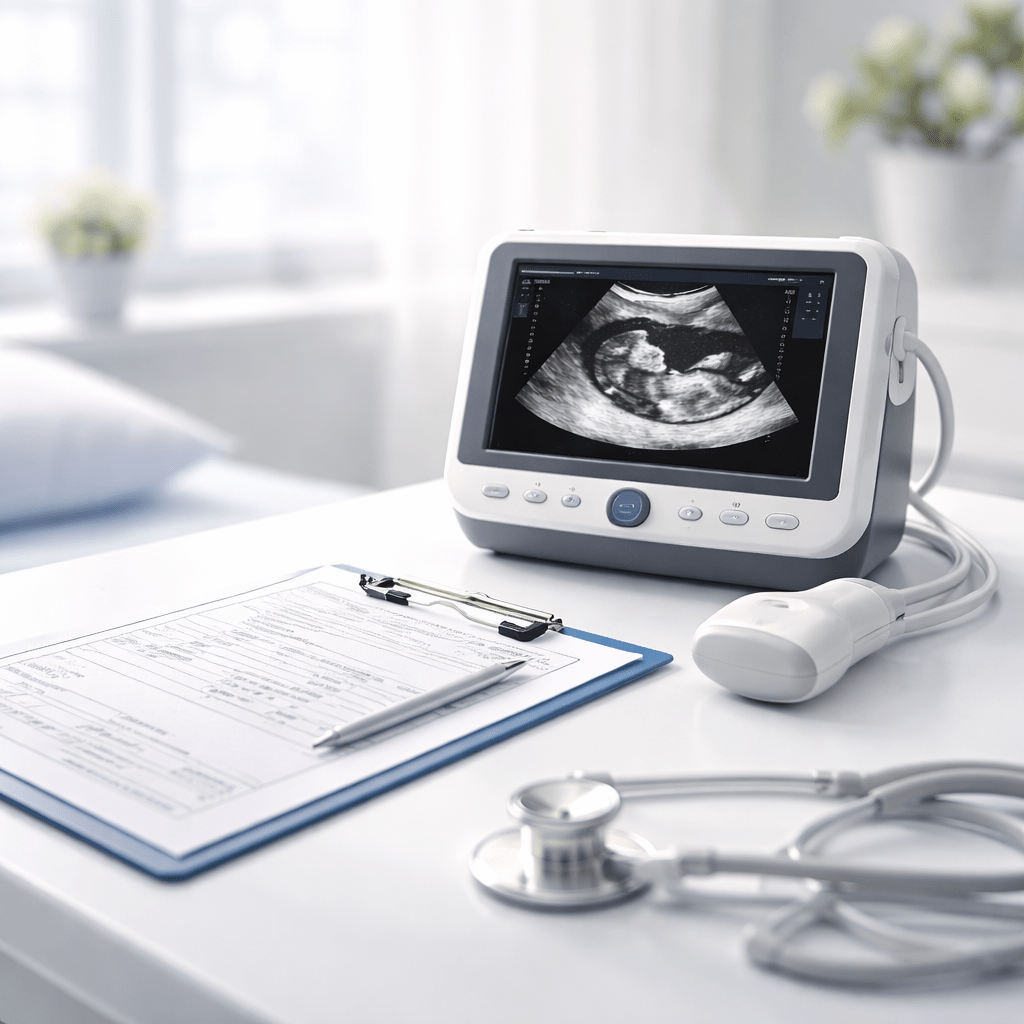
The study centres on the use of Breast AI, a registered medical device developed to assist clinicians in interpreting breast ultrasound images. The software analyses ultrasound features and produces a risk stratification score alongside Breast Imaging Reporting and Data System classifications. Rather than replacing clinicians, the system is designed to support decision-making during initial patient assessment.
The research was conducted at Daspoort PoliClinic in Gauteng Province, an urban public health facility serving a diverse population. Over a six-month period, 1617 women between the ages of 25 and 85 were screened. All participants underwent clinical breast examination, and those with symptoms or risk factors also received breast ultrasound enhanced by the AI system.
Importantly, the ultrasound examinations were performed using portable point-of-care devices rather than full diagnostic imaging suites. This reflects real-world conditions in many low-resource environments, thereby strengthening the relevance of the findings for global health systems seeking scalable solutions.
What the study found in practice
Of the women screened, 530 presented with clinical signs such as palpable lumps, breast pain, or significant family history. Within this group, only eight patients required short-term follow-up for BIRADS 3 findings, indicating lesions that were probably benign but warranted monitoring. Breast AI identified five of these cases, while clinical breast examination alone identified only two.
Although the difference did not reach statistical significance, the clinical implications are noteworthy. The AI system identified four additional positive cases that CBE had previously classified as negative, thereby reducing the number of false negatives. In settings where delayed diagnosis is common, identifying even a small number of additional cases can have meaningful consequences for patient outcomes.
One particularly illustrative case involved bilateral accessory breast tissue with underlying lipoma formation. This presentation was missed during clinical examination but identified through AI-assisted ultrasound, enabling timely referral for surgical consultation. While not malignant, such conditions can cause significant symptoms and are often overlooked in overstretched clinics.
Faster referrals, fewer unnecessary interventions
Beyond detection rates, the study also examined how AI-assisted screening influenced referral pathways. In the South African public health system, referral to tertiary hospitals for breast surgery can take six months or longer. At Daspoort PoliClinic, the integration of Breast AI reduced referral times to approximately one week for cases requiring specialist review.
Equally important was what did not happen. None of the screened patients were classified as BIRADS 5, meaning no cases required immediate biopsy or surgery. This suggests that AI-based risk stratification may help prevent over-referral and unnecessary surgical consultations, a critical consideration in health systems already operating under significant strain.
Most patients flagged by the AI system required reassurance, follow-up, or symptomatic management rather than invasive intervention. By improving triage accuracy, artificial intelligence in breast cancer screening may enable scarce specialist resources to be allocated to those most in need.
-Kathryn Malherbe
The role of education and community engagement
The study also incorporated breast cancer awareness sessions as part of its screening programme. Education remains a crucial component of early detection, particularly in communities where stigma, misinformation, or cultural beliefs may hinder timely diagnosis and treatment.
By combining education with on-site screening and AI-supported assessment, the programme aimed to reduce barriers at multiple levels. Women were informed about breast self-examination, encouraged to seek care early, and offered diagnostic evaluation during routine clinic visits.
This integrated approach underscores an important point. Technology alone cannot solve complex public health challenges. Its effectiveness depends on how well it is embedded within existing systems, workflows, and community contexts.
Reference
Malherbe, K. (2025). Revolutionizing breast cancer screening: Integrating artificial intelligence with clinical examination for targeted care in South Africa. Journal of Radiology Nursing, 44(2), 195 to 202. https://doi.org/10.1016/j.jradnu.2024.12.004