A recent study led by Cristina del Pilar Buenaño-Mariño at the Universitat Jaume I reveals that the way cities are built can shape not only skylines but also bird communities. Published in the journal Biodiversity and Conservation, the research titled Urban form shapes bird niches: insights from the European Green Capital 2024 explores how the architecture, density, and design of different urban neighbourhoods in Valencia, Spain, influence bird diversity and abundance.
By comparing historic centres, open-block and closed-block configurations, the research team found that the structure of urban landscapes directly affects the number of species that thrive, how they forage, and where they choose to nest. The findings highlight the urgent need to integrate urban biodiversity, bird ecology, and sustainable architecture into city planning policies.
A city that became a living laboratory
Valencia, designated as the European Green Capital 2024, offered an ideal testing ground for studying the intersection of urban design and ecology. As a Mediterranean coastal city with diverse architecture ranging from medieval quarters to modern apartment complexes, it encapsulates the urban transformation that many European cities are experiencing.
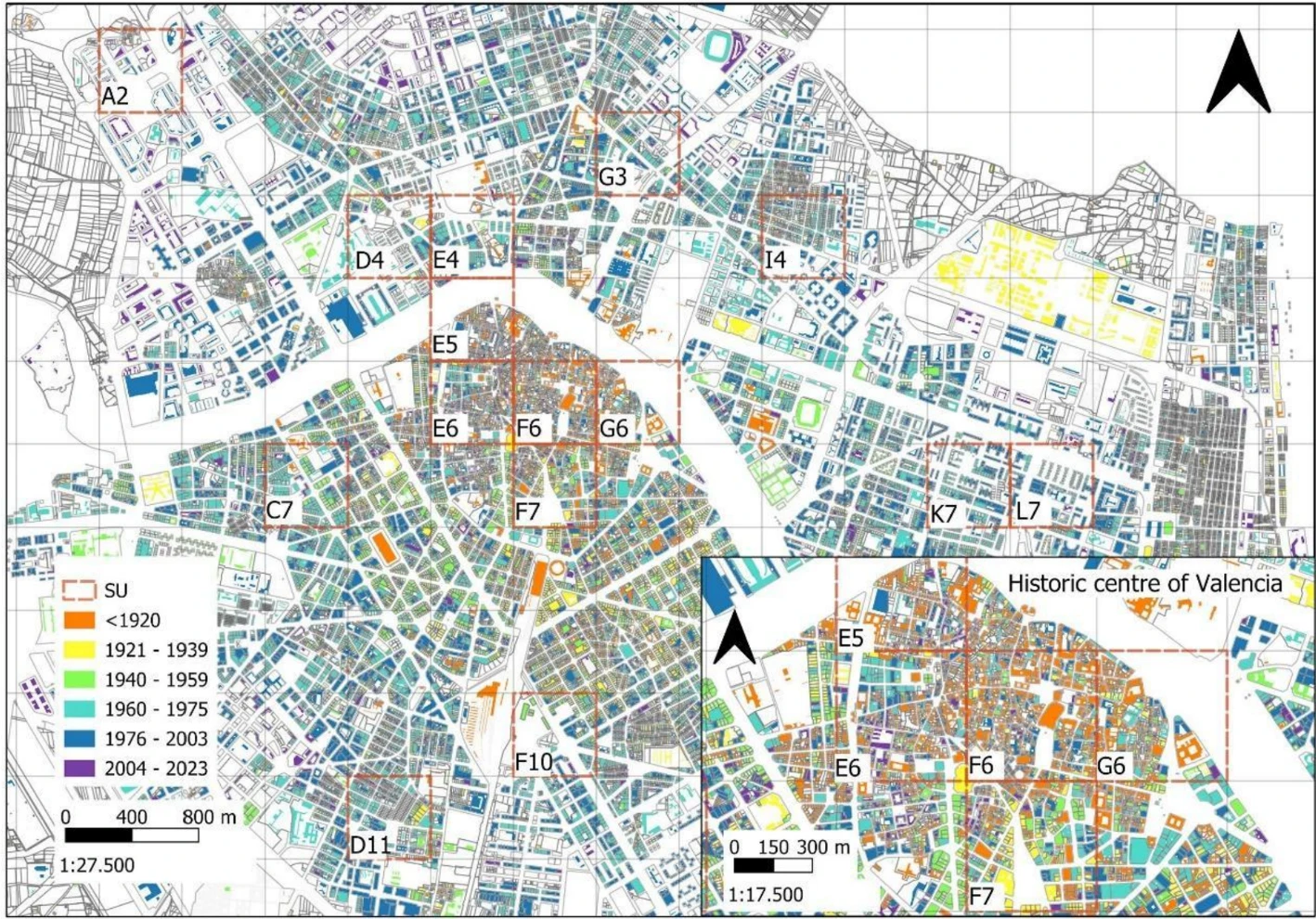
The study area covered nearly 64 square kilometres of central Valencia. Within this urban mosaic, the researchers selected fifteen sampling units that represented three distinct configurations: the compact historic centre, the open block characterised by spacious green courtyards and detached buildings, and the closed block typology, where structures encircle internal courtyards.
This fine-grained urban fabric enabled the team to investigate how variations in building age, street width, noise levels, vegetation, and pedestrian space influence the species richness and abundance of urban birds.
Citizen science and data-driven ecology
To capture the living pulse of Valencia’s avian population, the team relied on citizen science through the SACRE (Common Breeding Bird Monitoring) programme, developed by SEO/BirdLife, Spain’s leading ornithological society. Volunteers recorded bird sightings at census points throughout the city between April and June 2019.
Over 60 sampling points were monitored, each representing a unique combination of urban morphology, air quality, and noise pollution. Birds were observed for five minutes at a time within a 25-metre radius, ensuring consistency across locations. These observations were later combined with cadastral and environmental data obtained from open-access platforms to build a statistical model.
Using Generalised Linear Mixed Models (GLMMs), the researchers analysed how bird abundance and diversity correlated with environmental and architectural variables. The Akaike Information Criterion (AIC) and Shannon diversity index were used to assess ecological variation between urban typologies. This rigorous methodology enabled the researchers to quantify the influence of built environments on ecological patterns, turning city streets into natural laboratories for studying evolution in action.
Who thrives and who disappears
Across the fifteen sampled zones, 23 bird species were recorded. These ranged from common urban dwellers like the house sparrow (Passer domesticus) and rock pigeon (Columba livia) to less frequent visitors such as the Sardinian warbler (Curruca melanocephala) and European robin (Erithacus rubecula).
While the historic centre recorded the lowest species richness, with only 13 species, it paradoxically held the highest number of individual birds. The open-block and closed-block areas, by contrast, supported more diverse assemblages but with lower overall abundance. This pattern reflects the trade-off between density and diversity in urban ecosystems.
The study revealed that aerial insectivores such as the common swift (Apus apus) were particularly dominant in older districts, taking advantage of cavities and crevices in centuries-old buildings for nesting. The swift’s abundance was significantly higher in these areas than in any other configuration, accounting for nearly half of all individuals recorded during the breeding season.
By contrast, the closed-block neighbourhoods, with their mixture of post-1950s construction and internal courtyards, hosted a greater variety of species feeding on trees and shrubs. The presence of parakeets both the invasive rose-ringed parakeet (Psittacula krameri) and the red-masked parakeet (Psittacara erythrogenys) was also recorded, underlining how modern green spaces and exotic plantings can favour non-native birds.
What the data reveal about urban form
The research uncovered measurable differences in ecological indicators across Valencia’s urban types. Historic centres featured good air quality but also high noise levels and narrow streets, whereas open blocks provided more vegetation and lower building density. Closed blocks, common in mid-twentieth-century developments, showed the greatest variation in vegetation height and street coverage.
Statistical analyses confirmed that building age and structure are strong predictors of bird abundance. Older buildings with irregular façades and roof gaps provide vital nesting niches for species that depend on built environments. Conversely, modern architecture, characterized by sealed walls and smooth exteriors, offers few opportunities for these birds.
Species that forage in the air or nest in buildings showed the clearest correlation with historic architecture. The GLMM analysis demonstrated significant differences in abundance between historic and open-block areas, particularly for aerial feeders. However, when swifts were excluded from the dataset, these differences diminished, indicating how a single dominant species can influence urban ecological dynamics.
A sentinel species
The common swift emerged as the central figure in this urban drama. Its populations are in decline across Europe, with studies citing a 27 % reduction between 1998 and 2020. The loss of nesting sites due to building renovations and modern construction is considered a major cause.
In Valencia’s old quarters, many pre-1920 buildings remain unsealed, offering gaps that are swiftly reused each year. According to Buenaño-Mariño, “the age of the building stock is a determining factor for species that feed in the air and nest in façades.” The team noted that swifts’ high numbers in the city’s core coincide with the presence of nearby green corridors, providing access to foraging grounds.
The study recommends the implementation of explicit biodiversity-friendly building regulations, including the integration of nesting boxes and façade cavities in new developments. The Spanish NGO SEO/BirdLife has already begun advocating for such measures to be included in national urban planning frameworks.
Implications for planning and policy
The findings carry important lessons for urban planners, conservationists and architects. Modern city design often prioritises energy efficiency and aesthetic uniformity, but these goals can inadvertently reduce ecological complexity. Smooth façades and sealed roofs prevent birds from nesting, while excessive noise and light pollution disrupt feeding behaviour.
The study’s authors argue that urban sustainability must extend beyond green roofs and parks to include the structural features that make cities liveable for wildlife. Incorporating biodiversity into building codes could transform urban areas into refuges rather than obstacles for native species.
Historic districts such as Valencia’s old town already illustrate how traditional architecture can coexist with rich urban ecosystems. By contrast, the homogenisation of modern cityscapes leads to a uniform, less resilient bird community dominated by a few adaptable species. As the study notes, “the increased presence of widespread species and the reduced variation in relative abundances contribute to the homogenization of avian communities.”
Old buildings and open-block layouts with green spaces are key to biodiversity.
—Cristina del Pilar Buenaño-Mariño
The future of urban biodiversity
Buenaño-Mariño and her colleagues emphasize that citizen science plays a critical role in understanding urban ecology. Programmes like SACRE empower volunteers to collect reliable data, enabling long-term monitoring of biodiversity trends at low cost. However, the authors acknowledge limitations, such as inconsistent sampling and variability in volunteer expertise.
Despite these constraints, the study offers a model for how interdisciplinary collaboration combining architecture, ecology, and data science can guide the transition to nature inclusive cities. Future research could replicate this approach in other Mediterranean urban centres to assess how climate, vegetation, and building typologies interact in shaping biodiversity patterns.
In an era of rapid urbanisation, the lesson is clear: preserving nature in cities is not only about adding parks but about how we design every wall, roof, and street. By recognising the hidden ecological roles of our buildings, planners can help reverse biodiversity loss and promote resilience in the face of climate change.
Reference
Buenaño-Mariño, C. P., Sabán, J., Barba, E., & García-Esparza, J. A. (2025). Urban form shapes bird niches: insights from the European Green Capital 2024. Biodiversity and Conservation, 34(1857–1879). https://doi.org/10.1007/s10531-025-03050-9