
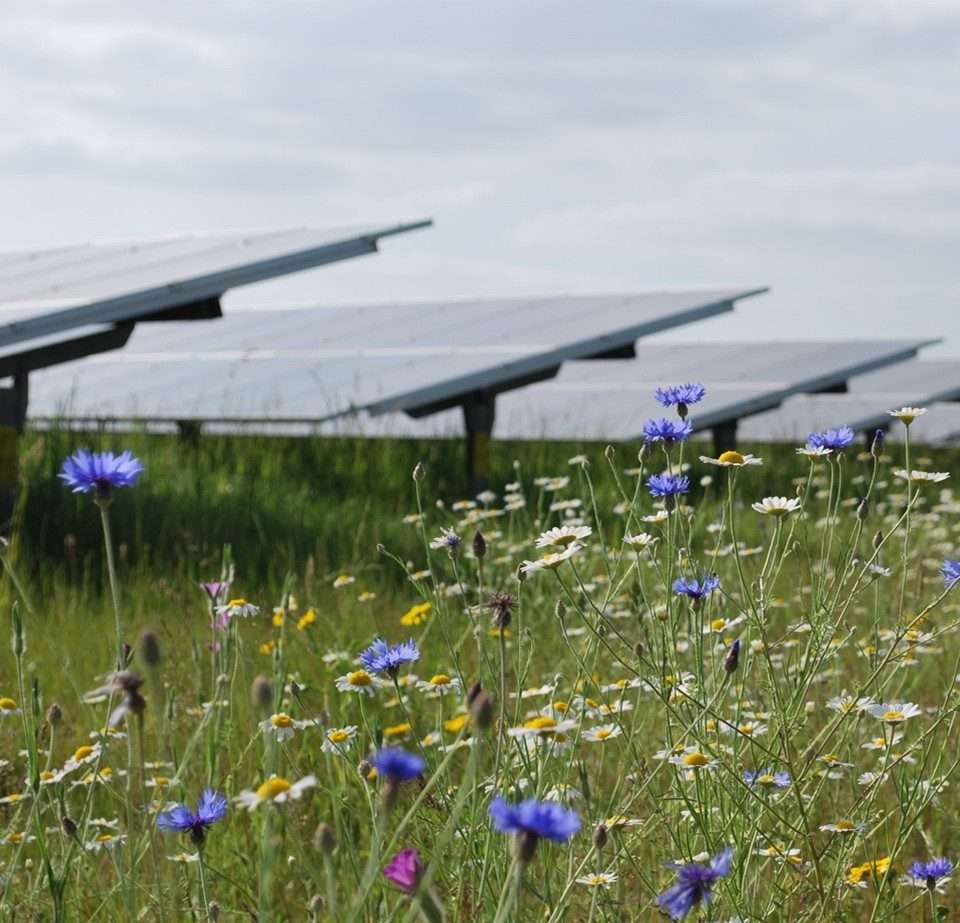
As countries accelerate the transition to low-carbon energy systems, solar farms and other renewable energy infrastructures are expanding rapidly across landscapes that also support fragile ecosystems. A growing body of research now suggests that biodiversity is no longer just an environmental compliance issue for developers. Instead, it is emerging as a strategic capability that shapes investment decisions, regulatory approval, corporate legitimacy, and long term organisational resilience.
A recent study led by Jacqueline You from the University of York, published in Business Strategy and the Environment, explores how biodiversity is transforming business strategy in the renewable energy sector. The article, titled Biodiversity as a Social Ecological Capability: Extending the Natural Resource Based View in Renewable Energy Systems, examines how firms operating in the UK solar farm sector interpret biodiversity not simply as an ecological constraint but as a source of competitive advantage within complex social ecological systems.
Drawing on interviews with industry stakeholders across the solar energy value chain, the research demonstrates that biodiversity is increasingly shaping environmental governance, infrastructure planning, and investor expectations. The findings provide new insight into how nature-positive strategies are reshaping the future of sustainable infrastructure.
From environmental obligation to strategic capability
Biodiversity loss is widely recognised as one of the most urgent sustainability challenges facing modern economies. Declines in ecosystems affect climate regulation, food security, water systems, and economic stability at multiple scales. Yet within business strategy research, biodiversity has historically been treated as a secondary environmental variable rather than a structural driver of organisational decision-making.
The study challenges this assumption by extending the Natural Resource-Based View of the firm, a widely used strategic management framework that explains how environmental capabilities contribute to competitive advantage. Traditionally, the framework has focused on pollution prevention, product stewardship, and sustainable development as mechanisms through which firms create value from environmental performance.
Jacqueline You and colleagues argue that biodiversity introduces additional ecological, institutional, and spatial dynamics that cannot be captured through efficiency-driven environmental strategies alone. Instead, biodiversity functions as a social ecological capability that shapes how firms interact with regulators, communities, investors, and landscapes across infrastructure systems.

Why solar farms reveal a changing relationship with nature
The research focuses on the solar farm sector in England, where biodiversity considerations are particularly significant given land-use pressures and evolving environmental regulations. Solar infrastructure occupies large areas of agricultural and semi-natural land, creating both risks and opportunities for ecosystem functioning.
England has recently introduced a mandatory Biodiversity Net Gain requirement, which obliges developers to demonstrate at least a ten percent improvement in habitat value after project completion. This regulatory framework represents a major shift in how infrastructure planning interacts with environmental performance. Rather than simply mitigating ecological damage, developers are now expected to enhance biodiversity outcomes over the lifecycle of their projects.
Within this policy context, biodiversity becomes a material factor influencing project approval, land valuation, investment confidence, and stakeholder legitimacy. The solar energy sector, therefore, offers a valuable case study for understanding how nature-related risks and opportunities shape corporate strategy in practice.
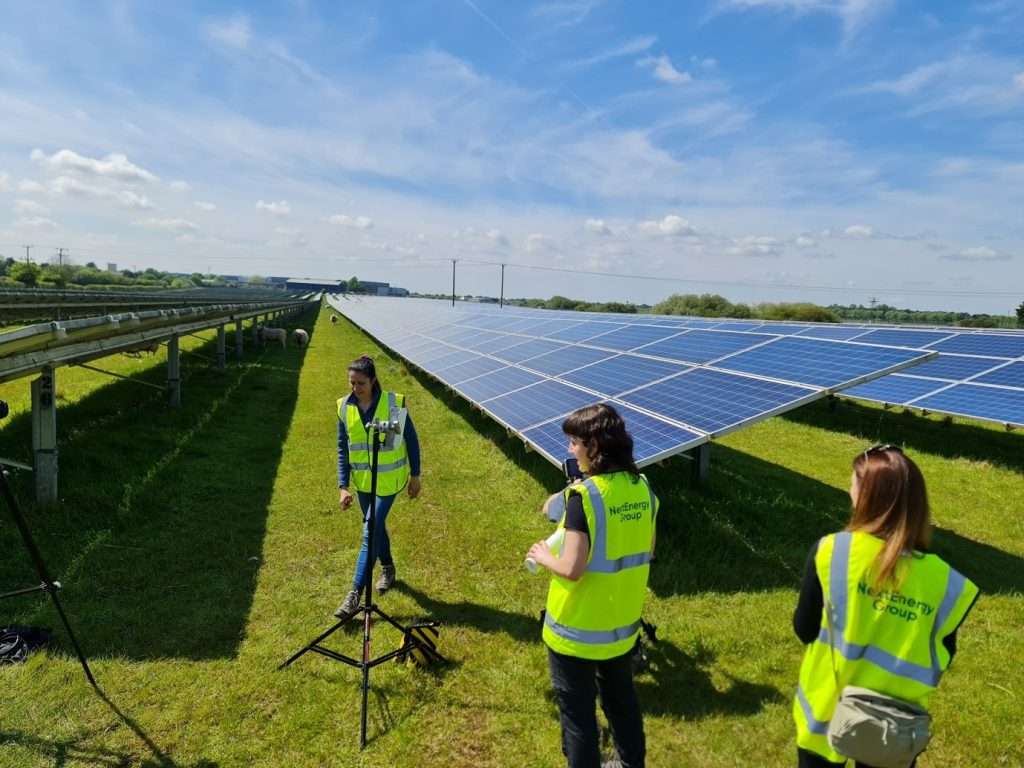
Three strategic orientations shaping biodiversity decisions
One of the most important contributions of the study is the identification of three distinct biodiversity value orientations that guide how organisations interpret and operationalise environmental responsibility. These orientations illustrate the evolving relationship between renewable energy development and ecosystem management.
The first orientation is instrumental. In this approach, biodiversity is treated primarily as a compliance requirement or reputational asset. Firms adopt nature-positive practices to meet regulatory expectations, attract environmentally conscious investors, and strengthen ESG performance indicators. Biodiversity reporting becomes a tool for managing risk and maintaining access to finance in sustainability-focused markets.
The second orientation is integrative. Here, biodiversity is embedded more deeply into organisational identity and operational practice. Companies incorporate ecological monitoring, stakeholder collaboration, and landscape planning into routine decision-making processes. Rather than responding to biodiversity requirements reactively, firms begin to align their governance structures with long-term environmental stewardship.
The third orientation is ecosystem-based. This represents the most advanced strategic position. Organisations adopting this approach recognise biodiversity as an intrinsic component of infrastructure resilience and spatial planning. Instead of treating ecological enhancement as an external obligation, they design projects that operate within social ecological systems and contribute to regenerative land management outcomes.
Together, these orientations demonstrate that biodiversity strategy is not uniform across the renewable energy sector. Instead, firms move along a spectrum shaped by regulatory pressure, institutional expectations, and organisational learning.
Biodiversity value creation is not simply a matter of efficiency, but a multi-logic, multi-actor process shaped by relationships, governance, and ecosystem-level thinking.
—Jacqueline J. You
How biodiversity influences investment and financial performance
One of the key findings of the research is the growing influence of biodiversity on capital allocation within renewable energy markets. Investors are increasingly seeking evidence that infrastructure assets can deliver measurable environmental outcomes alongside financial returns.
Nature-positive performance indicators are now being incorporated into ESG reporting frameworks, biodiversity credit schemes, and sustainability-linked investment instruments. These developments signal a shift in how natural capital is valued within infrastructure portfolios.
For solar developers, demonstrating habitat restoration, pollinator support, and enhanced ecosystem services can improve investor confidence and reduce perceived environmental risk. Biodiversity performance is therefore becoming part of the narrative through which companies communicate long-term asset stability and regulatory alignment.
The research suggests that biodiversity disclosure may also support improved financial outcomes by strengthening relationships between project developers and institutional investors who prioritise environmental transparency. As sustainability finance continues to evolve, biodiversity metrics are likely to become increasingly influential in infrastructure investment decisions.
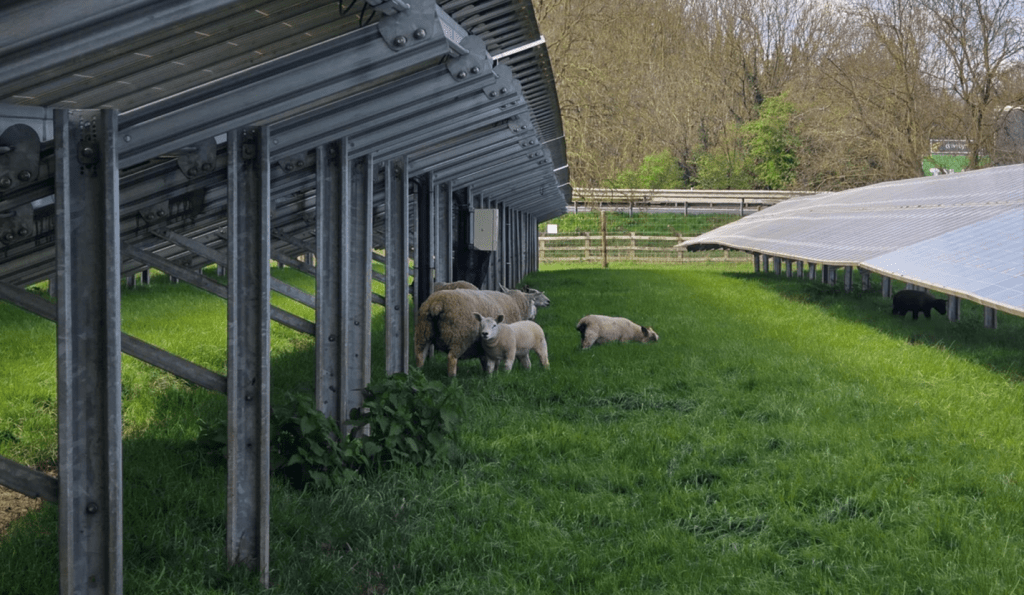
Collaboration across sectors is reshaping environmental governance
The study highlights that biodiversity capability cannot be developed within organisational boundaries alone. Instead, it emerges through collaboration across multiple actors, including ecologists, landowners, regulators, community organisations, legal advisers, and financial institutions.
Solar farm development requires coordination across landscapes rather than isolated project sites. Habitat connectivity, species movement, and ecological monitoring operate at spatial scales that extend beyond individual infrastructure assets. As a result, biodiversity strategy depends on cross-sector partnerships that support knowledge exchange and adaptive land management.
These collaborative processes also contribute to social legitimacy. Engagement with local communities, environmental groups, and planning authorities helps developers demonstrate that renewable energy expansion can deliver shared ecological benefits rather than environmental trade-offs. Such legitimacy is increasingly important as infrastructure projects face public scrutiny over land-use change and conservation priorities.
Managing tensions between climate goals and ecological protection
Renewable energy systems are essential for reducing greenhouse gas emissions, yet they can also generate conflicts with biodiversity conservation when poorly designed. The research identifies these tensions as a defining challenge for land intensive infrastructure development.
Solar arrays may alter habitat conditions, fragment landscapes, or affect species behaviour depending on site location and management practices. However, the study also emphasises that these impacts are not inevitable. Strategic planning, ecological monitoring, and integrated land management can support coexistence between energy generation and ecosystem restoration.
Approaches such as agrivoltaics, pollinator habitat creation, and adaptive vegetation management illustrate how renewable infrastructure can contribute to both climate mitigation and biodiversity enhancement. These examples demonstrate that the relationship between renewable energy and nature is not fixed but shaped by strategic choices within project design.
Reference
You, J. J., Hudson, P., White, P. C. L., Harrison, L. J., Armstrong, A., Treasure, L., & Lee, H. K. (2026). Biodiversity as a social ecological capability: Extending the Natural Resource Based View in renewable energy systems. Business Strategy and the Environment. https://doi.org/10.1002/bse.70524
Nature Positive Energy. (2026, 27th April). Finance and Investment in Nature Positive Energy. https://naturepositiveenergy.