

The metaverse has moved rapidly from science fiction into mainstream academic, policy and business conversations. While much of the global discussion focuses on developments in the United States and Europe, a growing body of research suggests that emerging economies are not merely passive adopters of immersive digital technologies. Instead, they are actively shaping how the metaverse evolves, particularly in education, healthcare, tourism and workforce development.
A recent peer reviewed study by Asha Lakshmy Nair of the Albertian Institute of Management, St Albert’s College (Autonomous), Kerala, India, published in the European Journal of Management Studies, provides one of the most comprehensive analyses to date of how the metaverse is developing across emerging economies. Titled “Exploring trends and prospects of metaverse in emerging economies”, the research examines nearly two decades of global scholarship and introduces a new conceptual framework for virtual apprenticeships and tacit knowledge diffusion.
The study asks how can immersive technologies be used to address long standing challenges in skills training, education access and workforce readiness in regions where physical infrastructure and resources remain uneven?
From science fiction to socio economic infrastructure
The term metaverse was first popularised in Neal Stephenson’s 1992 novel Snow Crash, where it described a persistent virtual environment inhabited by avatars. Over the past decade, advances in virtual reality, augmented reality, artificial intelligence and spatial computing have transformed this idea into a tangible technological ecosystem.
The study traces the evolution of the metaverse through key phases, from early virtual worlds such as Second Life and multiplayer gaming platforms to the current integration of Web 3.0 technologies, blockchain and generative artificial intelligence. While full interoperability and maturity remain aspirational, the metaverse is increasingly viewed as a shared digital space that supports real time collaboration, simulation and learning.
Unlike earlier waves of digital transformation that often reinforced global inequalities, immersive technologies offer the possibility of leapfrogging physical constraints. Virtual environments can simulate laboratories, hospitals, classrooms and workplaces that are costly or difficult to access in the physical world.
Mapping global metaverse research beyond the West
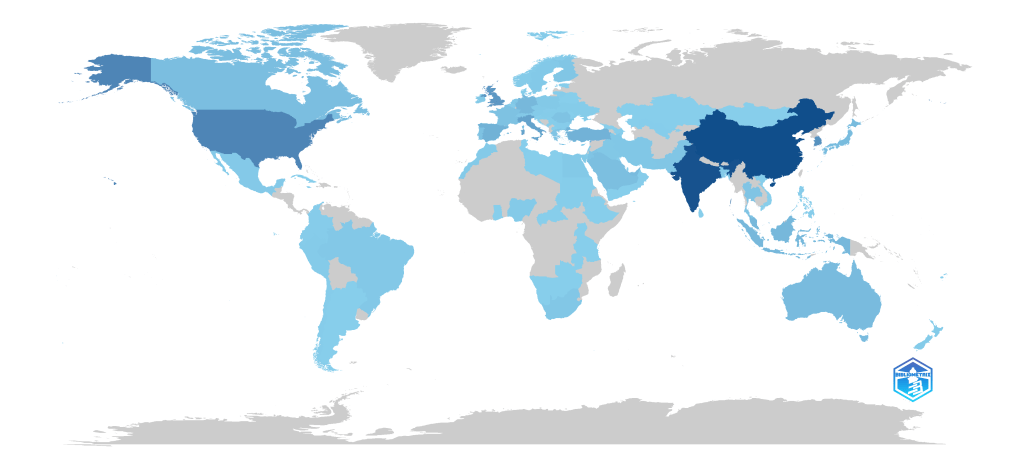
Using a bibliometric analysis of 4,337 peer reviewed publications indexed in Scopus and Web of Science between 2005 and 2026, the study provides a data driven overview of how metaverse research has developed globally. This approach allows patterns of authorship, collaboration and thematic focus to be examined at scale.
The findings challenge the assumption that innovation is concentrated solely in developed economies. China and India emerge as leading contributors to metaverse research, with significant growth since 2022. Countries such as the United Arab Emirates, Indonesia and Malaysia also show rising scholarly output, particularly in applied domains.
By contrast, regions including parts of Africa, Central Asia and Latin America remain underrepresented. The study attributes this gap to persistent digital infrastructure limitations, funding constraints and institutional barriers rather than a lack of interest or potential. These disparities highlight the risk of a fragmented global metaverse, shaped by uneven access and capacity.
Where the metaverse is already making an impact
One of the most striking findings is the shift in research focus over time. Early metaverse studies concentrated on foundational technologies such as blockchain, cybersecurity and virtual reality hardware. More recent work emphasises application oriented themes, including digital transformation, sustainability, social presence and immersive learning.
In education, research from countries such as China, Indonesia and the UAE explores how metaverse platforms can support interactive teaching, medical training and virtual classrooms. These environments allow learners to practise skills through simulation and observation, replicating real world conditions that are otherwise difficult to access.
Healthcare applications are similarly prominent. Studies from India and the UAE examine how immersive technologies can support remote care, medical education and patient engagement, while also raising critical questions about data privacy, latency and regulatory readiness.
Tourism and cultural heritage represent another emerging domain. Research from Turkey and parts of Southeast Asia shows how virtual experiences helped tourism firms maintain engagement during the COVID 19 crisis, demonstrating resilience through innovation. These examples illustrate that the metaverse is not a single use technology but a flexible infrastructure with cross sector relevance.
Why tacit knowledge matters in digital transformation
Unlike explicit knowledge that can be written down or codified, tacit knowledge is experiential, intuitive and context dependent. It is the kind of know how acquired through observation, practice and social interaction.
In many emerging economies, skills shortages persist despite formal education systems. Traditional training methods often struggle to transmit tacit knowledge effectively, particularly across geographical and cultural boundaries. This challenge becomes more acute as industries adopt complex technologies associated with Industry 5.0.
The research argues that immersive digital environments are uniquely suited to supporting tacit knowledge diffusion. Virtual reality and avatar based interaction can recreate the social and spatial conditions necessary for experiential learning, allowing learners to observe experts, practise tasks and receive guided feedback.
The metaverse has the potential to transform how people learn, work, and interact, but its impact in emerging economies will depend on how inclusively it is designed and governed.
– Asha Lakshmy Nair
Introducing MPACT as a virtual apprenticeship model
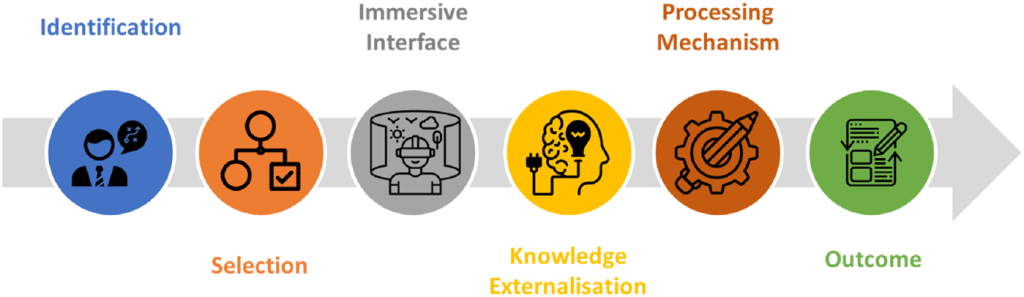
Building on this insight, the study introduces the Metaverse Platform for Apprenticeship, Collaboration and Training, known as MPACT. Rather than a technical system, MPACT is presented as a conceptual framework that outlines how immersive technologies can support workforce development in resource constrained contexts.
The framework consists of six interconnected stages, beginning with identifying valuable tacit knowledge and selecting relevant skills aligned with strategic objectives. Immersive interfaces then enable embodied learning through realistic simulations, while knowledge externalisation transforms individual expertise into shared organisational assets.
Generative artificial intelligence plays a key role in personalising these experiences. By adapting content in real time and supporting reflective learning, AI enhances engagement and relevance. The final outcome is the internalisation of skills that can be applied across organisational and national boundaries.
The role of generative AI and digital infrastructure
The convergence of the metaverse and generative artificial intelligence represents a critical inflection point. Transformer based models such as GPT, BERT and T5 enable natural language interaction, personalised feedback and adaptive simulations within virtual environments.
This integration expands the potential of immersive learning but also increases demands on digital infrastructure. The study highlights the importance of edge computing, spatial computing and efficient resource allocation to ensure performance and accessibility, especially in emerging economies.
Without sustained investment in connectivity, computational capacity and digital literacy, the benefits of AI driven metaverse platforms risk remaining unevenly distributed. Infrastructure is therefore not a background issue but a central determinant of equitable adoption.
Public private partnerships emerge as a critical mechanism for piloting and scaling metaverse initiatives. By aligning academic research, industry expertise and policy frameworks, emerging economies can shape immersive technologies in ways that reflect their social and economic priorities.
A more nuanced view of the biodiversity crisis
The study does not deny that Earth is undergoing a severe biodiversity crisis. However, the authors argue that proponents of the sixth mass extinction have not explained how the loss of less than 1% of Earth’s species over the last 500 years will become 75% species loss in the future, without identifying a specific threat or cause. The authors suggest that any claims of a sixth mass extinction must show that the current extinction crisis is comparable to the five largest extinction crises in the fossil record. Claiming a current sixth mass extinction without this evidence, they argue, risks the credibility of both conservation biology and science in general.
Reference
Ashalakshmy. (2025). Exploring trends and prospects of metaverse in emerging economies. European Journal of Management Studies,1-20. https://doi.org/10.1108/EJMS-06-2025-0069