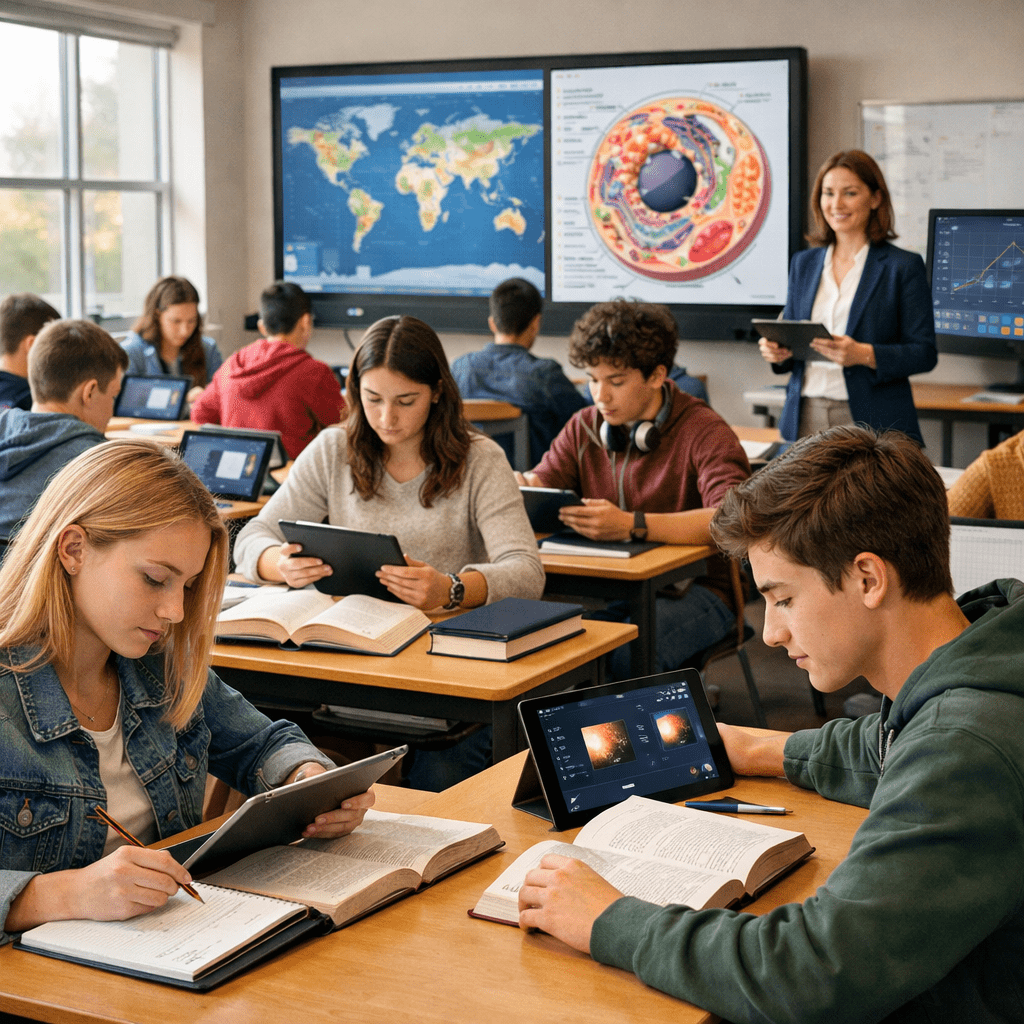
Foreign language learning has long been associated with classrooms, textbooks, grammar drills, and face-to-face interaction. For decades, this model defined how languages were taught and assessed across schools and universities worldwide. However, the rapid rise of digital media has challenged this traditional paradigm, introducing language learning apps, social networking platforms, online courses, and digital games into everyday educational practice.
A recent peer-reviewed study by Dr Mahmoud Sabri Alasal, published in the journal E Learning and Digital Media, explores this transformation in depth. Titled “The impact of digital media on foreign language acquisition: A comparative study”, the research was conducted at Qassim University in Saudi Arabia and examines whether digital media can genuinely enhance foreign language acquisition when compared with conventional teaching methods.
Rather than framing digital tools and traditional classrooms as competing forces, the study presents a more nuanced conclusion. Digital media offers clear advantages for certain language skills, while traditional methods remain critical for others. The most effective approach, the research suggests, lies in blending both.
Why language education is at a crossroads
Globalisation, migration, and digital connectivity have made multilingualism an essential skill rather than an academic luxury. At the same time, educational systems are under pressure to deliver flexible, accessible, and engaging learning experiences. Digital media appears to offer an attractive solution, particularly for learners who lack access to formal classroom instruction or who must balance learning with work and family commitments.
The COVID-19 pandemic further accelerated this shift. As face-to-face teaching was disrupted worldwide, digital platforms became central to education almost overnight. Language learning apps such as Duolingo and Babbel, social media platforms like Facebook and Telegram, and game-based learning environments saw unprecedented growth. Yet the speed of this transition raised an important question. Does digital media improve language learning outcomes, or does it merely change how learning feels?
Dr Alasal’s study addresses this question by analysing a broad body of qualitative research comparing digital and traditional approaches to foreign language acquisition. Instead of focusing on a single tool or learner group, the study synthesises findings across diverse educational contexts, age groups, and cultural backgrounds.
What digital media does particularly well
One of the clearest findings from the research is that digital media excels in vocabulary acquisition and listening comprehension. Language learning applications provide repeated exposure to words in varied contexts, often supported by audio, images and immediate feedback. These features align closely with multimedia learning theory, which suggests that learners process information more effectively when it is presented through multiple sensory channels.
Several studies reviewed by Alasal indicate that learners using mobile-assisted language learning tools achieved significantly higher vocabulary gains than those relying solely on textbooks. In some cases, vocabulary growth was reported to be up to 30 percent higher. Listening comprehension also improved markedly, with digital tools allowing learners to replay authentic speech, adjust playback speed and practise at their own pace.
Motivation is another area where digital media demonstrates a strong advantage. Gamification elements such as points, levels and rewards encourage sustained engagement, particularly among younger learners. Social media platforms further enhance motivation by enabling real-time interaction with native speakers, transforming language learning into a social and communicative activity rather than an isolated academic task.
The limits of learning through screens alone
Despite these strengths, the study highlights important limitations of digital media in foreign language learning. Traditional classroom-based instruction remains more effective for developing reading comprehension, academic writing, and complex grammatical structures. These skills often require explicit explanation, guided practice and structured feedback, which digital platforms do not always provide adequately.
Research reviewed in the study shows that learners who relied primarily on traditional classroom instruction performed better in grammar tests and written expression. In some cases, their results were around 20 percent higher than those of learners who depended mainly on digital tools. This suggests that while digital media supports language exposure and fluency, it may not, on its own, foster deep linguistic accuracy.
Another concern relates to the quality and consistency of digital content. Online resources vary widely in reliability, pedagogical design and linguistic accuracy. Without expert guidance, learners may develop fossilised errors or an incomplete understanding of formal language norms. This is particularly problematic for learners aiming to use a foreign language in academic or professional settings.
Social media, games and apps are not the same
A key contribution of Alasal’s study is its differentiation between types of digital media. Rather than treating technology as a single category, the research examines how language learning apps, social media platforms and digital games influence language acquisition in distinct ways.
Language learning apps tend to be structured and goal-oriented. They are particularly effective for vocabulary development and listening practice, using repetition and adaptive algorithms to reinforce learning. Social media platforms, by contrast, support informal communication and pragmatic language use. Learners improve conversational fluency and cultural awareness but may struggle with formal writing and grammatical precision.
Digital games offer yet another learning environment. Through role-play and problem-solving, learners engage with language in meaningful contexts that mirror real-life situations. This contextual learning supports comprehension and spontaneous language use, especially among younger learners. However, without integration into a broader curriculum, game-based learning alone may lack linguistic depth.
Why blended learning emerges as the best solution
Perhaps the most important conclusion of the study is that digital media and traditional instruction are not mutually exclusive. Instead, they are complementary. Digital tools provide flexibility, motivation, and exposure, while traditional methods offer structure, depth, and academic rigour.
Blended learning models combine the strengths of both approaches. In such models, digital media supports vocabulary building, listening practice, and learner engagement outside the classroom. Face-to-face instruction then focuses on grammar, writing, and critical language analysis. This integration aligns with constructivist and sociocultural theories of learning, which emphasise active participation and meaningful interaction.
For educators and institutions, this finding has significant implications. Rather than replacing teachers with technology, digital media should be strategically integrated into curricula to enhance learning outcomes. Policymakers and educational designers are encouraged to invest in hybrid language learning frameworks that balance innovation with pedagogical integrity.
Reference
Alasal, M. S. (2025). The impact of digital media on foreign language acquisition: A comparative study. E Learning and Digital Media. https://doi.org/10.1177/20427530251324830