

In a groundbreaking advancement for agricultural science, Dr. Hongqiang Feng from the Henan Academy of Agricultural Sciences, China, has developed the region’s first high-resolution vertical-looking radar (VLR) designed to automatically monitor the long-term movements of high-flying migratory insects. The research, recently published in Pest Management Science, marks a major milestone in the use of radar for understanding insect migration, pest surveillance, and climate-smart farming in Asia.
A sky full of insects
Every night, trillions of insects silently traverse the skies above Asia. Most go unnoticed, but their collective journeys have profound implications for agriculture, ecosystems, and food security. According to a paper published earlier, roughly 9.3 trillion nocturnal insects, carrying nearly 15,000 tonnes of biomass, migrate each year across the East China Plain.
These flying insects are not benign travellers. Many are serious agricultural pests capable of destroying vast swathes of crops, including wheat, rice, corn, cotton, and vegetables. In China alone, seven of the most important migratory pest groups cause annual crop losses of 2.8 million tonnes. Globally, pests and plant diseases account for up to 40% of lost crop yield, a figure expected to rise with climate change.
With warming temperatures and shifting wind patterns, these migratory insects are expanding their ranges, posing unprecedented challenges to sustainable agriculture. Continuous high-altitude monitoring has therefore become crucial for forecasting outbreaks and designing early warning systems that can protect global food supplies.
The innovation that changed the view
To tackle this challenge, Feng and his team constructed a vertical-looking radar (VLR) system in Henan Province capable of tracking insect movement at altitudes between 70 and 1,810 metres. Unlike conventional radar systems used for meteorology or aircraft, this entomological radar is finely tuned to detect small biological targets such as moths, beetles, and locusts.
Using modern high-frequency digitisation technology and a rapid target-finding algorithm, the radar automatically identifies the size, shape, wingbeat frequency, and body alignment of insects in flight. The system can record critical behavioural traits such as flight direction, track speed, and climb rate, all of which are essential for understanding how pest populations migrate over long distances.
This radar also achieves what previous systems could not: it can detect insects at lower altitudes (below 150 m) and maintain consistent accuracy at higher levels. Its sensitivity allows it to distinguish small insects whose radar signatures were previously lost in background noise. This breakthrough enables the continuous tracking of insect movements without human supervision, allowing for long-term, automated data collection over multiple years.


How radar tracks an insect’s journey
The VLR works by transmitting high-frequency microwaves vertically into the sky and recording the echoes returned by flying insects. Each echo provides information about the insect’s position and movement, while variations in the signal intensity and frequency reveal the insect’s size and wingbeat pattern.
By analysing these echoes using a three-step identification algorithm, the radar translates raw data into a dynamic visual record of aerial activity. The results are remarkably detailed: scientists can identify different insect species, estimate their body mass, and infer whether they are taking off, climbing, or descending.
Calibration of the system was conducted using unmanned aerial vehicles (UAVs) to ensure precise height measurements. Validation was further achieved through searchlight traps that captured real insects near the radar site for comparison. These results confirmed that the radar’s observations closely matched physical captures, ensuring that the data is biologically reliable.
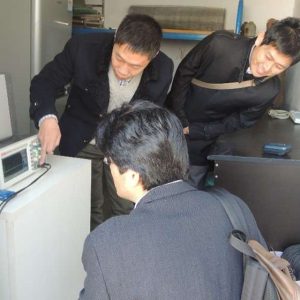

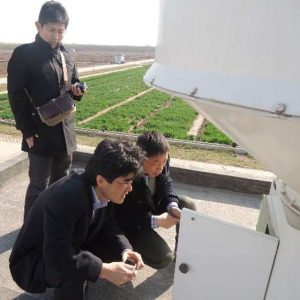
Figure 4. Discussing how the entomological radar works with Japanese experts.
Why monitoring from the sky matters
Monitoring high-flying insects is not a new concept. The United Kingdom have used radar technology for entomological studies since the 1950s. However, this marks the first time such automated, high-resolution monitoring has been achieved in Asia.
This technological leap has enormous implications for integrated pest management (IPM). Traditional ground-based light-traps, pheromone traps and baited traps are limited to insects flying near crop canopies. High-altitude migrants often escape detection until they descend en masse to infest new regions. By monitoring these insects before they land, scientists and policymakers can issue early warnings and prevent devastating infestations.
The radar’s data could also enhance pest forecasting models, enabling farmers to implement targeted, environmentally friendly control strategies such as attract-and-kill, push–pull, or mating disruption techniques. These approaches rely heavily on precise, real-time monitoring of adult insect populations, which the radar now makes possible.
Climate change and the rise of flying pests
The study emphasises that climate change is a driving factor behind the increasing frequency of migratory pest invasions. Warmer temperatures accelerate insect metabolism, shorten life cycles, and expand breeding zones. Coupled with changing wind currents, these factors enable pests to travel farther and establish in regions that were once inhospitable.
Radar-based entomology offers a vital tool for understanding how climate variables influence migration patterns. By continuously recording flight altitude, direction, and abundance, researchers can detect shifts in migratory timing or population density that are linked to changes in temperature and precipitation.
Over time, such datasets can reveal how insects respond to extreme weather events and guide adaptive agricultural planning. For example, knowing that a pest species tends to migrate northward during early summer could inform planting schedules or pesticide applications in threatened regions.
What the radar revealed
Between 2014 and 2017, Feng’s radar monitored insect activity across hundreds of nights, revealing intricate migration patterns. The data showed that the densest concentrations of insects occurred between 100 and 1,000 metres, peaking around 500 metres above the ground. The insects typically took off around dusk, climbed through the night, and descended before dawn.
Smaller species such as Spodoptera exigua (beet armyworm), Athetis lepigone, and Conogethes punctiferalis dominated the high-altitude flights. These species are among the most damaging agricultural pests in East Asia, known to devastate corn, cotton, rice and fruit crops.
Interestingly, the radar’s readings indicated that these insects often travelled in alignment with prevailing winds, suggesting that wind-assisted migration plays a key role in their movement. This finding supports the hypothesis that long-distance migrations are not purely behavioural but are aided by atmospheric currents.
From insects to insights: A tool for future agriculture
Beyond pest control, Feng’s vertical-looking radar offers insights into broader ecological questions. The technology can shed light on how insect biodiversity responds to climate variability and land-use changes. It can also help clarify the links between aerial insect fauna and ground-dwelling populations, offering new insights into ecosystem connectivity.
The research team envisions expanding this technology to create a network of insect-monitoring radars across Asia. Such a network could function like a meteorological system for biological data, delivering near-real-time updates on insect migrations. Combined with AI-driven analytics, it could enable predictive models that forecast not only pest invasions but also the movements of beneficial pollinators.
According to Feng, this is just the beginning. Further improvements could extend the radar’s detection range, enhance species classification, and integrate live weather data to improve predictive power.
The radar provides a unique tool to answer basic scientific questions, such as the impacts of climate change on insect populations, while helping to safeguard agriculture.
– Hongqiang Feng
Reference
Feng, H. (2025). First high‐resolution vertical‐looking radar for long‐term automatic observation of high‐flying insects in Asia. Pest Management Science. Wiley Online Library. https://doi.org/10.1002/ps.8773