
October 15, 2025
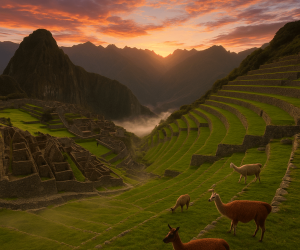
Long before modern sustainability, Inca farmers tamed the Andes. Could their water-wise terraces and llamas show us how to farm in a changing climate?

Alex Chepstow-Lusty has a PhD in palaeoecology from Cambridge University, and has used all kinds of microfossil groups for understanding climate and ecosystem changes. For the last 30 years, he has focussed on environmental records, particularly from the Andes and sub-Saharan Africa, for revealing the nature of human impact and climatic change in the past, as they are relevant for disentangling current issues of conservation, agriculture and sustainability. He considers a historical perspective has to feature in present decision-making processes of land management as often appropriate solutions have been used successfully in the past by local people, but forgotten or ignored.
Long before modern sustainability, Inca farmers tamed the Andes. Could their water-wise terraces and llamas show us how to farm in a changing climate?