Modern astronomy is often associated with giant telescopes, artificial intelligence-driven observatories, and spectacular cosmic discoveries. Yet behind many of South Africa’s most important astronomical breakthroughs lies a quieter and less visible force: a library.
New research titled “Histories Intertwined: Tracing The Evolution Of The South African Astronomical Observatory Library And Information Service Within The Historical Development Of Astronomy In South Africa” published in the Journal of Astronomical History and Heritage reveals how the South African Astronomical Observatory Library evolved alongside astronomical research itself, shaping scientific progress for more than two centuries. The study shows that access to curated scientific knowledge was not a secondary support function but a core research instrument without which many discoveries would not have been possible.
The research, led by Theresa de Young of the University of Cape Town, traces how the development of library and information services at the South African Astronomical Observatory, or SAAO, became inseparable from the history of astronomy in South Africa.
A 200-year scientific institution with a longer memory
The South African Astronomical Observatory is recognised as the oldest scientific institution on the African continent. Its roots extend back to 1820 when the Royal Observatory at the Cape of Good Hope was established under British rule to map the southern skies, provide time signals for navigation and support global astronomical research.
While the observatory’s telescopes and instruments are well documented, the accompanying library has received far less attention. Yet the SAAO Library was formally established as early as 1828 and today holds one of the most historically significant astronomy collections in the southern hemisphere.
De Young’s research demonstrates that from the outset, astronomers arriving at the Cape understood that scientific observation without access to global research literature would leave them isolated. Books, journals and star catalogues were transported by ship and became essential tools in an era when South Africa was geographically distant from the major centres of European science.
How astronomy libraries shaped discovery
In the nineteenth century, astronomy was advancing rapidly through precise measurement, celestial mapping and later astrophotography. The Royal Observatory at the Cape of Good Hope played a central role in these developments, including early star catalogues and groundbreaking work on stellar distances.
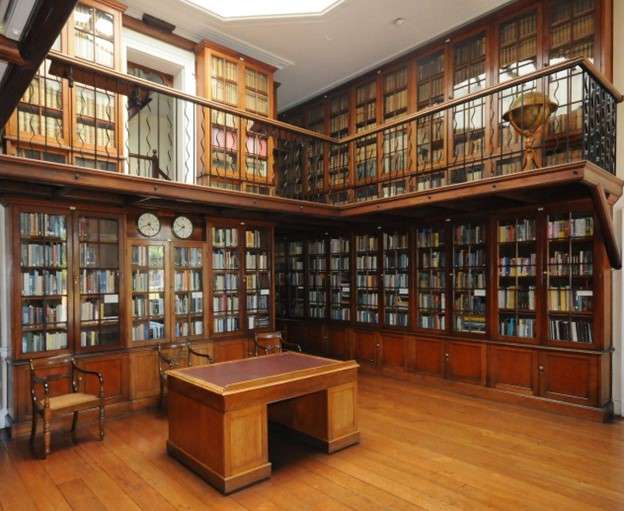
The study shows that these achievements were directly supported by access to specialised literature. Astronomers did not merely consult the library but actively built it. Early inventories reveal rare works such as Ptolemy’s Almagest, dated to 1515, along with foundational journals that connected Cape-based researchers to global scientific debates.
According to the research, astronomy libraries functioned as repositories of accumulated knowledge and as working laboratories of information. Astronomers relied on them to verify equations, compare observations and remain scientifically competitive despite their geographical remoteness.
When librarians were astronomers
One of the major findings of the study is that for much of its history, the SAAO Library was managed by astronomers themselves. Library duties were considered part of scientific responsibility rather than administrative labour.
This practice reflected the reality of nineteenth and early twentieth-century research environments, where information management and scientific inquiry were deeply intertwined. Astronomers curated collections, recommended acquisitions and exchanged publications with international institutions.
De Young’s research situates this practice within a global pattern. International literature confirms that astronomy libraries at observatories worldwide were originally created and sustained by scientists long before professional librarianship became established in scientific institutions.
Libraries as scientific infrastructure
The twentieth century marked a period of accelerated astronomical research in South Africa. New fields such as spectroscopy, photometry and infrared astronomy emerged, supported by expanding collections of journals and technical literature.
The study documents how the growth of research output created pressure on library space, funding and organisation. As publication volumes increased, the library transitioned from informal collections to professionally managed information services, adopting classification systems and circulation controls.
Importantly, the research highlights that library access remained fundamental during periods of political isolation. Even as South Africa faced international sanctions, astronomy continued to be protected as a form of big science, and the SAAO Library remained a critical gateway to international knowledge exchange.
From print shelves to digital data
The transition to the twenty-first century transformed both astronomy and libraries. Digital journals, electronic databases and open access publishing reshaped how scientists accessed information.
De Young’s study shows that the SAAO Library adapted by expanding electronic subscriptions, managing research metrics and maintaining institutional publication databases. These services became essential in measuring scientific output and guiding future research directions.
The emergence of big data astronomy placed new demands on information services. Librarians were increasingly expected to support data archiving, metadata standards and the FAIR principles, ensuring that scientific data remained findable, accessible, interoperable and reusable.
The African intelligent observatory and the future of libraries
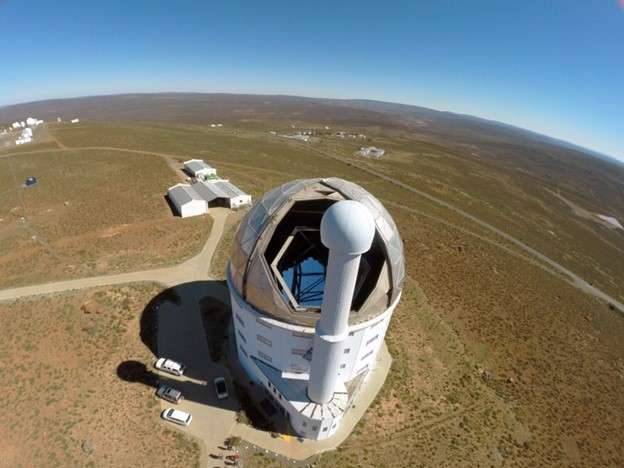
One of the most compelling contemporary developments examined in the study is the African Intelligence Observatory. This initiative allows astronomers to operate telescopes, including the magnificent Southern African Large Telescope (SALT), remotely through advanced software and artificial intelligence systems.
In a symbolic continuation of history, the remote observing room now occupies space once used for print journals. The physical proximity of the library and digital observatory reflects the enduring relationship between information access and scientific discovery.
According to the research, the library remains an integral component of the observatory rather than a peripheral service. Access to scientific literature, research data, and historical records continues to underpin cutting-edge astronomy in an increasingly connected research landscape.
The future library and information services remain closely tied to groundbreaking astronomical research developments within an electronically connected research landscape.
– Theresa de Young
Preserving astronomical heritage in the digital age
The declaration of the SAAO site as a National Heritage Site in 2018 brought renewed attention to the preservation of historical records. The study documents large scale digitisation projects involving meteorological records, astronomers’ notebooks and photographic archives dating back to the nineteenth century.
These initiatives aim not only to preserve fragile materials but to make them accessible to researchers and the public. The digitisation of more than 96,000 pages of historical records reflects a growing recognition that scientific heritage is an active research resource rather than a static archive.
De Young’s research argues that libraries play a critical role in connecting past observations with contemporary science, allowing modern researchers to reinterpret historical data using new analytical tools.
Reference
de Young, T., and Raju, J. (2024). Histories intertwined: tracing the evolution of the South African Astronomical Observatory Library and Information Service within the historical development of astronomy in South Africa. Journal of Astronomical History and Heritage, 27(3), 605 to 634. https://doi.org/10.3724/SP.J.1440-2807.2024.03.11