
In a striking example of how Earth’s earliest geological processes continue to influence modern technological futures, new research led by Dr Sunil Kumar Khare of the University of Petroleum and Energy Studies, Dehradun, has revealed that the Dongargarh granite of the Bastar Craton in Central India host minerals with unusually high concentrations of rare earth elements and thorium that are essential for the global clean energy transition.
Published in the Geological Journal under the title “U–Pb Geochronology and Petrogenesis of Dongargarh Granite, Bastar Craton, Central India: Insights Into Crustal Growth and Critical Metals Mineralization Across Archean-Proterozoic Transition”, the study provides deep insights into early continental crust formation while simultaneously highlighting the resource potential of ancient granitic systems for critical minerals exploration.
Why ancient granites matter for modern energy systems
The global transition towards net-zero carbon emissions depends heavily on secure access to critical metals such as rare-earth elements, thorium, lithium, and tin. These metals are indispensable for the manufacture of wind turbines, photovoltaic cells, electric vehicle motors, and advanced electronic components.
Granites formed during late Archean magmatic events are increasingly recognized as potential hosts for these strategic resources. The Dongargarh granite represents one such example, in which accessory minerals such as allanite, zircon, magnetite, and ilmenite preserve geochemical signatures indicating enrichment in rare-earth elements, thorium, and other critical metals.
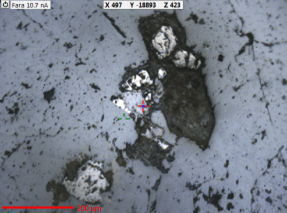
The present research highlights that magmatic allanite within the Dongargarh granite exhibits exceptionally high rare-earth element concentrations ranging from 167,818 to 217,910 ppm, with thorium concentrations reaching 5,133 ppm. Such enrichment indicates the granite’s significance as a possible target for future critical minerals exploration in India.
Locating the Dongargarh granite within India’s geological framework
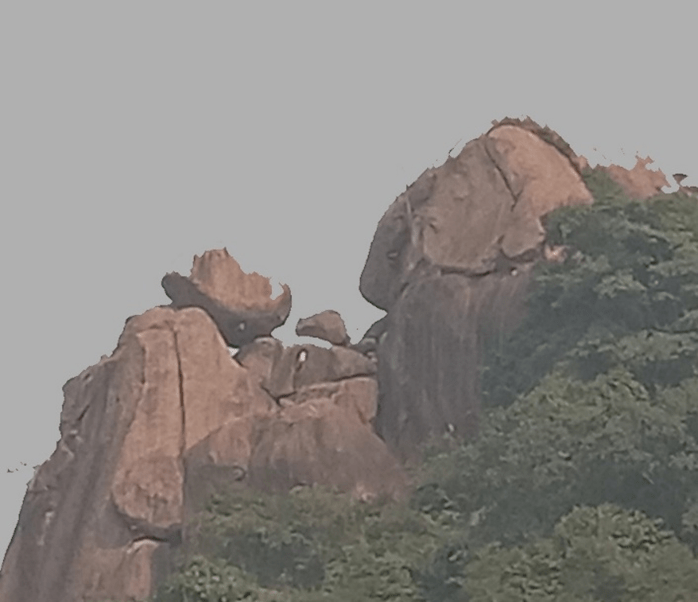
The Dongargarh granite occurs within the Dongargarh Kotri mobile belt of the Bastar Craton, one of the oldest continental nuclei of the Indian shield. Extending roughly 90 kilometers in width and 250 kilometers in length, this Precambrian mobile belt preserves evidence of large-scale tectonomagmatic activity during the transition between the Archean and Proterozoic eons.
This interval marks one of the most important phases of continental crust stabilization in Earth’s history. During this time, widespread granite emplacement and volcanic activity contributed to rapid crustal growth across several cratonic regions worldwide.
The Dongargarh granite intrudes older tonalite-trondhjemite gneiss basement rocks as well as the metavolcanic sequences of the Nandgaon Group. Its spatial association with the Malanjkhand granitoid, which hosts one of the world’s largest porphyry copper deposits, further increases its metallogenic significance within the Central Indian Craton.
Dating Earth’s early continental processes using zircon geochronology
One of the central achievements of the study lies in its precise determination of the Dongargarh granite emplacement age using zircon U–Pb geochronology. Zircon crystals act as robust geological time capsules because they incorporate uranium during crystallisation but exclude lead, allowing accurate radiometric dating of magmatic events.
Laser ablation inductively coupled plasma mass spectrometry analysis of zircon grains yielded a weighted mean age of 2460.1 ± 5.3 million years, confirming that Dongargarh granite magmatism occurred close to the Archean–Proterozoic boundary.
This age corresponds closely with earlier Rb–Sr geochronological estimates while refining the timing of crust-forming processes within the Bastar Craton. Importantly, the results support the interpretation that large-scale intracrustal recycling contributed significantly to continental growth during this interval.
Geochemical fingerprints of A-type granite formation
Whole-rock geochemical analysis reveals that the Dongargarh granite belongs predominantly to the A-type granite category, which is typically associated with anorogenic tectonic settings and within-plate magmatism.
The granite exhibits high silica content ranging from 69 to 73 weight percent, together with elevated alkali concentrations and low calcium oxide values. These characteristics confirm its sub-alkaline, peraluminous, and transitional calc-alkaline affinity.
Trace element signatures further indicate enrichment in zirconium, thorium, hafnium, and rare earth elements relative to average continental crust compositions. Chondrite-normalized rare earth element plots display pronounced light rare earth element enrichment together with a strong negative europium anomaly, reflecting plagioclase fractionation during magma evolution.
Such geochemical signatures are consistent with granitic magmatism generated through partial melting of lower continental crust involving contributions from sodic orthogneisses, metasedimentary paragneisses, and mantle-derived components.
Evidence for intracrustal recycling during continental growth
The petrogenetic interpretation presented in the study suggests that Dongargarh granite magma formed primarily through intracrustal recycling processes rather than direct mantle-derived magmatism. This interpretation is supported by mineral chemistry data from feldspar, biotite, and accessory phases, analyzed using electron probe microanalyzer and laser ablation ICP-MS techniques.
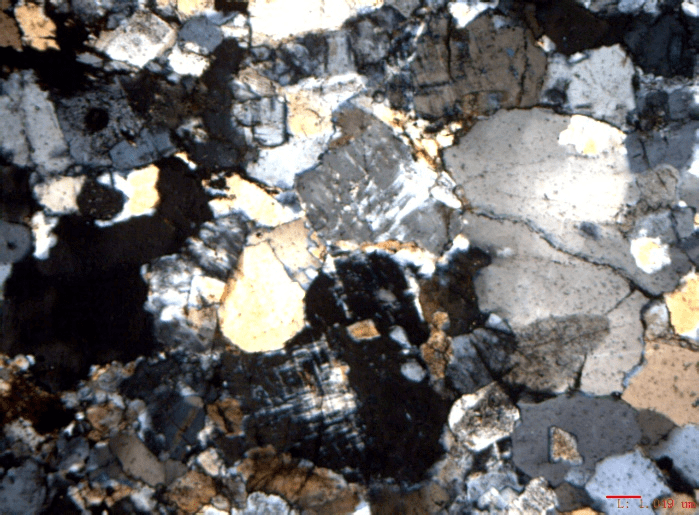
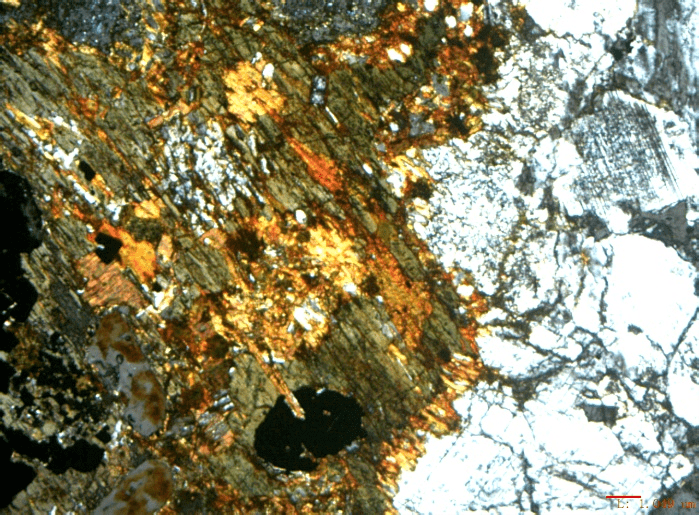
Feldspar crystallisation temperatures between approximately 739°C and 374°C indicate emplacement under relatively shallow crustal conditions. Meanwhile, magnetite ilmenite Geothermometry suggests crystallisation at around 435°C at depths corresponding to roughly ten kilometers within the continental crust.
These observations collectively demonstrate that the Dongargarh granite formed within a stable continental environment characterized by limited compressional tectonics and significant crustal reworking.
Rare earth element enrichment and metallogenic implications
One of the most important outcomes of the investigation concerns the granite’s high rare earth element concentrations, which range between 217 and 747 ppm across the analyzed samples. These concentrations exceed average continental crust values, indicating significant fractionation during magma evolution.
Allanite emerges as a particularly important host mineral for rare earth elements and thorium. Its high content of heavy rare earth elements suggests potential relevance for advanced energy technologies that require dysprosium and terbium for high-performance permanent magnets used in electric vehicles and wind turbine generators.
The presence of magnetite in greater abundance than ilmenite further indicates magnetite series affinity, although low calcium oxide content and associated ilmenite occurrence point towards a transitional low calcium ilmenite series signature that may explain elevated yttrium and thorium concentrations.
Granites formed near the Archean-Proterozoic transition could be a rich source of critical metals, including rare-earth elements, thorium, tin, and lithium, which are key drivers of clean energy, defense, and deeptech industries.
—Sunil Kumar Khare
Pegmatites and the search for lithium and tin resources
Beyond rare earth elements and thorium, the study also identifies the potential for lithium and tin mineralisation within pegmatites associated with the Dongargarh granite system.
Pegmatitic bodies commonly represent late-stage magmatic differentiates enriched in incompatible elements such as lithium, tin, and rare metals. Their occurrence in the Dongargarh region could enhance the broader metallogenic significance of this granite complex.
As global demand for lithium continues to increase due to the rapid expansion of electric vehicle battery manufacturing, identifying new lithium-bearing pegmatite provinces within Precambrian cratons has become an important objective for mineral exploration programs worldwide.
By integrating zircon geochronology, whole rock geochemistry, and mineral chemistry datasets, the study provides a comprehensive framework linking crustal evolution processes with metallogenic outcomes relevant to present-day clean energy technologies.
Reference
Khare, S. K., & Venkatesh, A. S. (2026). U–Pb geochronology and petrogenesis of Dongargarh granite, Bastar Craton, Central India: Insights into crustal growth and critical metals mineralization across Archean-Proterozoic transition. Geological Journal. https://doi.org/10.1002/gj.70197