
March 26, 2026
Can selective electron spin transport in CuMnO2 reshape semiconductor technology and create faster energy-efficient computing systems?
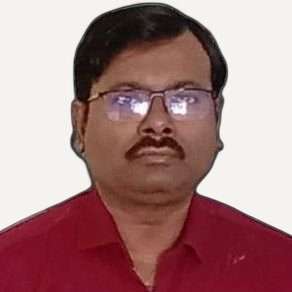
Dr. Nandan Pakhira is an Assistant Professor of Physics at Kazi Nazrul University, Asansol, India. He did his master’s and Ph. D from the Department of Physics, Indian Institute of Science, Bangalore, India. This was followed by Post-doctoral research at Georgetown University, Washington, D.C., USA, and the University of Queensland, Brisbane, Australia. His main area of research is theoretical condensed matter physics – strongly correlated electron systems. His expertise is in numerical studies of quantum materials using density functional theory, dynamical mean field theory, etc.
Can selective electron spin transport in CuMnO2 reshape semiconductor technology and create faster energy-efficient computing systems?