
April 3, 2026
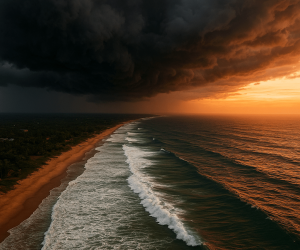
Could future cyclones be even deadlier? Researchers at IIT Kharagpur demonstrate how warmer oceans and low wind shear are intensifying storm activity.

Jayanarayanan Kuttippurath is an Indian climate scientist specializing in atmospheric chemistry, climate change, and tropical cyclone studies. He is an Associate Professor at the Centre for Ocean, River, Atmosphere and Land Sciences (CORAL), IIT Kharagpur. His research covers ozone depletion, air pollution, cyclone variability, and chemistry–climate interactions using satellite data and models. He earned his Ph.D. from the University of Bremen, Germany, and a D.Sc. from Université Pierre et Marie Curie, France. With extensive international experience, he has published widely and contributed to research on ozone trends, air quality, tropical cyclones, and climate impacts.
Could future cyclones be even deadlier? Researchers at IIT Kharagpur demonstrate how warmer oceans and low wind shear are intensifying storm activity.