


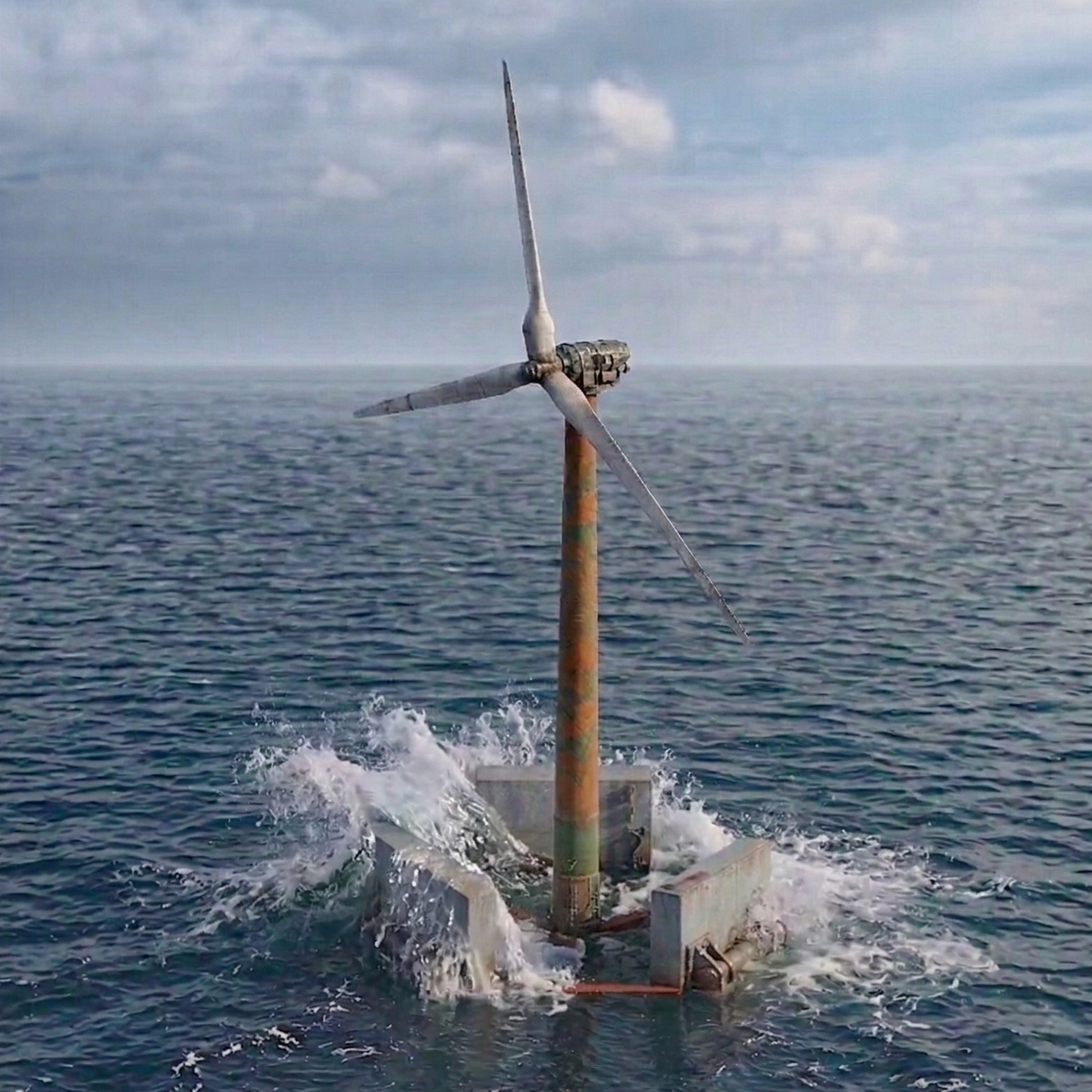

The research, conducted at the University of Michigan and published in the Ocean Engineering journal, introduces a floating hexagonal platform that integrates a large wind turbine with three wave energy converters. The study, titled “Modeling and dynamic simulation of a hybrid floating wind–wave platform with integrated flap type wave energy converters”, demonstrates how combining two renewable energy sources within a single offshore structure could increase power production and improve platform stability.
Researchers argue that hybrid offshore energy systems may play an important role in the global transition to low-carbon electricity. By harvesting energy from both wind and ocean waves, such systems could maximise energy output from limited ocean space while reducing infrastructure costs.
The ocean offers both wind and waves—we can harness them together to create more efficient and stable renewable energy systems.
— Saeid Bayat
Why offshore renewable energy matters
Global demand for renewable energy continues to rise as governments seek alternatives to fossil fuels. Oceans cover more than seventy percent of the Earth’s surface and represent one of the largest untapped sources of clean energy. Marine renewable energy technologies such as offshore wind turbines, tidal turbines, and wave energy converters are therefore attracting increasing attention.
Among these technologies, offshore wind energy has achieved the most commercial success. According to recent industry reports, global offshore wind capacity exceeded eighty gigawatts by the end of 2024, and projections suggest that this capacity could increase dramatically over the coming decades. Offshore wind turbines benefit from stronger and more consistent wind speeds at sea, allowing them to produce more electricity than many onshore turbines.
The untapped potential of wave energy
While offshore wind technology has matured rapidly, wave energy remains a less developed but promising renewable resource. Ocean waves carry high energy density and exhibit relatively predictable behaviour compared with wind. In theory, wave energy could supply a significant share of global electricity demand.
Despite this potential, the large-scale deployment of wave energy converters has been limited. Technical challenges include survivability in extreme sea conditions, high capital costs and relatively low conversion efficiency compared with established wind technology. These challenges have motivated researchers to explore hybrid systems that combine wave energy converters with other offshore renewable technologies.
Hybrid wind wave systems can benefit from the complementary nature of these resources. Waves often persist after wind speeds decline, leading to smoother, more continuous energy generation. Integrating both technologies on a single platform may therefore increase the overall capacity factor while reducing infrastructure duplication and installation costs.
A new concept for hybrid offshore platforms
The research team led by Saeid Bayat developed a new concept that integrates wave energy converters directly into the structure of a floating wind turbine platform. Unlike many previous hybrid designs, in which wave energy devices are attached as secondary components, the new platform treats wave energy converters as essential structural elements.
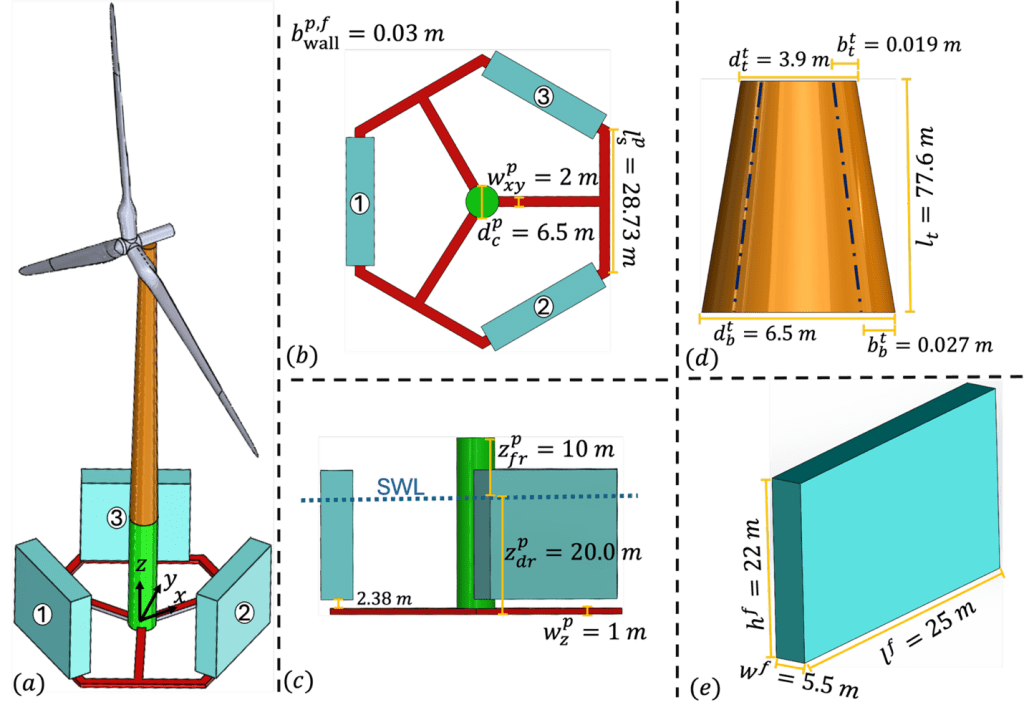
The proposed design uses a hexagonal semi-submersible platform with a large wind turbine mounted at its centre. Three oscillating surge wave energy converters are attached around the perimeter of the platform at 120-degree intervals. These devices consist of large hinged flaps that rotate in response to incoming ocean waves.
As waves push against the flaps, the oscillating motion is converted into mechanical energy, which is then converted into electricity through a power take-off system. At the same time, the flaps contribute buoyancy and hydrodynamic stiffness to the floating structure. This dual function allows the wave energy converters to support the platform while also generating power.
The researchers argue that integrating the flaps directly into the platform structure eliminates the need for additional stabilising columns, which are often required on conventional floating wind platforms. This design could potentially reduce structural mass and construction costs while improving overall system efficiency.
Advanced simulation of a hybrid energy system
To evaluate the performance of the proposed platform, the researchers developed a detailed modelling framework that simulates the interaction between wind turbines, ocean waves and floating structures. The study used numerical simulation tools widely applied in marine engineering research.
Hydrodynamic behaviour was analysed using boundary element methods implemented in open-source software. These models calculate the interaction between ocean waves and floating bodies, allowing engineers to estimate forces, motions and energy extraction potential.
Time domain dynamic simulations were performed using specialised software for wave energy converter systems. The modelling framework integrates several subsystems, including hydrodynamic coefficients, aerodynamic loads from the wind turbine, mooring dynamics, and control systems.
The simulations also accounted for realistic environmental conditions. Wave data from the Oregon coast in the United States were used to represent typical offshore conditions with significant wave heights of around 2.85 metres and energy periods of approximately ten seconds. These conditions correspond to an average wave power density of roughly forty kilowatts per metre.
Stability and engineering challenges
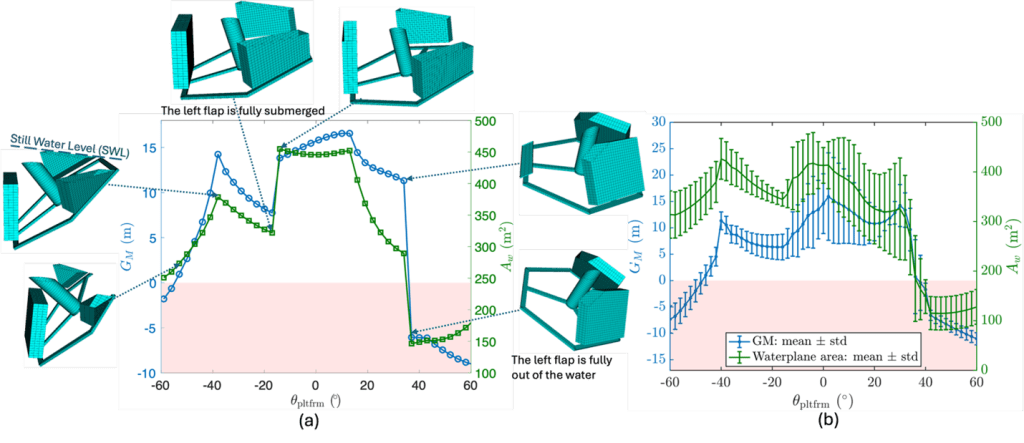
One of the central engineering challenges for floating offshore platforms is hydrostatic stability. The research, therefore, examined the metacentric height of the hybrid system, a parameter that describes how a floating structure responds to tilting or pitching.
Because wave energy converters rotate during operation, the platform geometry changes dynamically. This introduces additional degrees of freedom compared with conventional floating wind platforms and can affect the centre of gravity and buoyancy distribution.
The simulations evaluated numerous design configurations to ensure that the platform remained stable across a wide range of flap rotation angles. Sensitivity analysis of twelve geometric design parameters was also conducted to identify the variables that most strongly influence stability, energy capture and structural stress.
The analysis revealed that flap dimensions and tower length play a dominant role in determining system behaviour. Larger flaps increase the waterplane area and improve stability, while taller turbine towers raise the centre of gravity and can reduce hydrostatic stability.
How much energy can the platform generate?
The simulation results suggest that hybrid offshore energy platforms could produce significant amounts of renewable electricity. According to the study, the wind turbine component alone could generate approximately 16.86 gigawatt hours of electricity per year.
The three wave energy converters contribute an additional 3.65 gigawatt hours annually. In total, the hybrid system could therefore generate more than 20 gigawatt-hours of renewable electricity each year under the simulated environmental conditions.
Wave energy accounts for about 17.8 percent of the total energy production. Although this contribution is smaller than that of the wind turbine, it represents a meaningful increase in total power output from the same offshore infrastructure.
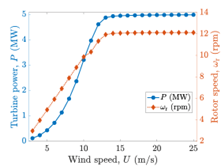
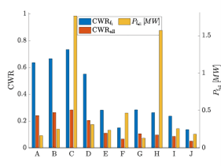
Figure 3. Performance of the hybrid wind–wave energy system. (a) Wind turbine electrical power output (P) and rotor speed (ωᵣ) as functions of wind speed, showing the increase in power and transition to rated operation. The computed average wind power is approximately 1.92 MW, corresponding to an annual energy production (AEP) of 16.86 GWh. (b) Wave energy converter performance across representative sea states (A–J), including capture width ratios and total extracted power from all flaps. The annual weighted mean wave power is approximately 0.417 MW, corresponding to an annual energy production (AEP) of 3.65 GWh. Credit. Author
Why hybrid offshore energy could matter
Hybrid wind wave systems are attracting increasing interest among researchers and energy developers. By combining two renewable resources within a single floating platform, these systems can potentially increase energy yield while making more efficient use of offshore infrastructure.
Sharing structural components such as mooring systems, electrical connections and maintenance vessels may reduce the levelised cost of energy for offshore installations. Hybrid systems may also produce smoother power output because waves often persist after wind conditions change.
Another advantage is improved platform stability. The motion of wave energy converters can help dissipate wave forces acting on the floating structure, reducing pitch and roll motions that might otherwise affect turbine performance.
For these reasons, hybrid marine renewable energy systems are emerging as a promising area of research within the broader field of offshore engineering and ocean energy technologies.
Reference
Bayat, S., Zuo, J., & Sun, J. (2026). Modeling and dynamic simulation of a hybrid floating wind wave platform with integrated flap-type wave energy converters. Ocean Engineering. https://doi.org/10.1016/j.oceaneng.2025.123684
Coauthors
Jerry Zuo is a high school student at Skyline High School in Ann Arbor, Michigan, focused on offshore renewable energy, coastal engineering, and water-energy systems for resilience. He develops and tests innovative marine and wind energy–powered technologies to improve access to clean water and sustainable energy. His research includes four peer-reviewed publications, a submitted patent, and prototype development, demonstrating both technical skill and practical impact on water sustainability as well as offshore renewable energy.
Prof. Jing Sun is the Michael G. Parsons Collegiate Professor of Engineering at the University of Michigan. She is an internationally recognized expert in marine renewable energy systems, advanced control, and control co-design. Dr. Sun is the principal investigator of a $3.89 million ARPA-E project focused on advancing next-generation marine energy technologies and has made foundational contributions in nonlinear, adaptive, and optimal control.